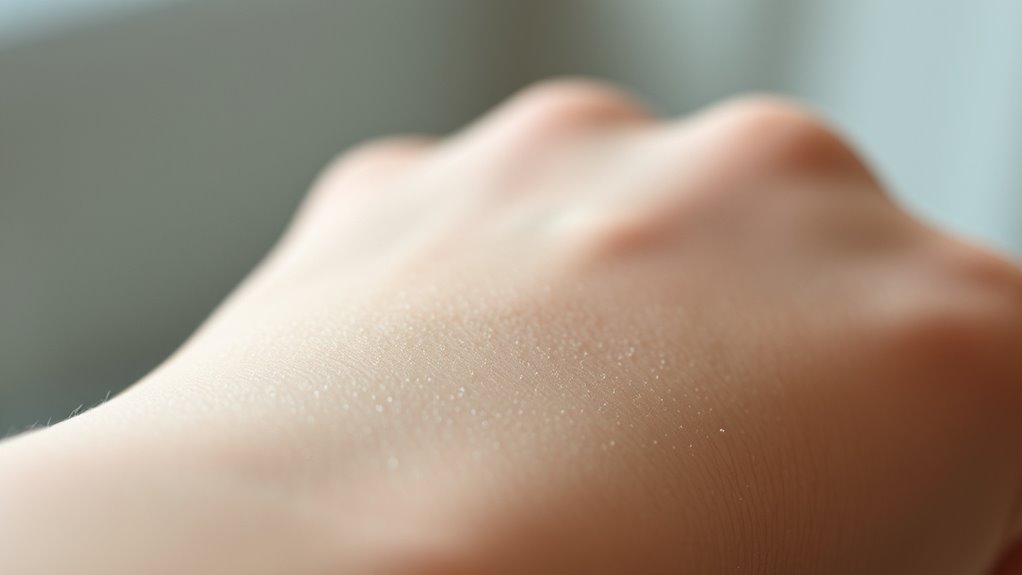

When you get goosebumps, it’s your body’s way of reacting to cold or strong emotions. Tiny muscles at the base of your hair follicles involuntarily contract, making your hair stand up and creating bumps on your skin. This reflex is an ancient survival trait that made your ancestors appear larger or added insulation. While it may seem simple now, understanding why this happens reveals a fascinating link between your physical and emotional responses. Keep exploring to uncover more about this intriguing reaction.
Key Takeaways
- Goosebumps are caused by tiny muscles contracting at hair follicles, a reflex rooted in our evolutionary past.
- They serve as a defense mechanism to make us appear larger and intimidating.
- Emotional responses like fear, excitement, or touch can trigger goosebumps through nervous system activation.
- Historically, they helped our ancestors stay warm or enhance threat displays by raising body hair.
- Today, goosebumps reveal emotional states and are a physical sign of our innate survival instincts.
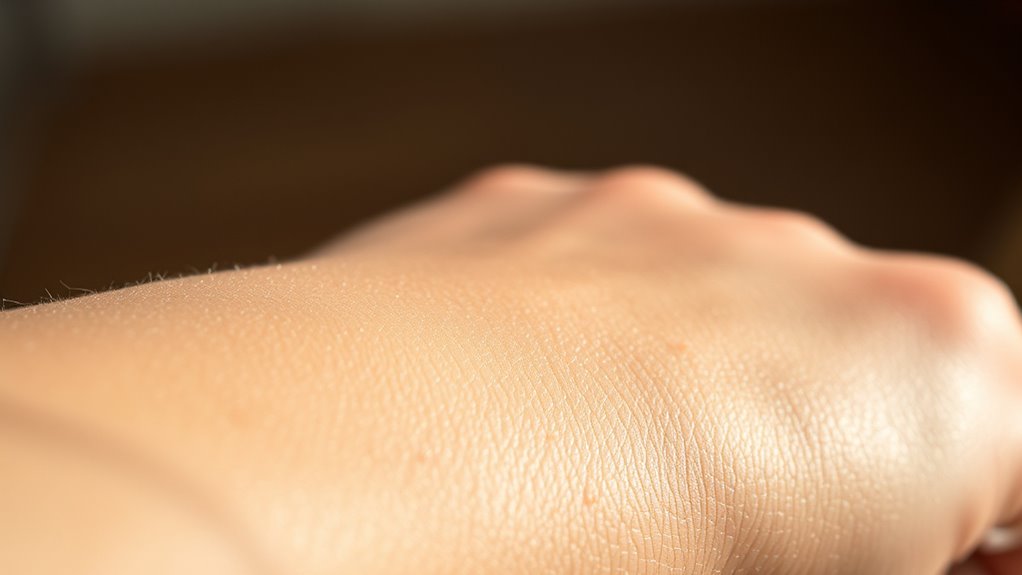
Have you ever wondered why your skin suddenly puffs up with tiny bumps, even when you’re not cold? That phenomenon is called goosebumps, and it’s a captivating reflex rooted in our evolutionary past. When you experience a chill or a strong emotion, your body triggers tiny muscles at the base of each hair follicle to contract. This involuntary response is an ancient defense mechanism designed to make your body appear larger and more intimidating, a trait once useful for warning off predators. Although these bumps don’t serve much purpose today, they’re a leftover from a time when our ancestors had more body hair and needed every advantage to stay safe.
Have you ever wondered why tiny bumps appear on your skin even without cold?
This reaction also ties deeply into emotional responses. When you’re frightened, excited, or even touched, your nervous system kicks into gear, activating the same muscle contractions that cause goosebumps. These emotional triggers are part of your body’s way of preparing for a possible threat or expressing intense feelings. For example, hearing a sudden loud noise or recalling a powerful memory might give you goosebumps as your body reacts to the emotional surge. For many mammals, this reflex trapped air or increased insulation** helped them stay warm or appear larger, highlighting its evolutionary significance. In this way, goosebumps are more than just a physical response**—they act as a mirror to your inner emotional state.
From an evolutionary standpoint, the purpose of goosebumps was to help humans and their hairy ancestors survive threats. When the muscles contracted and hair stood upright, it created a layer of trapped air or increased insulation, helping to keep the body warm or make the individual appear larger. While this doesn’t have much impact now, the reflex persists as part of your nervous system’s automatic responses. Surprisingly, this same mechanism is seen across many mammals, highlighting its deep evolutionary roots.
Your body’s tendency to produce goosebumps reveals how intertwined physical and emotional responses are. It’s a reflex that evolved not just to keep you warm or scare off predators, but also to signal your emotional state to others. When you’re startled or moved, those tiny bumps serve as a physical manifestation of your feelings, even if they seem minor. The next time you notice your skin rise in tiny bumps without cold, remember it’s a snapshot of your evolutionary history—an instinctual response designed to protect and communicate, even if its original purpose has faded over time.
Top picks for "goosebump"
Open Amazon search results for this keyword.
As an affiliate, we earn on qualifying purchases.
Frequently Asked Questions
Can Goosebumps Occur During Sleep or Only When Awake?
Goosebumps can happen during sleep, especially during certain sleep phenomena like shifts between sleep stages or vivid dream responses. When you’re asleep, your body’s autonomic nervous system still reacts to emotions, cold, or fear, causing tiny muscles at hair follicles to contract. These involuntary responses can occur both during REM sleep, when dreaming is most vivid, and in non-REM stages, making goosebumps a common part of sleep-related reactions.
Do Animals Experience Goosebumps, and if So, Why?
Animals do experience goosebumps, and you can see their animal reactions in response to cold or fear. These reactions, like raising fur or feathers, provide evolutionary benefits by trapping heat or making them look larger to predators. When you notice an animal’s piloerection, it’s often a reflex linked to survival instincts, helping them stay warm or appear more intimidating, much like how human goosebumps serve similar purposes.
Are There Health Conditions Associated With Abnormal Goosebump Responses?
Your body’s goosebumps can signal more than just cold; they might indicate serious health issues. Abnormal responses can be linked to neurological conditions like nerve damage or autoimmune disorders, which have significant medical implications. If your goosebumps happen frequently or oddly, it’s essential to consult a healthcare professional. These signs could be a warning of underlying problems, so don’t ignore them—your health might depend on catching these issues early.
How Do Different Cultures Interpret or Explain Goosebumps?
In many cultures, goosebumps are seen as a sign of spiritual awakening or connection to ancestors, reflecting cultural symbolism and traditional beliefs. You might interpret them as a response to divine presence or supernatural forces, depending on your background. Some cultures view them as a sign of protection or a message from spirits. These interpretations shape how you understand and respond to the physical sensation of goosebumps across different societies.
Can Knowing About Goosebumps Improve Emotional or Physical Health?
Knowing about goosebumps can boost your emotional awareness and help you recognize physical sensations better. For example, if you notice goosebumps during a stressful situation, you might realize your body’s response to anxiety. This awareness allows you to manage your emotions more effectively, reducing stress and improving overall mental health. Understanding these signals helps you connect with your body, fostering healthier emotional and physical well-being.
Conclusion
Now that you know why you get goosebumps, it’s fascinating to realize they’re a leftover from your ancestors’ fur-covered days. Did you know that newborns often get goosebumps as a natural reflex, even when they’re cold or excited? It’s like a tiny reminder that your body’s still wired with ancient instincts. So next time you see those little bumps, remember, your body’s just trying to keep you warm and connected to your evolutionary roots.