
The real pirates of the Caribbean were tough, brutal criminals driven by greed and desperation, not the romantic rebels in movies. They engaged in violence, sabotage, and intimidation, often living harsh lives filled with danger and hardship. Unlike Hollywood’s flamboyant portrayals, actual pirates were often desperate and violent, with little regard for heroism. If you want to uncover more about their true, gritty world, keep exploring what history reveals beyond the movies.
Key Takeaways
- Real pirates operated across global waters, targeting merchant ships for valuable cargo, often driven by greed or necessity.
- Many pirates were violent criminals, living harsh, dangerous lives with high mortality rates, contrary to romanticized portrayals.
- The stereotypical flamboyant pirate attire and rebellion are exaggerated; actual pirate ships were brutal, disciplined environments.
- Supernatural curses and ghost ships are fictional; pirates relied on violence, intimidation, and sabotage, not supernatural elements.
- The true history of piracy reveals a gritty, perilous world focused on survival and profit, far removed from Hollywood’s adventurous myth.
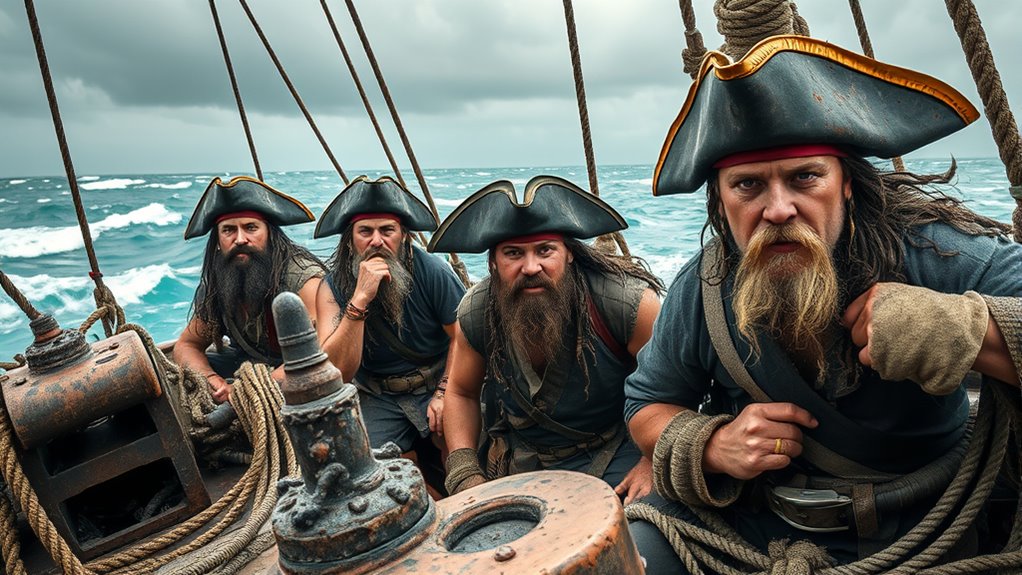
Ever wondered what it’s like to sail the high seas in pursuit of treasure and adventure? “Pirates of the Caribbean” is a popular film franchise that plunges you into a world of swashbuckling pirates, cursed ships, and daring escapades. But behind the Hollywood spectacle lies a complex history of maritime piracy that’s often romanticized or exaggerated. If you’re curious about how these stories stack up against reality, understanding maritime piracy and its historical accuracy can give you a clearer picture of what pirates truly were.
Maritime piracy, in its essence, involves acts of robbery, violence, or other criminal acts committed at sea. Historically, pirates operated across global waters, from the Caribbean to the Indian Ocean, targeting merchant ships laden with valuable cargo. These pirates weren’t always the flamboyant, daring figures you see in movies; many were desperate sailors, outlaws, or individuals seeking revenge or wealth. Their motivations, methods, and lifestyles varied widely, and their impact on maritime trade was significant, prompting nations to develop naval defenses and anti-piracy laws.
Pirates were diverse criminals driven by greed, revenge, and survival, impacting maritime trade worldwide.
When it comes to historical accuracy, the pirate stories portrayed in movies often take considerable creative liberties. Films tend to romanticize pirates as heroic rebels or colorful characters, with exaggerated bravado and flamboyant attire. While some pirates did live flamboyant lives, the reality was often harsher and more brutal. Pirate ships were harsh environments where violence was commonplace, and life expectancy was low. Most pirates were not the charming rogues depicted on screen; they were often violent criminals, driven by greed or necessity.
Furthermore, the portrayal of cursed ships or supernatural elements, as seen in “Pirates of the Caribbean,” is purely fictional. While some pirates believed in superstitions and had their own folklore, the idea of cursed ships or supernatural curses is a Hollywood invention. The real threat pirates posed was physical violence, sabotage, and intimidation—not supernatural curses.
In terms of historical accuracy, filmmakers often omit or gloss over the brutal realities of piracy, such as the harsh discipline onboard ships or the often fleeting and treacherous pirate lifestyle. The allure of pirate life in movies is more about adventure and rebellion than the grim reality faced by many pirates. So, while “Pirates of the Caribbean” offers a enthralling and entertaining glimpse into pirate lore, it’s essential to separate the myth from the historical truth and recognize that maritime piracy was often a gritty, dangerous, and less romanticized world.
Frequently Asked Questions
Were Real Pirates as Flamboyant as Depicted in Movies?
No, real pirates weren’t as flamboyant as movies show. They wore practical pirate fashion suited for rough seas, not the extravagant costumes you see on screen. They used pirate slang like “Avast!” and “Ahoy!” to communicate, but their attire was mostly functional. Movies exaggerate their style and speech for drama, but in reality, pirates focused on survival and efficiency rather than flashy appearances.
What Were the Most Common Pirate Symbols and Their Meanings?
Think of pirate flags as their secret language, with symbols like the Jolly Roger signaling danger or a warning to surrender. You’ll find treasure symbols like the skull and crossbones representing death or piracy, while the hourglass warns of impending doom. These symbols serve as messages, revealing the pirates’ intentions and fears. When you see these flags and symbols, you’re glimpsing their world of peril, power, and hidden stories.
Did Pirates Have a Code of Conduct or Laws?
Yes, pirates had a code of conduct that governed their behavior, often called the Pirate Code. This code outlined rules and punishments, such as marooning or flogging, for disobedience. It also defined the pirate hierarchy, ensuring fairness among crew members. The code helped maintain order on ships, making sure everyone knew their roles and responsibilities, and it fostered a sense of shared purpose and discipline among pirates.
How Did Pirates Choose Their Ships and Crews?
Imagine you’re in the age of pirates and need to choose your ship and crew. You focus on ship acquisition, often capturing or trading for vessels that suit your needs. Crew selection is vital; you prefer skilled sailors, fighters, and those loyal to your cause. You might even consider crew members’ reputations or their ability to navigate treacherous waters, ensuring your crew’s loyalty and the ship’s success on the high seas.
Are There Any Surviving Artifacts From Real Pirates Today?
Yes, there are surviving artifacts from real pirates today. Modern piracy leaves behind confiscated goods, weapons, and sometimes ship remnants. Maritime museums often display these artifacts, offering a glimpse into pirate life. You can see old maps, weapons, and personal items, helping you understand their history. These artifacts connect you to the past and highlight how piracy has evolved, making museums a fascinating resource for exploring pirate stories.
Conclusion
So, next time you watch Pirates of the Caribbean, remember that real pirates once roamed these waters, with over 1,000 known pirates operating in the Caribbean during the 18th century. Their daring exploits shaped history and inspired countless stories. Pirates weren’t just fictional villains—they were real adventurers risking everything for treasure and freedom. Now, when you think of pirates, you can picture their true legacy etched into history, far beyond the movies.