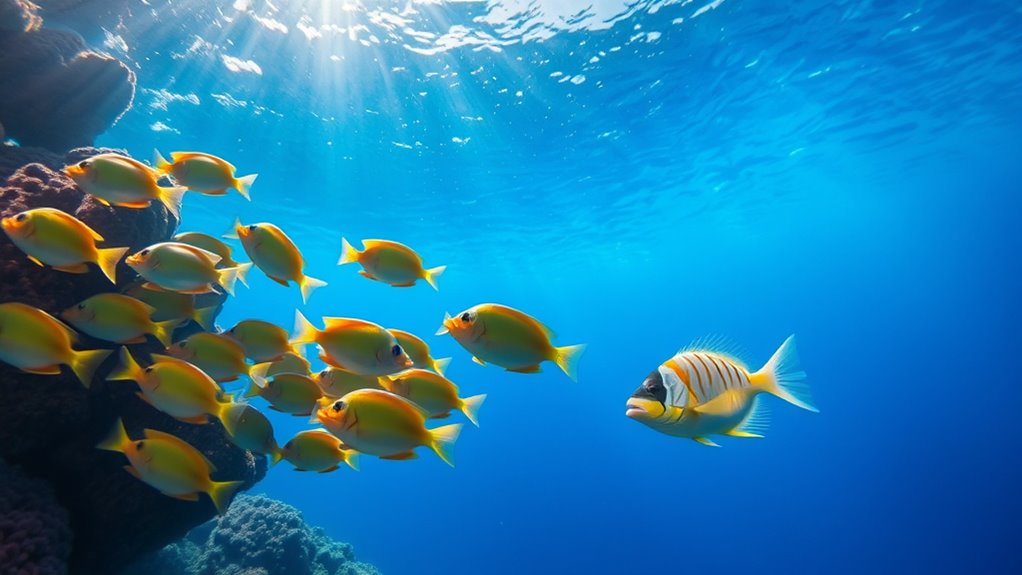

Yes, fish do sleep, even though they lack eyelids. They rest by reducing activity, floating motionless, or staying near surfaces while becoming less responsive to external stimuli. Their sleep periods are shorter and often fragmented but serve similar purposes as in land animals, like conserving energy and maintaining health. Some fish even sleep with one brain hemisphere at a time to stay alert for predators. Want to understand more about how they rest?
Key Takeaways
- Fish do sleep, despite lacking eyelids, by resting still or hovering with reduced activity.
- They experience sleep phases involving decreased responsiveness and energy conservation, similar to other animals.
- Some fish exhibit unihemispheric sleep, resting one brain half while remaining alert for predators.
- Sleep patterns vary by species, environment, and behavior, often being shorter and fragmented than land animals.
- Fish’s sleep behaviors are vital for health, survival, and balancing rest with threat detection.
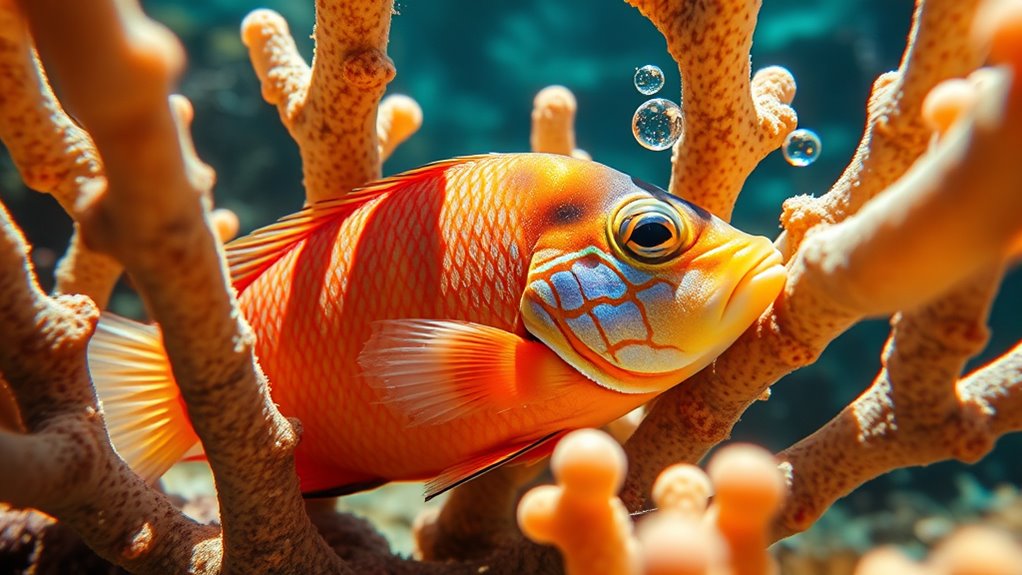
Have you ever wondered how fish sleep? It’s a common question because fish don’t have eyelids like humans, so it’s hard to tell when they’re resting. But yes, fish do sleep, even if their sleep looks different from ours. Unlike mammals and birds, fish don’t go into deep REM sleep cycles, but they do enter periods of rest that serve similar purposes. Their behavior patterns during these times show clear signs of sleep, even if it’s less obvious. When fish sleep, they often become less active, remain still or hover in one place, and reduce their responsiveness to external stimuli. Some fish float motionless near the surface or stay close to the substrate, conserving energy while staying alert enough to react to danger. These behavior patterns are essential for their survival, especially since they lack eyelids and rely heavily on other senses to detect threats.
Fish have different sleep cycles depending on their species and environment. Some are diurnal, meaning they’re active during the day and rest at night, while others are nocturnal, sleeping during daylight hours. Their sleep patterns are influenced by factors like water temperature, light availability, and predation risk. For example, reef fish often sleep in crevices or under rocks to stay hidden, whereas open-water species might rest in mid-water or near the seabed. Interestingly, some fish exhibit unihemispheric sleep, a phenomenon where one half of their brain rests while the other remains alert. This allows them to keep watch for predators even when they’re technically “sleeping.” These varied sleep cycles highlight how adaptable fish are, adjusting their rest habits to fit their needs and surroundings.
Understanding fish sleep behavior patterns helps us appreciate their complexity. Their rest isn’t just about shutting down; it’s about balancing the need to conserve energy with staying alert enough to survive. Their sleep cycles are often shorter and more fragmented than those of land animals, but they’re sufficient for maintaining health and function. Researchers continue to study fish sleep to uncover how they synchronize rest with environmental cues and how their sleep impacts their overall well-being. So, next time you see a fish floating calmly in the tank or swimming gently in the pond, remember that it’s probably resting. Their behavior patterns during these times are essential for their health and survival, even if their sleep looks very different from what we’re used to.
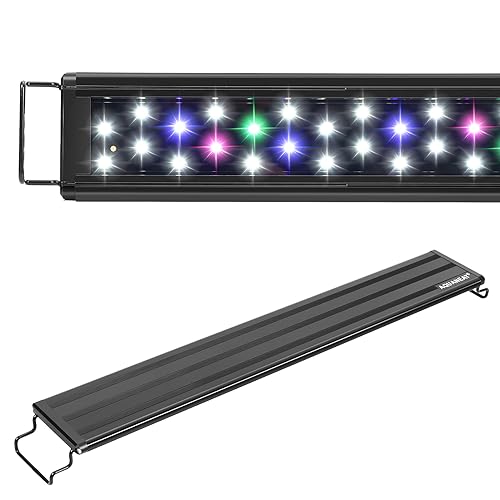
AQUANEAT LED Aquarium Light Full Spectrum for 18 Inch to 24 Inch Fish Tank Light Fresh Water
Work best on 10 gallon tanks with 20 inches long; with two extendable brackets, this light also fits…
As an affiliate, we earn on qualifying purchases.
As an affiliate, we earn on qualifying purchases.
Frequently Asked Questions
Do All Fish Sleep the Same Way?
Not all fish sleep the same way; their sleep patterns vary based on their species and environment. Some fish enter periods of rest called aquatic rest cycles, during which they remain less active and may even float or settle at the bottom. Others hide in crevices or sleep while swimming slowly. You’ll notice these differences as fish adapt their sleep habits to survive, find safety, and conserve energy in their underwater habitats.
How Do Fish Know When to Wake Up?
You can tell when fish wake up because their circadian rhythms and sleep cycles naturally signal it. These biological clocks respond to changes in light and dark, prompting fish to become active at specific times. As day turns to night, their bodies adjust, and they rest. When dawn arrives, the increase in light triggers their wake-up signals, helping them stay alert and ready for feeding or movement during their active periods.
Can Fish Sleep While They’re Moving?
You bet fish can sleep while moving—if you think about it, they’re masters of multitasking. Their sleep patterns are flexible, often involving resting periods where they drift or hover, not necessarily still. Fish don’t need to stop completely; instead, they slip into a light, restful state, even amid swimming. So, whether they’re gliding or lurking, their sleep behavior adapts, proving they’re surprisingly efficient at catching z’s on the go.
Do Fish Dream During Sleep?
You might wonder if fish dream during sleep. While it’s not definitively proven, their sleep cycles suggest they could experience dreaming behavior. Fish enter periods of restful sleep, during which their brains may process information similarly to dreaming in mammals. Although we can’t confirm fish dream like humans, their sleep patterns imply they might have some form of mental activity during these rest periods.
How Long Do Different Fish Species Sleep?
You might wonder how long different fish species sleep, and their aquatic rest cycles vary widely. Some fish, like goldfish, sleep for about 8-12 hours daily, while others, such as sharks, rest in shorter, more frequent periods. Fish sleep patterns are influenced by their environment, activity levels, and species, so their rest durations can range from a few minutes to several hours, ensuring they stay healthy and alert in their aquatic habitats.

JIH Aquarium Decorations Rock, Ceramic Shelters – Shrimp Habitat, Breeding Tube, Hiding cave, Stackable Fish Tank Decor Cave for Hiding, Betta Fish (J001+J002)
Special design for the existence of middle bottom fish, Pleco, Shrimp, Betta fish etc.
As an affiliate, we earn on qualifying purchases.
As an affiliate, we earn on qualifying purchases.
Conclusion
Just like a lighthouse guiding ships safely through the night, understanding fish sleep helps you navigate the mysteries of the ocean. When you realize that fish rest in their own unique ways, you become a curious explorer of nature’s hidden rhythms. Remember, every creature has its own way of recharging, shining bright again at dawn. So next time you see a fish settle, think of it as a sailor docking after a long voyage—ready for new adventures tomorrow.

PAIZOO Fish Tank Digital Thermometer Accurate LED Display to ±0.9°F Tank Thermometer Aquarium Temperature Measurement Suitable for Fish, Axolotl, Turtle or Aquatic
HD LED Display: PAIZOO Aquarium Thermometer adopts LED screen to display temperature, LED can provide wide viewing angle…
As an affiliate, we earn on qualifying purchases.
As an affiliate, we earn on qualifying purchases.
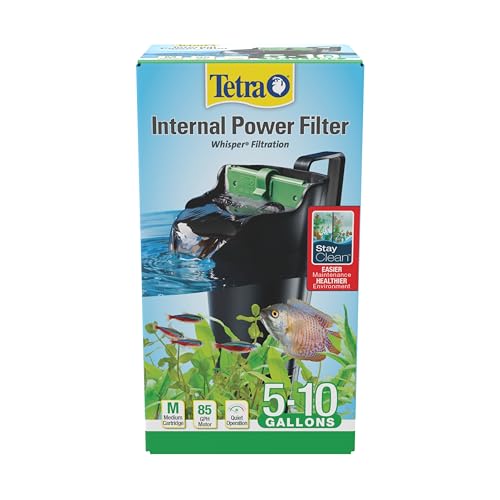
Tetra Whisper Internal Power Filter, Medium Bio-Bag Filter Cartridges, 3-Stage Filtration, 5-10 gal
INTERNAL POWER FILTER: Tetra Whisper Internal Power Filter for 5- to 10-gallon aquariums uses medium Whisper BioBag filter…
As an affiliate, we earn on qualifying purchases.
As an affiliate, we earn on qualifying purchases.