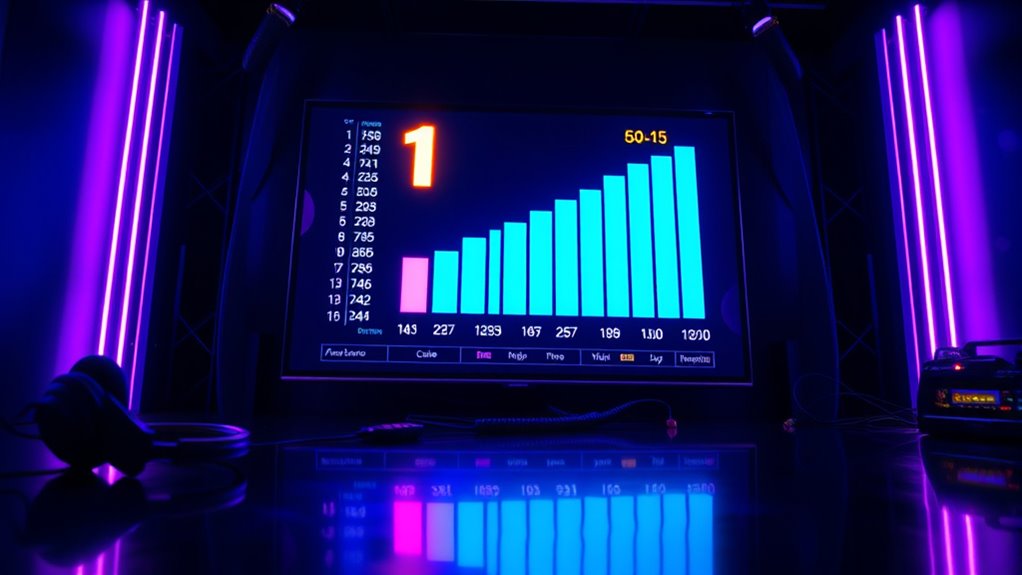

To make a song reach No. 1, streaming numbers and viral algorithms work together to track how many people are listening, sharing, and talking about it in real time. Streaming platforms count plays, unique listeners, and engagement to see how popular a song is. Viral algorithms help identify trending tracks quickly, pushing them higher on charts faster than ever. Keep going to discover how these factors shape the music industry behind the scenes.
Key Takeaways
- Viral algorithms detect sudden spikes in song mentions, plays, and shares to identify trending tracks early.
- Streaming platforms’ data, including unique listeners and repeated plays, directly influence chart rankings.
- Social media buzz and playlist placements amplify a song’s visibility, boosting its chances to reach No. 1.
- Combining streaming metrics with viral detection enables real-time updates and reflects current listener interest.
- The integration of digital engagement and algorithms creates dynamic charts that respond quickly to trending music.

Have you ever wondered how music charts determine which songs top the lists? The answer lies in a combination of viral algorithms and streaming metrics. These tools work together to analyze and rank songs based on popularity, giving you a clear picture of what’s trending in the music world. When a song goes viral, it catches fire across social media, playlists, and various streaming platforms. Viral algorithms are designed to detect these surges in attention by tracking how quickly and widely a track spreads online. They look for patterns, such as a sudden spike in plays, shares, and mentions, to decide whether a song deserves to climb the charts. This process guarantees that the most talked-about tracks get the recognition they deserve, often before traditional radio play or sales even catch up.
Streaming metrics play a crucial role in translating these viral moments into chart positions. Every listen on platforms like Spotify, Apple Music, or YouTube adds to a song’s overall streaming count. These numbers are meticulously recorded and fed into chart calculations. The more streams a song accumulates, especially over a short period, the higher it climbs the rankings. Chart compilers weigh these metrics heavily because they reflect real-time listener engagement. Unlike traditional sales, streaming offers instant feedback, allowing charts to adapt quickly to changing trends. This means that a song that rapidly gains streams can shoot to the top of the chart within days or even hours. It’s a dynamic process that captures the current pulse of music consumption.
Additionally, streaming metrics aren’t just about raw numbers. They often consider factors like unique listeners—how many individual people are streaming the song—and the duration of listens. A song that’s played repeatedly by a dedicated fanbase can outperform one with a lot of casual plays. This nuance helps guarantee that chart positions more accurately reflect genuine popularity. Viral algorithms also consider social media trends, playlist placements, and algorithmic recommendations that boost a song’s visibility. Understanding data analysis is essential for grasping how these systems identify and rank trending tracks in real time. When combined, viral algorithms and streaming metrics create a powerful system that rapidly identifies and ranks the hottest tracks in the world. As a listener, this process explains why some songs seem to explode overnight, becoming chart-topping hits in a matter of days. It’s an ever-evolving cycle where digital engagement defines musical success, making the charts more responsive and reflective of current listener interests than ever before.

96GB MP3 Player with Bluetooth 5.0 and WiFi, Music Player with Spotify, Audible, Pandora, Libby, Spotify Kids, 4" Touchscreen Android MP4 Player with HiFi Sound (Glossy Black)
- Preloaded Music Apps: Spotify, Pandora, TIDAL, YouTube Music
- Lossless HiFi Sound: HiBy Music for high-quality playback
- Built-in Audiobook Access: Audible, Libby, LibriVox preloaded
As an affiliate, we earn on qualifying purchases.
As an affiliate, we earn on qualifying purchases.
Frequently Asked Questions
How Do Different Streaming Platforms Impact Chart Rankings?
Different streaming platforms impact chart rankings through playlist curation and user demographics. You’ll notice that curated playlists boost streams from targeted audiences, increasing chances of hitting the top. Platforms with diverse user bases influence which songs become popular, as demographics shape listening habits. So, as an artist, you should consider how playlist choices and understanding your audience on each platform can help you climb the charts faster.
What Role Do Radio Plays Play in Digital Chart Calculations?
Radio plays influence digital chart calculations by boosting a song’s visibility and streaming numbers. When a track gets radio airplay, it often leads to increased playlist curation, encouraging listeners to stream it online. This interconnected effect helps a song climb the charts faster. So, radio influence remains a powerful factor, even in the digital age, shaping what gets featured on playlists and ultimately determining chart success.
How Are Remix or Alternate Versions Factored Into Streams?
Remix impact and alternate versions are typically counted separately from the original track unless they’re officially combined. If a remix or alternate version gains significant streams, it can boost the song’s overall chart performance, especially if listeners stream both versions. However, chart rules vary by platform, and some may only include streams of the original or the most popular version, influencing how remix impact affects your chart position.
Do Chart Algorithms Change Over Time? if So, How?
Yes, chart algorithms do change over time through algorithm updates and ranking adjustments. These updates refine how streams are counted and weighted, ensuring fairness and relevance. You might notice shifts in chart positions as the algorithms adapt to new streaming behaviors or industry trends. Staying aware of these changes helps you understand how your favorite tracks can climb or fall on the charts, reflecting current listening patterns more accurately.
How Are Physical Sales Integrated With Digital Streams for Rankings?
You combine physical sales and digital integration to determine chart rankings. When you buy a physical album, it’s counted alongside digital streams, with each metric weighted differently depending on the chart rules. This means your physical purchases directly boost an artist’s position, just like your digital streams. By integrating these sales, charts reflect an all-encompassing picture of an artist’s overall popularity, encouraging fans to support music through both formats.

FIFINE Studio Condenser USB Microphone Computer PC Microphone Kit with Adjustable Boom Arm Stand Shock Mount for Instruments Voice Overs Recording Podcasting YouTube Vocal Gaming Streaming-T669
- Easy USB Plug-and-Play: Connects directly to PC or laptop
- High-Quality Sound Capture: Wide frequency response and clear audio
- Durable Construction: Robust design for long-lasting use
As an affiliate, we earn on qualifying purchases.
As an affiliate, we earn on qualifying purchases.
Conclusion
Now that you know how streams turn songs into chart-toppers, you’re better equipped to understand the music world’s new rules. Remember, in this game, every stream counts, and the race to No. 1 is a marathon, not a sprint. Keep your ear to the ground, and you’ll see how artists hustle and fans rally to turn a song into a chart-topping hit. It’s a wild ride, but that’s what makes it exciting to watch.
Hal Leonard Student Keyboard Guide – Beginner Piano Note Chart and Learning Tool | Fits Behind Any 88-Key Piano | Treble and Bass Clef Reference for Lessons and Self-Teaching
As an affiliate, we earn on qualifying purchases.
As an affiliate, we earn on qualifying purchases.

MasterKey – The Finest Music Transposing Tool. Easily Transpose Notes and Chords to Any Key with No Mistakes!
- Music Theory Made Easy: Simplifies understanding of music theory
- Quick Transposing: Easily transpose music for various instruments
- Chord Analysis: Identify notes and improvise over chords
As an affiliate, we earn on qualifying purchases.
As an affiliate, we earn on qualifying purchases.