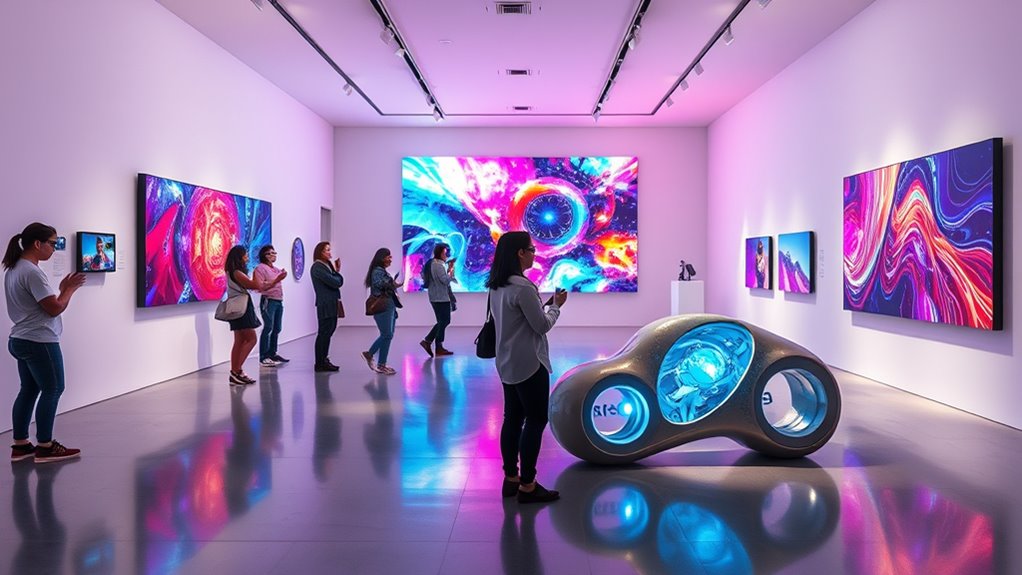

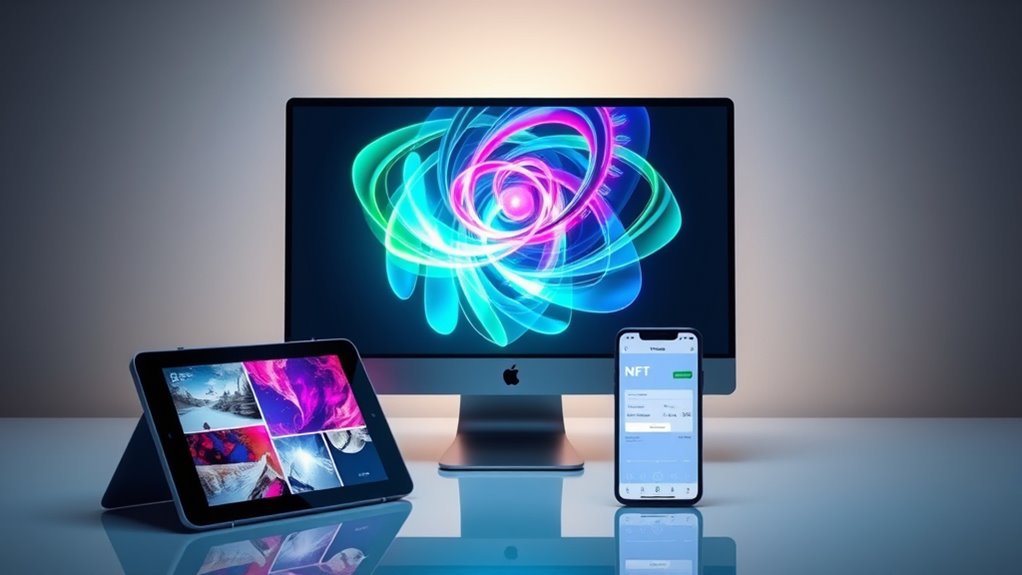
The online art market is transforming with innovations like NFTs, which let you own and trade digital assets securely, and new platforms that make discovering, buying, and selling art easier than ever. Digital auctions and virtual galleries let you explore collections from anywhere, often with immersive features like AR and VR. Artists can connect directly with audiences, expanding opportunities. Keep exploring to discover how these latest trends are shaping the future of art commerce.
Key Takeaways
- NFTs revolutionize online art ownership and provenance, enabling secure digital transactions and new revenue streams for artists.
- Digital platforms facilitate virtual auctions and galleries, expanding access and interaction within the online art market.
- Emerging platforms integrate virtual and augmented reality for immersive art experiences and virtual gallery walkthroughs.
- Direct artist-to-collector sales online reduce intermediaries, increasing transparency and democratizing art ownership.
- Future trends include AI-driven curation, virtual exhibitions, and integration of blockchain for enhanced security and provenance.
Have you ever wondered how the art world is transforming in the digital age? It’s happening fast, and the way you experience, buy, and sell art is changing dramatically. Thanks to digital auctions and virtual galleries, you now have unprecedented access to the global art market without leaving your home. Digital auctions, in particular, have become a game-changer, allowing collectors and enthusiasts to bid on artworks in real-time from anywhere in the world. These online auction platforms make it easier for you to discover new artists, view high-resolution images, and participate in competitive bidding without the constraints of traditional auction houses. They also introduce transparency and immediacy, so you can see a live update of bids and know exactly where you stand. Virtual galleries further amplify this shift by providing immersive online spaces where you can explore collections from major museums, private collections, and emerging artists. Instead of visiting physical locations, you can now browse through beautifully curated digital exhibitions, zoom into artworks for detailed inspection, and learn about the pieces through interactive descriptions. This democratizes art access, meaning you no longer need to travel or be part of exclusive circles to enjoy and acquire fine art. The rise of these digital platforms has also sparked innovative ways for artists to showcase their work directly to audiences. With virtual galleries, creators can reach a global viewer base, build their brand, and sell without traditional intermediaries. The convenience of online art sales extends to NFTs, which have revolutionized digital ownership, but digital auctions and virtual galleries remain central to the traditional art market’s online evolution. They enable you to connect with art in an engaging, dynamic way, making the experience more accessible and immediate. As the digital landscape continues to evolve, expect more integrations of virtual reality, augmented reality, and artificial intelligence to personalize your art journey even further. These advances could allow you to virtually walk through a gallery, examine artworks from different angles, or even try pieces in your own space before making a purchase. The blend of technology and art is opening new avenues for collectors, investors, and enthusiasts alike, breaking down barriers that once limited access. Whether you’re bidding in digital auctions or exploring virtual galleries, the online art market is shaping a future where art is more accessible, interactive, and connected than ever before. This transformation isn’t just about convenience; it’s about redefining how you engage with art at its core.
As an affiliate, we earn on qualifying purchases.
Frequently Asked Questions
How Do Online Art Platforms Verify Artwork Authenticity?
Online art platforms verify artwork authenticity by using digital signatures that confirm the creator’s identity. They also employ provenance tracking to record the artwork’s history, ensuring its origin and ownership are transparent. When you upload or buy art, these tools help prevent forgery and fraud, giving you confidence in the piece’s legitimacy. Digital signatures and provenance tracking work together to create a trustworthy marketplace for digital art.
What Are the Environmental Impacts of NFT Art Transactions?
You should know that NFT art transactions can considerably impact the environment by increasing your carbon footprint. Many platforms are adopting sustainable practices like using energy-efficient blockchain technologies or offsetting emissions. By choosing marketplaces that prioritize eco-friendly methods, you help reduce environmental harm. Your awareness and support for sustainable practices can make a difference in lowering the overall ecological impact of digital art trading.
How Do Digital Art Royalties Work on New Platforms?
On new platforms, digital art royalties work through digital watermarking, which tracks ownership and sales. When you sell or resell a piece, the platform automatically distributes royalties to the creator based on preset agreements. This system guarantees transparent royalty distribution, so you get paid each time your art changes hands. Digital watermarking helps verify authenticity and rights, making sure you’re fairly compensated for your work across various transactions.
Can Traditional Artists Easily Transition to Online Marketplaces?
You can definitely make the switch—it’s true that “fortune favors the bold.” With some artistic adaptation and a digital skillset, traditional artists find online marketplaces accessible. Start by learning platform basics, showcase your work digitally, and engage with online communities. Embracing these new tools allows you to reach wider audiences and thrive in the digital art world, making your progression smoother and more rewarding.
What Legal Protections Exist for Online Art Buyers and Sellers?
You’re protected by laws addressing digital privacy and intellectual property, which help guarantee your online transactions are secure. Digital privacy laws safeguard your personal data, while intellectual property rights protect artists’ work from unauthorized use. When buying or selling art online, it’s important to verify platform policies and consider digital rights management. These protections help you feel confident in your transactions, knowing your rights and privacy are prioritized.
As an affiliate, we earn on qualifying purchases.
Conclusion
You’ve seen how the online art market is transforming, from NFTs to innovative platforms. One staggering stat reveals that digital art sales surged by over 700% in 2021 alone. This rapid growth shows that the art world is more accessible and dynamic than ever before. Embrace these changes, and you’ll discover new opportunities to connect, buy, and sell art in ways you never imagined. The future of art is truly happening online—are you ready to be a part of it?
As an affiliate, we earn on qualifying purchases.
As an affiliate, we earn on qualifying purchases.