
AI NPCs are making your game experiences more dynamic and immersive by becoming smarter and more responsive. They adapt to your actions, remember past interactions, and react realistically, which creates a sense of genuine conversation and evolving worlds. These advanced characters open new design choices for developers, leading to richer stories and more engaging gameplay. If you want to see how these innovations are shaping the future of gaming, keep exploring the possibilities.
Key Takeaways
- AI NPCs utilize procedural generation to create unpredictable, evolving behaviors that enhance game realism.
- They adapt responses based on player interactions, fostering more believable and dynamic character relationships.
- Incorporating advanced AI techniques allows NPCs to exhibit complex emotions, motivations, and personalized reactions.
- New design choices focus on creating emergent, player-driven stories rather than fixed scripts.
- Smarter NPCs deepen immersion, offering unique, meaningful experiences and strategic engagement for players.
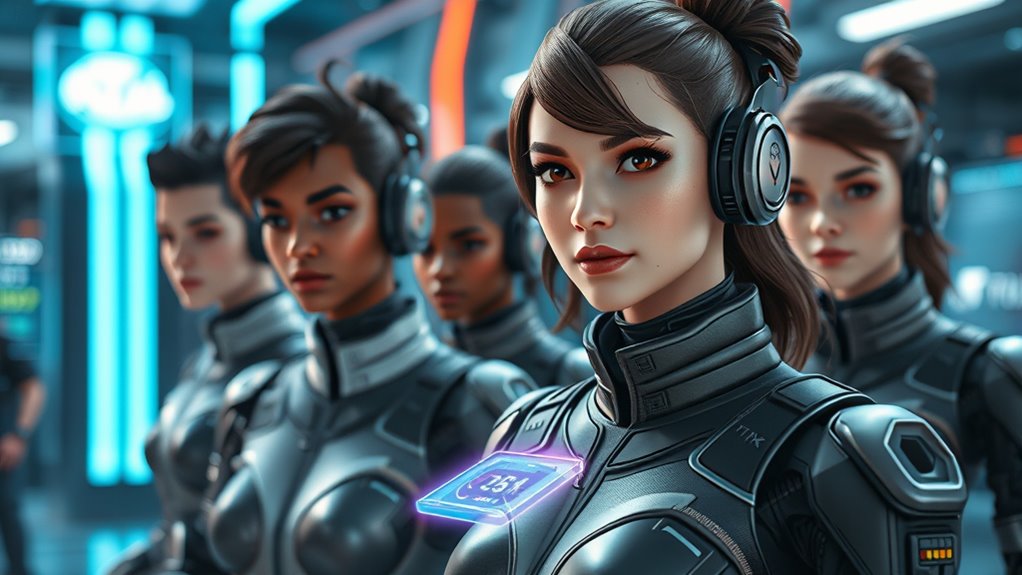
Have you ever wondered how non-player characters (NPCs) in video games are becoming smarter and more lifelike? The secret lies in advancements like procedural generation, which allows developers to create dynamic, unpredictable environments and behaviors that keep players engaged. Instead of static, scripted interactions, NPCs now adapt based on your actions, making each encounter feel unique. Procedural generation enables game worlds and character behaviors to evolve in real-time, so NPCs don’t just follow a fixed script—they respond intelligently to your decisions, creating a more immersive experience. This innovation directly boosts player engagement, as you’re not just passively observing but actively influencing the game world. When NPCs react with nuanced behaviors, it feels more like interacting with true characters rather than playing through a predetermined sequence.
Procedural generation makes NPCs smarter and more lifelike, creating dynamic, immersive game worlds that respond to your actions.
As you navigate these smarter NPCs, you notice that their responses aren’t just random or scripted; they’re driven by complex algorithms that analyze your choices and adapt accordingly. This means your interactions matter more, and the game responds in a way that feels organic. For example, an NPC might remember your previous actions and adjust their attitude or dialogue, creating a sense of continuity and realism. Such intelligent behavior encourages you to explore different strategies, fostering deeper engagement and investment in the game. It’s no longer enough to follow a set path—you’re encouraged to experiment, knowing the NPCs will react in believable ways that keep the experience fresh and challenging.
Design choices now revolve around leveraging this technology to craft richer narratives and more believable characters. Developers can design NPCs that exhibit a range of emotions, motivations, and reactions, all driven by AI algorithms that learn from your gameplay style. This approach opens up new storytelling possibilities, where the game adapts to your preferences, making each playthrough unique. Additionally, integrating advanced AI techniques enhances the complexity and realism of NPC interactions, leading to even more immersive worlds. The integration of procedural generation and AI-driven behavior shifts the focus from linear storytelling to emergent, player-driven experiences. It’s a game design revolution that puts you at the center, ensuring that every decision you make influences the world around you, and every NPC interaction feels authentic and meaningful.
In essence, smarter NPCs powered by procedural generation not only elevate the technical quality of games but also deepen your connection to the virtual world. You’re no longer just a player following a script—you’re an active participant in a living, breathing universe that reacts and evolves with you. This blend of AI innovation and creative design is transforming how games are played and experienced, promising more engaging, personalized adventures ahead.
Top picks for "npcs smarter character"
Open Amazon search results for this keyword.
As an affiliate, we earn on qualifying purchases.
Frequently Asked Questions
How Do AI NPCS Adapt to Player Actions Over Time?
You notice AI NPCs adapt to your actions by analyzing your behavior, making adjustments in real-time. They learn from your choices, altering their responses and strategies to create a more engaging experience. This enables adaptive storytelling, where the game evolves based on your interactions. By responding dynamically, these NPCs keep the gameplay fresh, challenging, and personalized, ensuring you stay immersed and invested in the unfolding narrative.
What Ethical Considerations Arise From Realistic AI NPC Behaviors?
Think of AI NPCs as mirrors reflecting your actions, but with greater depth, raising ethical questions. You might worry about privacy concerns as these characters remember and respond to your behavior, feeling almost real. Emotional manipulation becomes a risk, as their realistic reactions could sway your feelings or decisions. You must consider if creating such immersive experiences respects your autonomy and safeguards your emotional well-being.
Can AI NPCS Learn From Multiple Players Simultaneously?
Yes, AI NPCs can learn from multiple players simultaneously through multi-player learning and collective adaptation. You’ll see NPCs that adjust their behaviors based on interactions with different players, creating a more dynamic and responsive gaming experience. This approach allows NPCs to develop nuanced strategies and personalities, enhancing immersion. However, it also raises concerns about maintaining balance, fairness, and ensuring that collective adaptation doesn’t lead to unpredictable or unfair gameplay outcomes.
How Do Developers Balance AI Complexity With Game Performance?
Did you know that 70% of gamers say immersive AI enhances their experience? To balance AI complexity with game performance, developers optimize procedural generation and streamline algorithms, ensuring smooth gameplay. They focus on creating smarter NPCs that adapt to players without overloading systems. This approach maintains player immersion, making interactions feel natural while keeping the game running efficiently, so you stay engaged without lag or interruptions.
Are There Differences in AI NPC Design Across Gaming Genres?
You’ll notice AI NPC design varies across genres to enhance gameplay. In open-world games, developers use procedural generation to create diverse environments and characters, boosting replayability. In story-driven games, they focus on narrative depth, crafting NPCs with complex dialogues and reactions. These differences make certain the AI fits the genre’s goals, whether emphasizing exploration or storytelling, making your experience more immersive and engaging.
Conclusion
So, as you marvel at these smarter AI NPCs, just remember—you’re designing characters that might outthink you someday. It’s ironic how the more realistic they become, the more you realize they could outsmart your plans. Maybe one day, your perfect game will have a protagonist more clever than its creator. But hey, at least you’ll have the satisfaction of knowing your AI characters are finally smarter than your old, predictable NPCs.