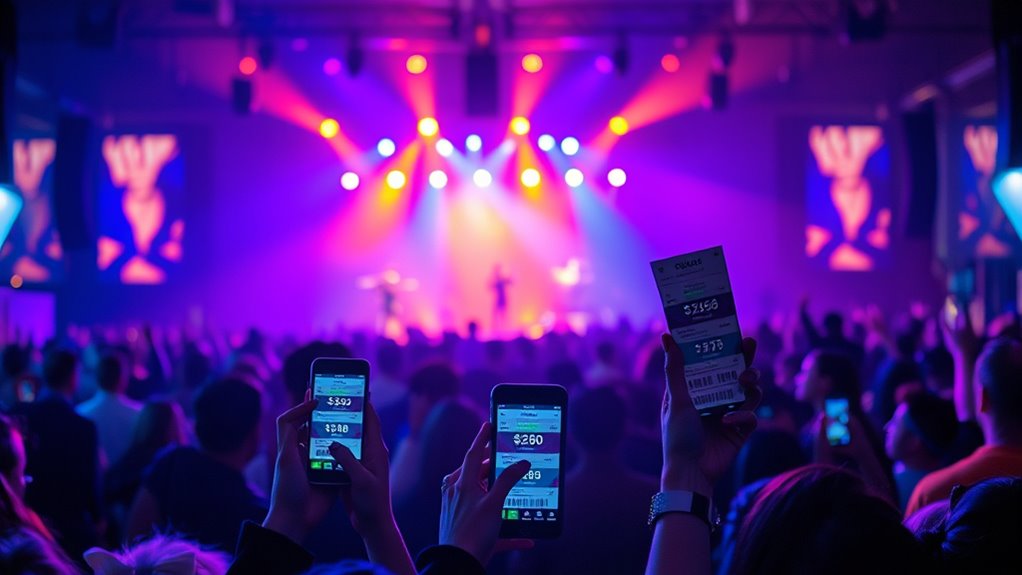

Dynamic pricing in concerts adjusts ticket costs in real time based on demand, helping you and organizers maximize revenue and reduce unsold seats. This approach responds to resale activity, often charging higher prices during peak interest, while keeping earlier tickets more affordable. By balancing supply and demand, it benefits artists, promoters, and fans alike. If you’re curious how this system benefits everyone and shapes ticket sales, there’s more to explore below.
Key Takeaways
- Dynamic pricing adjusts ticket costs in real-time based on demand, maximizing revenue and minimizing unsold seats.
- It helps balance affordability for fans with profitability for promoters and artists.
- Real-time data analysis enables smarter pricing strategies during high-demand periods.
- Proper implementation can reduce resale scalping and control secondary market activities.
- Dynamic pricing aligns concert revenue with market conditions, enhancing overall economic efficiency.
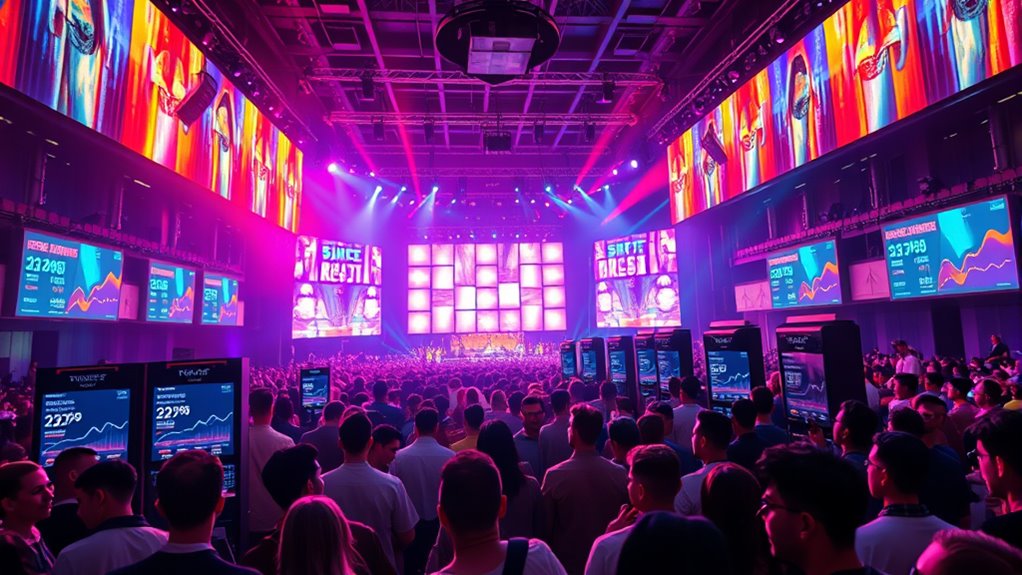
Have you ever wondered what goes into the pricing and profitability of a concert? It’s more complex than just setting a ticket price and hoping for the best. Behind the scenes, multiple factors influence how much a concert earns and how those earnings are distributed. One key element you might not consider is ticket resale. When tickets sell out quickly, some buyers turn to secondary markets to buy or sell tickets at higher prices. This resale activity can profoundly impact the overall revenue for the event. While resellers often profit from flipping tickets at a premium, the original promoter or artist might not see that extra cash. In fact, ticket resale can sometimes lead to a loss of potential revenue for the primary seller, especially if tickets end up in the hands of scalpers who charge exorbitant prices. This creates a tricky situation where the initial ticket price might not reflect the true market value, making it harder for artists and promoters to predict earnings with certainty. On the flip side, a well-managed resale system can also boost overall revenue by creating a sense of scarcity and demand, encouraging fans to buy early and at higher prices. Understanding how ticket resale impacts artist revenue is essential for event organizers, as it influences decisions about ticketing strategies, pricing tiers, and even legal measures to curb scalping. Additionally, technological innovations like dynamic pricing and smart ticketing systems are increasingly used to better control resale and optimize revenue.
Beyond resale, artist revenue itself is a major factor in concert economics. Artists typically earn a percentage of ticket sales or a fixed fee, but the actual payout depends on several variables. Larger acts with strong fan bases can command higher guarantees, which means more upfront costs for promoters. To cover these costs, ticket prices often need to be set at a level that balances affordability with profitability. If prices are too low, the artist may not generate enough revenue to justify the event; too high, and you risk deterring potential attendees. Dynamic pricing models have been introduced to address this challenge. Instead of static prices, ticket costs fluctuate based on demand, ensuring that revenue aligns more closely with market conditions. This approach benefits artists by maximizing their earnings when demand is high, and it allows promoters to better manage their risk. It also helps prevent the pitfalls of flat pricing, which can lead to unsold seats or missed revenue opportunities.
In essence, concert pricing isn’t just about setting a sticker price on a ticket. It’s a strategic process that considers resale dynamics, artist revenue models, market demand, and pricing strategies, all working together to maximize profitability and fairness. When these elements are balanced correctly, everyone benefits—from fans getting fair prices to artists earning the revenue they deserve, and promoters maximizing their profitability. Understanding these intricacies helps you appreciate why ticket prices can fluctuate and why some concerts seem to sell out instantly at different prices. It’s a complex dance of supply, demand, and revenue sharing, all working together to make live music financially viable for everyone involved.
Top picks for "concert economic dynamic"
Open Amazon search results for this keyword.
As an affiliate, we earn on qualifying purchases.
Frequently Asked Questions
How Do Artists Influence Ticket Pricing Strategies?
You influence ticket pricing strategies through your fan engagement and artist branding efforts. When you connect deeply with your fans, they’re more willing to pay premium prices, encouraging dynamic pricing. Strong branding boosts your desirability, allowing you to set higher ticket prices. By understanding your audience’s preferences and fostering loyalty, you help shape pricing models that maximize revenue while maintaining a positive fan experience.
What Role Do Secondary Markets Play in Concert Pricing?
Think of secondary markets as a wild river shaping the landscape of ticket prices. Resale markets and ticket scalping influence concert pricing by creating a ripple effect, often driving prices higher or lower based on demand. When tickets sell out quickly, scalpers step in, and resale prices can skyrocket. This dynamic impacts the overall market, nudging original prices and affecting your chances of snagging affordable tickets.
How Does Weather Impact Ticket Demand and Pricing?
Weather impact profoundly influences ticket demand and pricing. If the forecast predicts bad weather, demand tends to drop, leading to lower prices as people hesitate to attend. Conversely, good weather boosts demand fluctuations, allowing you to see higher prices and more ticket sales. You should monitor weather forecasts closely, as they directly affect your decision-making, allowing you to optimize pricing strategies based on expected demand shifts caused by weather conditions.
Are There Ethical Concerns With Dynamic Pricing?
Dynamic pricing can feel like a double-edged sword, cutting both ways for fairness. Yes, there are ethical concerns, especially around price transparency and consumer fairness. When prices change rapidly, fans might feel blindsided or exploited, like caught in a pricing storm. To keep trust, sellers should clearly communicate how prices fluctuate, ensuring fans understand the system and feel treated fairly, even when prices shift quickly.
How Do Loyalty Programs Affect Pricing Models?
Loyalty programs influence pricing models by introducing ticket tiering and promotional discounts for repeat customers. You benefit from exclusive access and lower prices, encouraging loyalty. This creates a tiered system where loyal fans pay less, while new buyers may face higher prices. Such strategies help optimize revenue and foster long-term relationships, but they also raise questions about fairness and accessibility for all fans.
Conclusion
Now that you see how dynamic pricing turns ticket buying into a high-stakes game, you’re practically a concert economics wizard. It’s like the prices are on a roller coaster, soaring and plunging faster than you can blink, all in real-time! So next time you’re hunting for tickets, remember—you’re not just buying a seat; you’re stepping into a world where prices dance wildly, making every concert experience feel like a VIP adventure.