

Implementing AI-powered testing combined with continuous verification pipelines in the cloud allows you to deliver frequent game updates without crunch. Automated testing predicts issues early, reducing manual effort and fixing time. Cloud deployment speeds up delivery, scales smoothly, and supports multiple testing environments. As a result, you can release stable updates, minimize downtime, and keep players engaged. Keep exploring how these innovations can streamline your development process and keep your game fresh and reliable.
Key Takeaways
- Implement automated AI-powered testing to detect issues early and reduce last-minute fixes.
- Use continuous integration pipelines to streamline updates and ensure game stability.
- Deploy updates via cloud infrastructure for rapid, scalable delivery without disrupting gameplay.
- Automate ongoing verification processes to maintain quality and minimize manual intervention.
- Leverage cloud and AI tools to enable frequent releases, avoiding crunch and enhancing player experience.
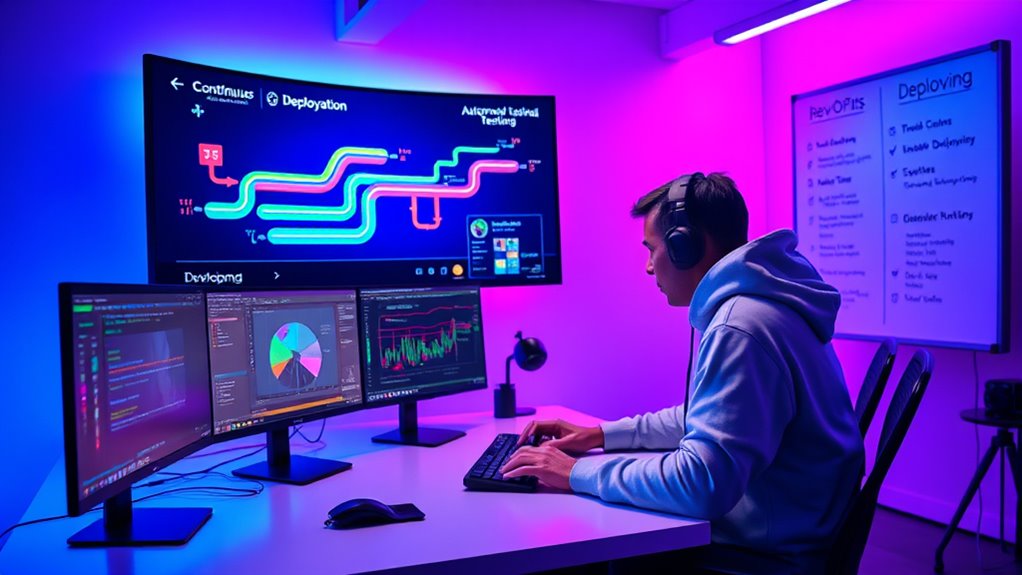
Have you ever wondered how modern games deliver seamless updates, quick bug fixes, and reliable multiplayer experiences? The secret lies in the advanced DevOps practices that power the gaming industry today. At the core, AI powered testing plays a pivotal role, allowing developers to automatically identify issues before they reach players. By analyzing vast amounts of gameplay data, AI algorithms can predict potential failures, optimize testing coverage, and reduce the time it takes to find and fix bugs. This not only accelerates the development cycle but also guarantees higher quality releases. Additionally, implementing automated testing pipelines enables continuous verification of game stability and performance, further streamlining the development process. Coupled with AI-driven insights, cloud deployment enables teams to push updates faster and more efficiently than ever. Instead of waiting for manual testing or lengthy build processes, you can deploy new content, patches, and hotfixes directly to the cloud, making updates almost instant for players across the globe.
With cloud deployment, you don’t need to worry about the limitations of physical infrastructure. It provides scalability, so as your player base grows or as new features are added, your deployment environment can expand seamlessly. This flexibility means that you can run multiple testing environments simultaneously, isolating issues without disrupting live servers. It also simplifies rollback procedures—if a problem slips through, you can revert to previous versions quickly, minimizing downtime and player frustration. These practices are vital for maintaining a smooth gaming experience, especially when updates are frequent and expectations for reliability are high.
The combination of AI powered testing and cloud deployment transforms how you manage game development and maintenance. Instead of reactive fixes after players encounter bugs, you proactively identify and resolve issues during development. Automated testing pipelines, enhanced by AI, run continuously in the background, catching errors early and providing feedback to developers in real time. Meanwhile, cloud deployment ensures that these updates are delivered smoothly and reliably, reducing the risk of crashes or data loss. This approach allows you to maintain a steady flow of content, keeping players engaged without the dreaded crunch periods often associated with traditional development.
Ultimately, leveraging AI powered testing and cloud deployment enhances your ability to deliver high-quality, up-to-date games without the burnout and stress of last-minute crunches. It creates a more sustainable development environment where innovation thrives, and players enjoy consistent, bug-free experiences. By integrating these modern DevOps practices, you can focus on crafting great games while guaranteeing your updates are seamless, reliable, and timely.

GODOT 4 NEXT-GEN GAME DEVELOPMENT: AI-POWERED TOOLS, MULTIPLAYER WORLDS & IMMERSIVE XR DESIGN
As an affiliate, we earn on qualifying purchases.
As an affiliate, we earn on qualifying purchases.
Frequently Asked Questions
How Does Devops Improve Game Stability During Updates?
DevOps improves game stability during updates by streamlining game patching and automating deployment processes. You can quickly roll out updates, fix bugs, and optimize performance without causing downtime. By utilizing server scaling, you guarantee your infrastructure adapts to player demand, reducing crashes and lag. This proactive approach minimizes disruptions, keeps players satisfied, and maintains a stable gaming experience even during frequent updates.
What Tools Are Best for Automating Game Deployment?
You should consider automation tools like Jenkins, GitLab CI, and Azure DevOps, which streamline your deployment pipelines. These tools simplify repetitive tasks, reduce errors, and speed up game releases, allowing you to focus on quality and innovation. By leveraging reliable deployment pipelines, you guarantee smooth updates that keep players engaged without the stress of last-minute crunch. Embracing these solutions helps you maintain a healthy development rhythm and deliver consistent experiences.
How Do Teams Handle Rollback in Continuous Game Updates?
You handle rollbacks in continuous game updates by implementing solid rollback strategies and leveraging version control systems. When an update causes issues, you quickly revert to a stable version using automated deployment tools integrated with version control. This minimizes downtime and user disruption. Regularly testing rollback procedures guarantees you’re prepared for unexpected problems, allowing your team to maintain a smooth player experience without sacrificing agility or stability.
What Challenges Exist in Integrating Devops With Game Development Pipelines?
You face challenges integrating DevOps with game development pipelines, especially around version control and collaboration workflows. Managing large assets and frequent updates can cause conflicts and slowdowns. Ensuring seamless teamwork requires robust tools and clear protocols. Automating builds and testing helps, but aligning these processes with creative workflows remains tricky. Continuous communication and flexible systems are essential to overcome these hurdles and deliver smooth, ongoing game updates.
How Can Devops Reduce Player Downtime During Updates?
You think updates mean long downtime? Think again. With DevOps, you can keep players engaged by enabling server scalability, so updates roll out smoothly without interruption. Integrate player feedback in real-time, ensuring fixes and improvements happen seamlessly. This approach minimizes downtime, making players wonder if the game ever paused. You’re offering continuous updates without the usual frustration—keeping everyone happy and the game running flawlessly.

MindWare A Daily Cloud Family Game – Fun Drawing & Caption Card Game for Kids, Teens & Adults – Family Game Night, Boosts Creativity & Storytelling – Ages 8+, 3-6 Players, 25-Minute Gameplay
Hilarious Family Fun: A Daily Cloud is a laugh-out-loud card game that turns simple cloud images into creative…
As an affiliate, we earn on qualifying purchases.
As an affiliate, we earn on qualifying purchases.
Conclusion
By adopting DevOps for games, you can deliver continuous updates seamlessly, avoiding crunch and boosting player satisfaction. Imagine a game studio that implements automated testing and deployment pipelines, releasing regular content without overworking their team. This approach keeps your game fresh and your team healthy. Embrace DevOps, and you’ll find that smooth, ongoing updates become your new standard—delivering better experiences for players and a sustainable workflow for your team.
![MixPad Free Multitrack Recording Studio and Music Mixing Software [Download]](https://m.media-amazon.com/images/I/71ltIxIuz1L._SL500_.jpg)
MixPad Free Multitrack Recording Studio and Music Mixing Software [Download]
Create a mix using audio, music and voice tracks and recordings.
As an affiliate, we earn on qualifying purchases.
As an affiliate, we earn on qualifying purchases.

THE GAME AUDIO PIPELINE WITH REAPER: INTEGRATING UNITY, WWISE, AND FMOD FOR PROFESSIONAL SOUND DESIGN, MIDDLEWARE WORKFLOW, AND AUTOMATED IMPLEMENTATION
As an affiliate, we earn on qualifying purchases.
As an affiliate, we earn on qualifying purchases.