
Airplanes fly by using their wings to generate lift. The wing shape is designed so that air moves faster over the top, lowering the pressure there, while the slower air underneath keeps pressure higher. The engines provide thrust to accelerate the plane to the right speed so this lift can overcome gravity. If you want to understand how everything works together to keep the plane in the sky, keep exploring more details.
Key Takeaways
- Airplane wings are shaped as airfoils, directing airflow to create pressure differences that generate lift.
- Faster airflow over the top of the wing reduces pressure, helping the plane rise.
- Engines produce thrust, increasing speed to enhance airflow and lift.
- Sufficient thrust and proper wing shape work together to keep the plane airborne.
- The balance of airflow, pressure, and engine power makes controlled, sustained flight possible.
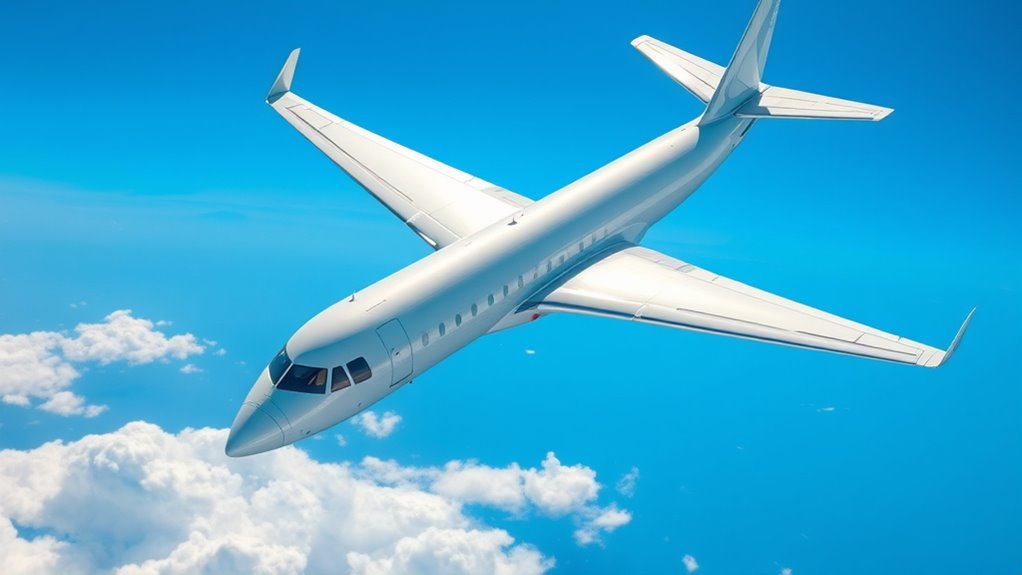
Have you ever wondered how airplanes stay in the sky? It all comes down to a combination of forces working together, but a good starting point is understanding how the shape of the wings, called the airfoil design, plays a pivotal role. An airfoil is specifically shaped to manipulate air as it flows over and under the wing. When the airplane moves forward, the airfoil design causes air to move faster over the top surface and slower underneath. This difference creates lower pressure on top and higher pressure below, generating lift that keeps the plane airborne. The shape isn’t random; engineers carefully craft airfoil designs to maximize lift while maintaining stability and efficiency.
Airfoil shape manipulates airflow to generate lift and keep planes flying smoothly.
But lift isn’t the only factor that keeps an airplane in the sky. Thrust generation is equally essential. Thrust is the force produced by the airplane’s engines that propels it forward. Without sufficient thrust, the plane can’t gain enough speed to generate the necessary lift. Think of thrust as the engine’s way of pushing the airplane through the air, overcoming other forces like drag—air resistance that slows the plane down. When you accelerate on the runway, your engines are generating thrust that pushes you forward. As your speed increases, the air moves faster over the wings, and the airfoil design ensures this movement translates into lift. Once enough speed is reached, lift surpasses gravity, and the plane begins to ascend.
The interplay between airfoil design and thrust generation is what makes flight possible. The engine’s thrust must be strong enough to reach the required speed for lift to develop. A well-designed airfoil then efficiently converts the airflow into lift, allowing the plane to rise and stay steady in the sky. Think of thrust as the push that gets the airplane moving fast enough, and the airfoil shape as the clever design that turns that speed into upward lift. Both are essential; without thrust, your plane won’t reach the necessary speed, and without a good airfoil, even high speed won’t produce enough lift for sustained flight.
Understanding these concepts helps you see how critical engineering is in aviation. Every detail, from the shape of the wings to the power of the engines, works harmoniously to achieve flight. So next time you see a plane take off or soar through the sky, remember that it’s a perfect balance of airfoil design and thrust generation that keeps it flying smoothly. These elements combine seamlessly, turning the marvel of flight into a daily reality.
Frequently Asked Questions
How Do Pilots Control Airplane Altitude During Flight?
You control the airplane’s altitude by making altitude adjustments using your pilot instruments. When you want to climb, you increase the pitch angle and adjust the throttle to gain altitude. To descend, you lower the pitch and reduce throttle. Your instruments help you monitor your altitude precisely, ensuring you stay at your desired height. This active control keeps your flight smooth and safe throughout the journey.
What Materials Are Used to Build Airplane Wings?
You might think airplane wings are made of simple metal, but they often combine lightweight composite materials like carbon fiber for strength and flexibility. These materials enhance wing aerodynamics, reducing weight while maintaining durability. The blend of composites and traditional aluminum helps wings withstand pressure and turbulence, making flights smoother and safer. By choosing advanced materials, engineers optimize performance, ensuring your journey is comfortable and efficient.
How Do Weather Conditions Affect Airplane Lift?
Weather conditions can markedly impact your airplane’s lift by causing air pressure variations and wind impact. When air pressure drops, there’s less support for the wings, reducing lift. Strong winds or turbulence can disrupt your aircraft’s stability and airflow over the wings, making control more challenging. You should always pay attention to weather reports, as these factors can influence your flight safety and comfort by affecting how well your plane stays aloft.
Why Do Airplanes Sometimes Experience Turbulence?
Like a boat riding choppy waters, your airplane hits turbulence when it encounters uneven air currents. You’re often flying through clear air, where invisible jet streams whirl at different speeds and directions. These sudden shifts cause the plane to shake or bounce. Just as sailors adjust to changing seas, pilots navigate turbulence by changing altitude or route, ensuring your journey stays as smooth as possible despite nature’s unpredictable mood swings.
How Is Airplane Lift Affected at Different Speeds?
As your airplane’s airspeed varies, so does the lift it generates. Increasing your airspeed boosts lift, helping you stay aloft, while decreasing airspeed reduces lift, risking a stall. The wing angle, or angle of attack, also plays an essential role; a higher angle increases lift but can lead to stalls if too steep. So, maintaining proper airspeed and wing angle is critical for steady, safe flight.
Conclusion
Just like Icarus once soared toward the sun, understanding lift helps you grasp how airplanes defy gravity. With the right wings and clever design, you can now see how planes stay afloat, gliding smoothly through the sky. It’s a blend of science and ingenuity, turning dreams of flight into reality. So, next time you take off, remember you’re part of a remarkable journey—flying high, just like the mythic wings of old.