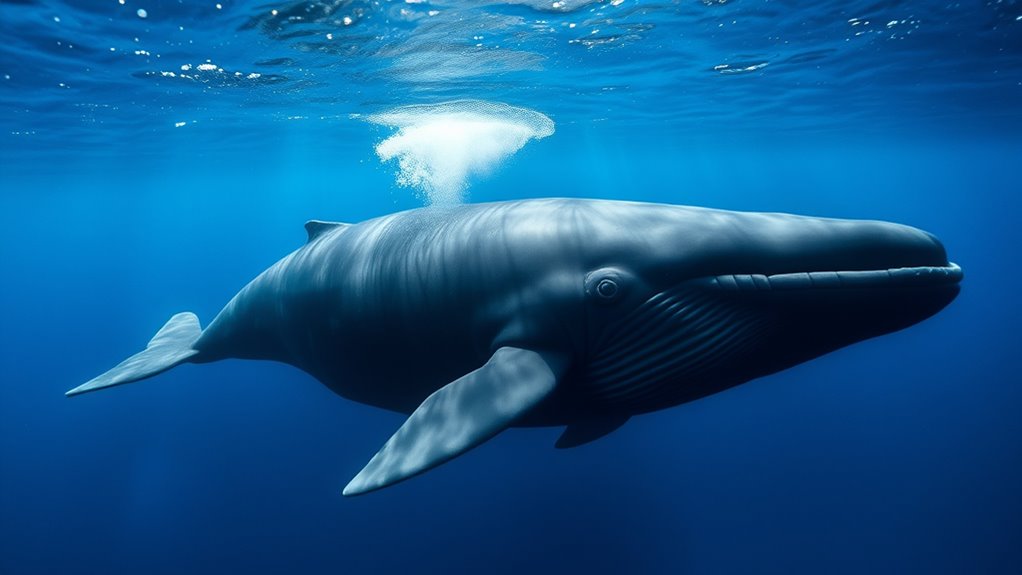

Whales sleep without drowning by using a special method called unihemispheric sleep, where one half of their brain stays active to control breathing, while the other rests. They surface regularly to breathe consciously and keep their blowholes clear. During sleep, their breathing slows but remains rhythmic, allowing them to rest safely underwater. This remarkable adaptation helps them balance rest and respiration, and if you want to discover more fascinating details, there’s plenty more to explore.
Key Takeaways
- Whales sleep with one brain hemisphere at a time, maintaining consciousness to control breathing and surface for air.
- They rest in short, frequent periods called logging, avoiding long unalerted sleep.
- During sleep, whales slow their breathing rhythm to conserve oxygen while remaining semi-aware.
- They voluntarily surface to breathe before and after dives, never losing conscious control of their respiration.
- Their ability to balance sleep and breathing prevents drowning while allowing rest in their aquatic environment.
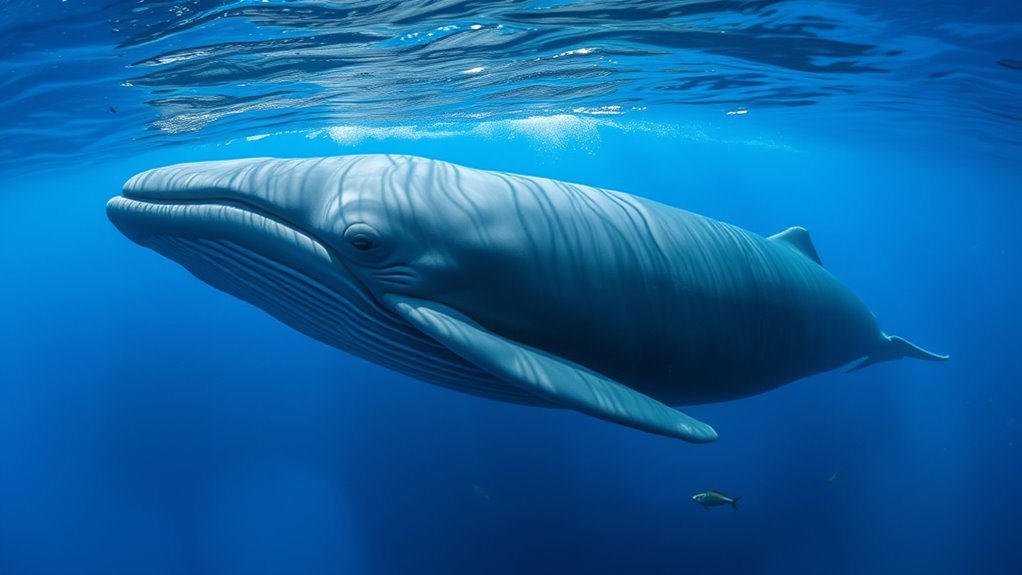
Whales sleep in a way that’s quite different from most land mammals. Instead of long, uninterrupted periods of rest, they employ a unique method that allows them to stay afloat and alert in their aquatic environment. This adaptation is essential because, unlike land animals, whales must surface regularly to breathe. Their ability to rest while keeping their breathing patterns under control is a marvel of evolution. When you observe a whale sleeping, you might notice that it doesn’t drift off into deep, continuous sleep like a human. Instead, it engages in a form of rest called unihemispheric sleep, where one half of its brain remains active while the other half rests. This process enables the whale to surface for air without fully waking up, which is vital considering their need to breathe consciously.
Whales rest with one brain hemisphere active, enabling conscious breathing and alertness underwater.
A key aspect of how whales sleep involves their dive duration, which plays a significant role in their rest cycles. Unlike humans, whales can hold their breath for extended periods—sometimes over 15 minutes—depending on the species and activity. During these dives, their heart rate slows down considerably, conserving oxygen and allowing them to remain submerged longer. When they surface, they take quick, forceful breaths before diving again. This cycle of diving and surfacing creates a pattern that influences their sleep behavior. Sometimes, whales rest during short surface intervals, known as logging, where they drift just below the water’s surface. These resting periods are brief but frequent, allowing the whale to balance breathing with rest.
Their breathing patterns are surprisingly flexible, which is essential for their sleep cycles. Unlike humans, who breathe involuntarily, whales consciously control their breathing. This means they can choose when to surface for air without disrupting their rest. When they’re asleep, they often breathe in a slow, rhythmic pattern that helps conserve oxygen. As they prepare for a dive, they exhale forcefully to clear their blowholes, then hold their breath during the dive itself. Once the dive ends, they surface to breathe again, often taking several quick breaths before descending once more. This pattern ensures they don’t drown while resting and keeps them oxygenated throughout their sleep periods.
In essence, whales have mastered a delicate balance between rest and respiration, allowing them to sleep without drowning. Their ability to control dive duration and breathing patterns enables them to stay safe, alert, and well-rested in their vast underwater world. Understanding these adaptations reveals just how extraordinary these creatures are, constantly adjusting their sleep habits to fit their environment.
Frequently Asked Questions
Do Whales Ever Sleep While Swimming?
Yes, whales do sleep while swimming. Their unique whale sleep mechanisms involve unihemispheric sleep, where one brain hemisphere rests while the other stays alert. This allows them to breathe consciously and stay aware of their surroundings. During this time, they might experience aquatic dreaming, even in a semi-conscious state. You’ll observe whales surfacing periodically, demonstrating how they balance rest with essential activities in their aquatic environment.
How Long Can Whales Stay Awake Without Sleeping?
You can stay awake for several days, but whales typically stick to their unique whale sleep cycles, which involve short, alternating periods of rest. As cetacean rest patterns, they don’t need continuous sleep like humans. Instead, they often rest in cycles of about 10-15 minutes, allowing them to stay alert for breathing and navigation. This adaptive sleep behavior helps them avoid drowning while getting the rest they need.
Do Different Whale Species Sleep Differently?
Different whale species do sleep differently. You’ll find some whales, like dolphins, engage in unihemispheric sleep, where one brain hemisphere rests while the other stays alert, allowing whale dreaming without drowning. Others may experience periods of sleep deprivation, especially during long migrations or hunting. This variation helps you understand how whales adapt their sleep patterns, balancing necessary rest with survival needs, ensuring they stay healthy and alert in their aquatic environment.
Can Whale Sleep Patterns Change With Age?
In a twist of fate reminiscent of a Shakespearean subplot, whale sleep patterns do change with age. As you observe whale sleep development, you’ll notice young whales often exhibit unihemispheric sleep, while older whales develop more complex sleep behaviors. Age-related sleep patterns influence how they rest, balancing the need for sleep with their survival needs. So, yes, your understanding of whale sleep evolution deepens as they mature, showcasing fascinating adaptations over their lifespan.
Are Whale Sleep Behaviors Affected by Environmental Changes?
Yes, whale sleep behaviors are affected by environmental changes like marine noise and climate impact. You might notice that increased noise from ships or industrial activities disrupts their resting patterns, forcing them to adapt by taking shorter or more frequent naps. Climate change can also alter their habitats and prey availability, which influences when and how whales rest. Staying aware of these factors helps you understand the challenges whales face in their natural sleep behaviors.
Conclusion
Imagine yourself swimming through a busy city, occasionally pausing to rest without crashing into traffic. That’s how whales sleep—by shutting down half their brain at a time, like a lighthouse keeping its light on while the rest rests. This clever trick keeps them from drowning in their ocean home. Just like a well-coordinated team, they balance rest and awareness perfectly, showing nature’s genius in solving even the deepest challenges of survival.