April Fools’ Day started in medieval times when festivals celebrated chaos, humor, and role reversals, often involving jesters and satire. It also links to calendar changes in 1582, when Pope Gregory XIII shifted New Year’s from late March to January 1st, causing confusion and leading people to play pranks on those who kept celebrating on April 1st. Over time, these traditions fused into a day of harmless mischief. If you keep exploring, you’ll uncover more about this playful history.
Key Takeaways
- April Fools’ Day originated from medieval festivals like the “Feast of Fools,” celebrating chaos and humor.
- The calendar reform in 1582 shifted New Year’s to January 1st, causing confusion and pranks on April 1st.
- Early pranksters sent others on fool’s errands, mocking ignorance of the calendar change.
- The tradition spread across Europe, reinforcing customs of mischief and societal satire.
- The day evolved into a modern holiday of playful deception rooted in historical calendar and festival traditions.
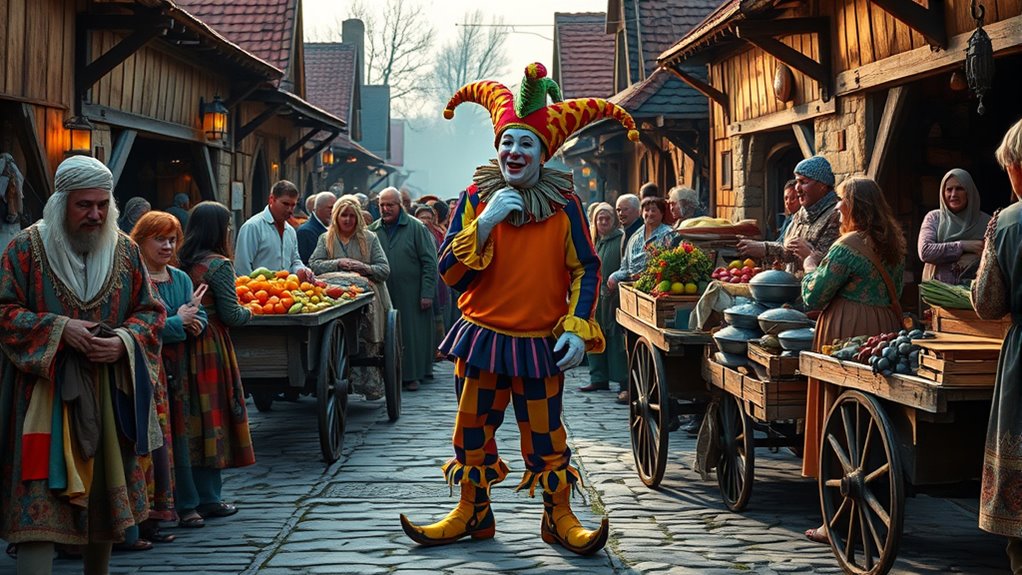
Have you ever wondered how April Fools’ Day began? The origins of this playful holiday are deeply rooted in historical calendar changes and medieval traditions. Long ago, people celebrated the arrival of spring with various festivals, but a significant shift occurred when the calendar was reformed. In 1582, Pope Gregory XIII introduced the Gregorian calendar, moving New Year’s Day from late March or early April to January 1st. This change confused many, especially those who still celebrated the old New Year on April 1st, which had been a traditional date for festivities and merrymaking for centuries.
April Fools’ Day originated from calendar reforms and medieval festivals celebrating chaos and humor.
As some folks continued to mark the old New Year, they found themselves the butt of jokes and pranks by others who had already adopted the new calendar. These early pranksters would send them on fool’s errands or play harmless tricks, poking fun at their ignorance of the calendar change. Over time, this practice of trickery became associated with the date itself, and people began to observe April 1st as a day for jokes and foolishness. The pranking tradition spread across Europe, reinforced by the stories and customs of medieval times, where festivals like the “Feast of Fools” celebrated chaos, role reversals, and humorous reversions to medieval customs.
Medieval traditions also played a role in shaping April Fools’ Day. During this period, festivals often involved role reversals and satirical performances, where societal norms were temporarily upended, and fools or jesters took center stage. These festivities encouraged the idea of humor and deception as a way to break the monotony of daily life. When the calendar change came into effect, the timing aligned with these existing customs, and the idea of pranking someone on April 1st gained popularity. Additionally, the cultural significance of humor and satire during these festivals helped to solidify the day’s playful nature.
The concept of playing tricks on this day persisted through the centuries, evolving into the light-hearted tradition we know today. The pranksters of old who delighted in fooling others set the stage for modern April Fools’ Day celebrations, where media outlets, companies, and individuals participate in elaborate hoaxes. While the specifics of the pranks have changed, the core idea remains: a day dedicated to harmless mischief, rooted in a mix of calendar reformation and medieval customs that valued humor, satire, and the playful subversion of societal rules.

DIMROM Prank Kit for Kids – 25 Gags & Practical Joke Toys – Prank Stuff for April Fools – Ultimate Practical Jokes – Gag Gifts for Kids – Big Funny Toys Pack Set Box + Bonus Inside
Mega Prank Box: Packed with a variety prank stuff and toys, our kit guarantees endless fun for kids…
As an affiliate, we earn on qualifying purchases.
As an affiliate, we earn on qualifying purchases.
Frequently Asked Questions
How Do Different Cultures Celebrate April Fools’ Day Worldwide?
You’ll find that different cultures celebrate April Fools’ Day with unique twists, showcasing diverse cultural variations and global customs. For example, in France, people play practical jokes until noon, while in Scotland, the tradition extends to two days. In Japan, some enjoy humorous media pranks, and in parts of Africa, playful storytelling is common. These customs reflect how various societies embrace humor and creativity on this playful day worldwide.
When Did April Fools’ Day Celebrations First Begin Historically?
You might be surprised to learn that April Fools’ Day dates back to the 16th century, around 1582, when France shifted from the Julian to the Gregorian calendar. Early traditions involved pranksters celebrating on April 1st, tricking others, and spreading jokes. The history origins show how this playful day has evolved over centuries, blending customs from various cultures. Today, it remains a global day for humor and lighthearted mischief.
Are There Any Famous Historical Pranks Associated With April Fools’ Day?
You’ll find plenty of famous pranks linked to April Fools’ Day, like the 1957 BBC broadcast showing spaghetti growing on trees, which fooled many viewers. Historical anecdotes include the 19th-century “paper fish” prank, where people glued paper fish to others’ backs. These pranks showcase how April Fools’ Day has long been a day for playful trickery, engaging people in lighthearted fun through clever, memorable jokes.
What Psychological Effects Do April Fools’ Pranks Have on People?
When you fall for an April Fools’ prank, you might experience a mix of humor perception and trust erosion. The humor makes you laugh, but it can also lead to doubts about others’ sincerity afterward. This playful deception temporarily boosts your mood, yet repeated pranks could make you question future interactions, subtly affecting your trust. Overall, April Fools’ pranks create a fun, yet sometimes slightly suspicious, psychological effect.
How Has Social Media Changed April Fools’ Day Traditions?
Think of social media as a lively marketplace, where every corner buzzes with viral trends and digital deception. It transforms April Fools’ Day into a global stage, allowing you to share clever pranks instantly. You can craft believable stories or surprising visuals that spread fast, making the tradition more interactive and widespread. Social media amplifies the fun, turning simple tricks into viral moments that everyone can participate in, no matter where they are.

Burly Effects Hidden Noise Maker Gag Prank – 10 Different Sounds – Ringtone, Dog, Cat, Cricket, Fart, Baby Cry, Smoke Alarm, Monkey, Screaming Goat, Bird (1 Pack)
BE THE ULTIMATE PRANKSTER WITH THE PRANKSTER- this annoying noise prank is sure to be the hit of…
As an affiliate, we earn on qualifying purchases.
As an affiliate, we earn on qualifying purchases.
Conclusion
So, next time you play a prank on someone, remember the long history behind April Fools’ Day. Its roots stretch back centuries, blending tradition and mischief. Do you ever wonder if the spirit of fun and surprise still holds the power to bring people together today? Perhaps, the day reminds us that a little laughter and lightheartedness can make the world a brighter place. After all, isn’t life too serious not to celebrate with a little jest?

GameHead Foolish Fool, The Goofy Rule Party Game for Families and Parties, Ages 8+, 3-8 Players, Fast Paced 15 Minute Play Time, Fun and Travel Friendly
RULES GONE WILD! Get ready for a hilariously chaotic party as Foolish Fool throws new, zany rules at…
As an affiliate, we earn on qualifying purchases.
As an affiliate, we earn on qualifying purchases.

Renaissance Belt Pouch Purse Viking Bracer Hook Halloween Set Medieval Festival Costume Accessory Casual Fanny Pack Waist Bag (Dual-Black)
– More Style & More Function fit the most ocassions. 1 detachable Belt + 1 Pairs Leather Bracers…
As an affiliate, we earn on qualifying purchases.
As an affiliate, we earn on qualifying purchases.