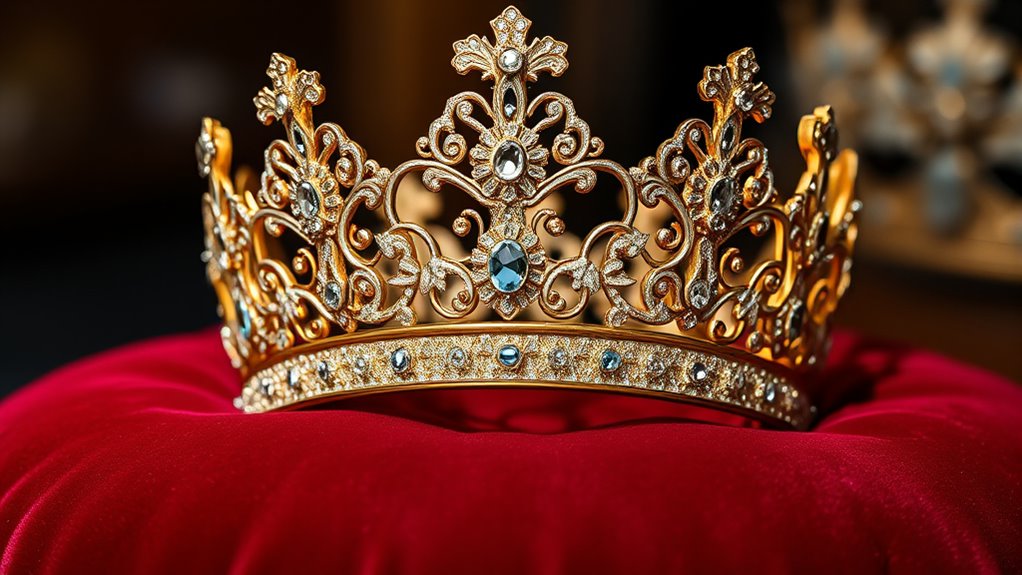

Crowns have become powerful symbols in pop culture, representing authority, glamour, and personal empowerment beyond traditional royalty. You see their influence in music, fashion, and media, where artists like Beyoncé and Lady Gaga use crown imagery to claim their dominance and inspire confidence. Crowns now symbolize individuality and leadership accessible to everyone, shaping cultural narratives. Curious about how these symbols continue to transform? Keep exploring to discover more about their evolving impact.
Key Takeaways
- Crowns have evolved from royal symbols to icons of empowerment, glamour, and cultural identity in mainstream pop culture.
- Celebrities incorporate crown imagery in music and fashion to assert dominance, success, and personal authority.
- Crown-inspired accessories and apparel transform royal symbolism into everyday style statements.
- Wearing crowns or crown motifs signifies confidence, self-worth, and internal strength across various cultural contexts.
- The use of crowns in media reinforces their role as symbols of influence, authenticity, and universal empowerment.
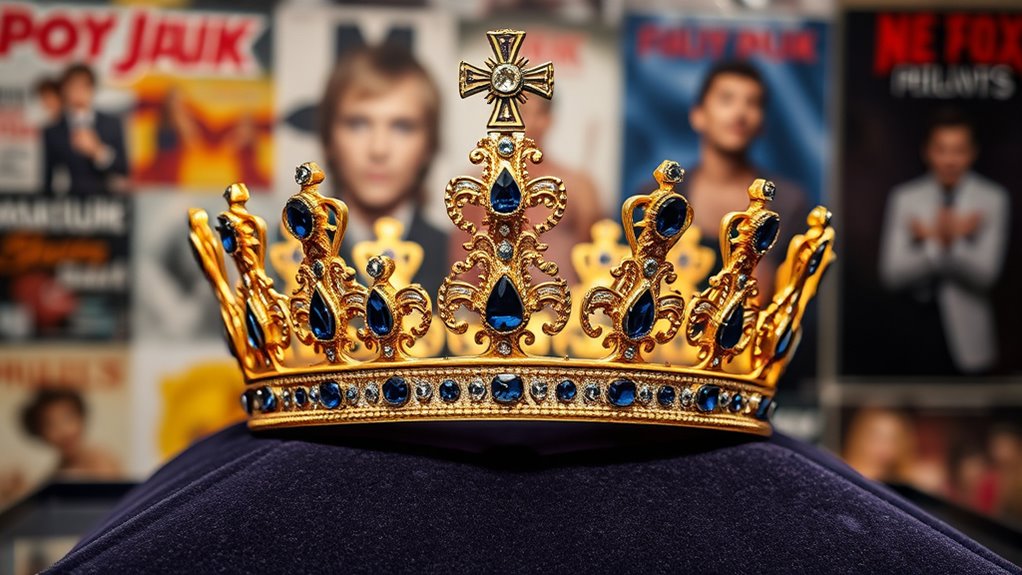
Have you ever noticed how crowns have become more than just symbols of royalty? Today, they’re powerful icons that transcend their traditional meaning, shaping popular culture in unexpected ways. When you see a crown in movies, music videos, or fashion, it’s often not just about monarchy—it’s about projecting authority, glamour, and a sense of grandeur. This shift reflects how royal fashion has evolved from formal regalia into a broader cultural language, where crowns symbolize more than status; they embody aspiration, power, and self-expression. You might find yourself drawn to a celebrity’s crown-inspired look, recognizing how this accessory channels the same crown symbolism that once distinguished kings and queens. It’s no longer solely about monarchy’s hierarchy but about personal empowerment and making a statement.
In pop culture, crowns have become versatile symbols that convey different messages depending on context. For some artists and entertainers, wearing a crown signifies claiming their throne in the music industry or asserting dominance over their craft. Think about pop stars like Beyoncé or Lady Gaga, who often incorporate crown motifs into their stage costumes and album artwork. They’re using crown symbolism to communicate their reigning status and to inspire fans to see themselves as royalty in their own right. This cultural shift has made the crown a universal emblem of success and ambition, accessible to anyone willing to adopt its regal connotations. The association extends into fashion too, where crowns are featured in jewelry, clothing, and accessories, turning what was once exclusive to royalty into a mainstream style statement.
Crown symbolism also plays a role in empowering individuals. When you see someone wearing a crown pin or a crown-shaped accessory, it’s often a subtle nod to self-worth or a declaration of personal sovereignty. It’s about owning your space and embracing your unique identity. This democratization of royal symbols moves beyond traditional notions of power, emphasizing internal strength and confidence. In this way, crowns have become a cultural shorthand for leadership and influence, inspiring people to see themselves as deserving of respect and admiration. As a result, royal fashion elements like crowns are no longer confined to the realm of aristocracy—they’re woven into the fabric of everyday life, reminding us all of the symbolic power we hold within. Additionally, color accuracy in visual representations helps reinforce the impact and authenticity of crown imagery in pop culture.
Top picks for "royal watch crown"
Open Amazon search results for this keyword.
As an affiliate, we earn on qualifying purchases.
Frequently Asked Questions
How Do Crowns Influence Modern Fashion Trends?
Crowns influence modern fashion trends by inspiring crown-inspired accessories like tiaras, headbands, and jewelry, making royal fashion statements that stand out. You can incorporate these elements into your style to add a regal touch, blending elegance with contemporary flair. By embracing crown-inspired accessories, you create bold looks that echo royal sophistication, helping you stay fashionable and on-trend while paying homage to the timeless allure of crowns in pop culture.
Are Crowns Ever Used as Political Symbols Today?
Yes, crowns are still used as political symbols today. They embody monarchical symbolism and represent political power, often appearing in national emblems, flags, or official portraits. When you see a crown in these contexts, it signals authority, sovereignty, and tradition. Even in republics, crowns remind you of historical ties to monarchy and serve as powerful symbols of leadership and legitimacy.
What Materials Are Most Popular in Contemporary Crown Designs?
You’ll find that gold remains the most popular material in contemporary crown designs, thanks to its long history symbolism of wealth and power. notably, modern crowns also incorporate innovative materials like lightweight alloys and precious stones, blending tradition with material innovation. These choices not only honor historical significance but also enhance durability and comfort, making crowns both beautiful and functional for today’s royal ceremonies and pop culture references alike.
How Do Crowns Impact Royal Family Branding Globally?
Crowns considerably impact royal family branding globally by embodying royal symbolism that reinforces tradition and authority. During royal ceremonies, they serve as iconic symbols that attract worldwide attention, shaping public perception. You see, these crowns create a sense of continuity and prestige, linking the family to centuries of history. Their presence during important events helps maintain a regal image, ensuring the royal family remains influential and relevant across different cultures and generations.
Do Crowns Hold Any Significance in Non-Western Cultures?
Yes, crowns hold significant cultural symbolism in many non-western cultures. You’ll find them used in ceremonial traditions to represent authority, spiritual power, or divine right. These crowns often embody cultural values and history, serving as symbols of leadership or sacredness. By participating in these traditions, you recognize how crowns transcend mere ornamentation, becoming meaningful icons that connect communities to their heritage and identity.
Conclusion
As you imagine a gleaming crown atop a regal head, you realize how these symbols of power seep into your everyday life. They sparkle in movies, adorn jewelry, and even influence fashion trends. Crowns aren’t just royal; they’re timeless icons that shape your perception of authority and elegance. So, next time you see one, think of how it quietly weaves itself into pop culture, casting a shimmering spell on your world.