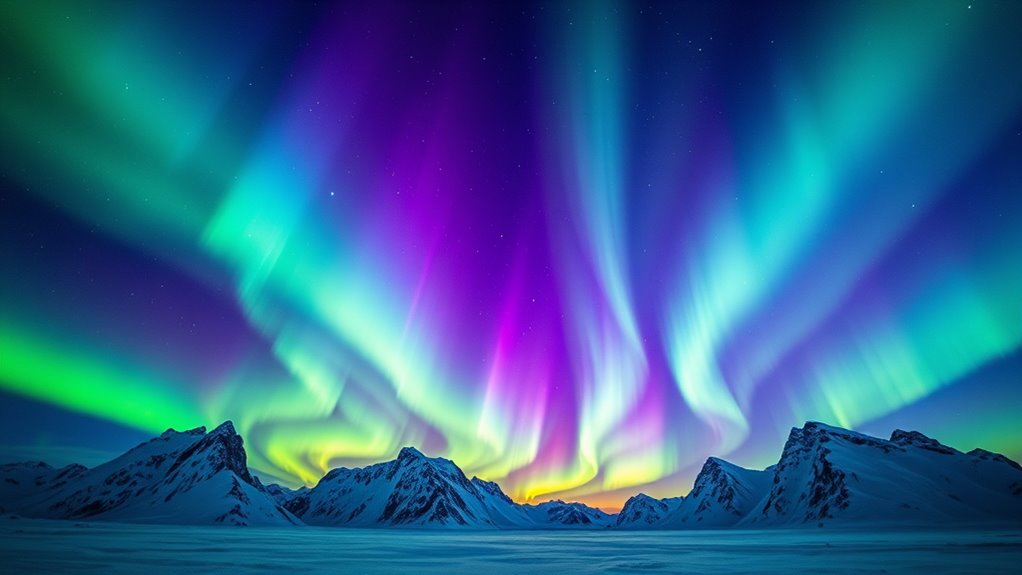

During Solar Maximum 2025, the sun’s magnetic activity intensifies, causing more solar flares and coronal mass ejections. This boosts the number of energetic particles reaching Earth, creating stronger and more frequent auroras. Because of this heightened activity, auroras are not only more common but can also be seen at lower latitudes than usual. If you keep exploring, you’ll discover how these solar changes can make viewing auroras more exciting and accessible.
Key Takeaways
- Solar maximum increases solar activity, producing more energetic particles that enhance aurora formation.
- The Sun’s intensified magnetic activity during solar maximum leads to more frequent solar flares and coronal mass ejections.
- These solar eruptions send charged particles toward Earth, fueling more frequent and vivid auroras.
- Auroras can expand to lower latitudes during solar maximum, making them visible in wider regions.
- Enhanced space weather activity during this period results in higher aurora occurrence and intensity.
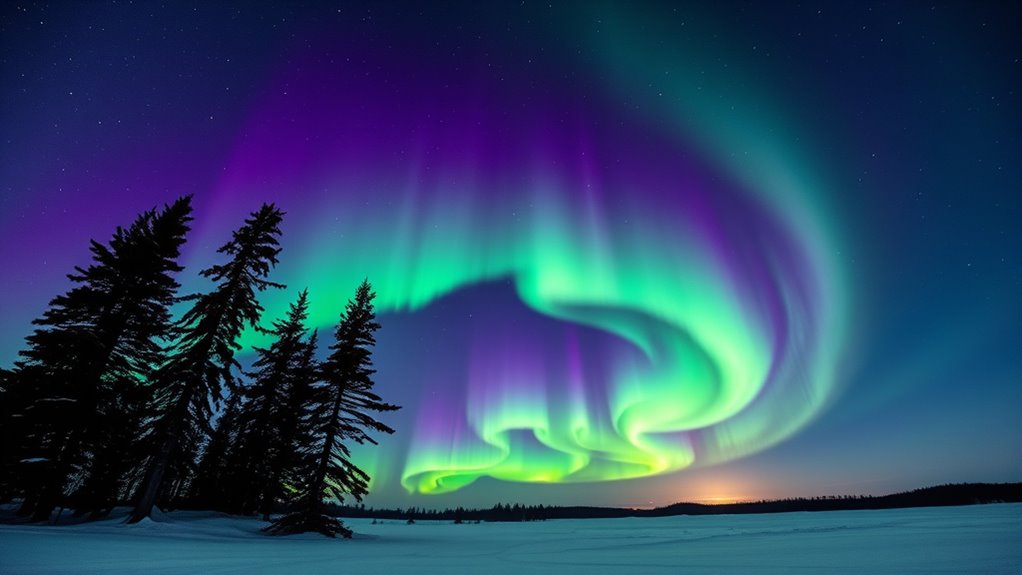
As we approach the peak of Solar Maximum 2025, solar activity is expected to intensify markedly. This period marks the height of the Sun’s approximately 11-year cycle, during which sunspots, solar flares, and coronal mass ejections become more frequent and powerful. As a result, space weather—those dynamic conditions in Earth’s space environment—will become more active and unpredictable. You’ll notice increased disruptions in satellite communications, navigation systems, and even power grids, but one of the most spectacular effects of heightened solar activity is the increased frequency and intensity of auroras.
During Solar Maximum, the Sun releases more energetic particles and magnetic disturbances that interact with Earth’s magnetic field. When these charged particles collide with atoms and molecules in our atmosphere, they produce the vibrant displays of light known as auroras—aurora borealis in the north and aurora australis in the south. Because solar activity is at its peak, the likelihood of these interactions intensifying and expanding to lower latitudes increases. This means you’ll have a better chance of witnessing auroras from regions that don’t typically see them, making the phenomenon more accessible to a broader audience.
During Solar Maximum, increased solar activity boosts auroras, making them visible at lower latitudes and more accessible worldwide.
The increased solar activity also means space weather becomes more volatile, influencing everything from satellite health to radio signals. Solar flares and coronal mass ejections release bursts of energetic particles that can disrupt the Earth’s magnetosphere, causing geomagnetic storms. These storms not only amplify auroral displays but can also create hazards for astronauts and spacecraft. As a result, space agencies closely monitor the Sun’s activity to forecast potential disruptions and protect crucial infrastructure. For you, this heightened space weather activity translates into more frequent alerts about potential satellite anomalies or communication blackouts, especially during intense solar events. Additionally, understanding the solar cycle helps scientists predict periods of heightened aurora activity more accurately.
Understanding that solar activity directly influences space weather helps you grasp why auroras become more frequent and vivid during Solar Maximum. The Sun’s increased magnetic activity causes more frequent and powerful solar wind streams, which, when interacting with Earth’s magnetic field, lead to these stunning light shows. So, as Solar Maximum 2025 approaches, you should expect a surge not only in the number of auroras but also in the scale of space weather phenomena. Keeping an eye on space weather forecasts and aurora alerts can help you plan to catch these breathtaking displays when they’re at their most spectacular. It’s a reminder of the Sun’s immense power and its direct influence on our planet’s atmospheric and magnetic environment during this active phase.

AcePath 15×56 Binoculars for Adults High Powered – Large View Binoculars with Clear Low Light Vision – Waterproof Compact Binocular for Hunting Camping Cruise Travel Bird Watching
COMPACT POWERHOUSE – AcePath binoculars pack 15x magnification into a 56mm objective lens, delivering a 315ft/1000-yard field of…
As an affiliate, we earn on qualifying purchases.
As an affiliate, we earn on qualifying purchases.
Frequently Asked Questions
How Can I See Auroras From My Location During Solar Maximum 2025?
To see auroras during solar maximum 2025, check aurora forecasts and plan your viewing around clear, dark nights away from city lights. Use aurora viewing tips like monitoring geomagnetic activity and arriving early. Seek out ideal viewing locations such as rural areas or higher elevations with unobstructed skies. Keep an eye on space weather updates, dress warmly, and be patient—auroras can appear unexpectedly, especially during peak solar activity.
Are There Any Health Risks Associated With Increased Aurora Activity?
You might think more auroras mean more health risks, but actually, the radiation exposure from them is minimal and harmless. While the stunning visuals may tempt you to stare longer, don’t worry about damaging your eyes or overall health. The increased activity is mostly a visual spectacle, not a warning sign of radiation danger. So, enjoy the show without fearing for your visual health or safety.
Will Solar Maximum 2025 Affect Global Communication or GPS Systems?
During solar maximum 2025, you might experience disruptions in global communication and GPS systems due to solar flares and magnetic disturbances. These solar events can interfere with satellite signals, causing navigation errors and communication outages. Staying updated with space weather alerts helps you prepare for potential disruptions. While most effects are temporary, understanding the impact of solar activity is essential for minimizing inconvenience during this heightened solar period.
How Long Will the Solar Maximum 2025 Period Last?
Like a thunderstorm brewing, the solar maximum 2025 period will last about 1 to 2 years, driven by heightened solar cycle magnetic activity. During this time, you’ll notice more intense auroras and increased solar emissions. The peak typically occurs around mid-2025, with activity gradually declining afterward. Keep an eye on space weather updates, as this period’s magnetic activity can influence your technology and outdoor experiences.
What Are the Best Times to Observe Auroras During This Peak?
You’ll want to aim for the darkest, clearest nights between late evening and early morning to catch auroras at their best. Check the forecast for ideal viewing conditions—clear skies and low light pollution are essential. Keep an eye on aurora alerts and solar activity reports, and head to northern regions if possible. The peak activity during Solar Maximum 2025 means these moments are more frequent, making your chances even better.

HUMIIEYE Northern Light Projector, Battery Operated Aurora Night Light, 16 Colors Galaxy Lamp Ocean Wave Ceiling Projector Mood Ambient Lighting for Bedroom Party Adults Kids Room Toddler Girl Gift
【Create The Perfect Vibe】 This battery-operated northern light projector brings the beauty of 16 dazzling aurora light colors…
As an affiliate, we earn on qualifying purchases.
As an affiliate, we earn on qualifying purchases.
Conclusion
So, get ready to chase those breathtaking auroras, because Solar Maximum 2025 promises more stunning displays. Ironically, as the sun puts on its brightest show, you might find yourself wishing for clear skies—and missing out. But hey, isn’t that the thrill? With more auroras lighting up the night, you’ll have plenty of chances to witness nature’s most dazzling light show. Just don’t forget your camera… or your patience!

SIONYX Aurora PRO Digital Night Vision Camera & IR Illuminator Kit
Advanced Digital Night Vision Recording: The SIONYX Aurora PRO night vision camera is designed for commercial and recreational…
As an affiliate, we earn on qualifying purchases.
As an affiliate, we earn on qualifying purchases.

Aurora Borealis: The Ultimate Hunting Guide
As an affiliate, we earn on qualifying purchases.
As an affiliate, we earn on qualifying purchases.