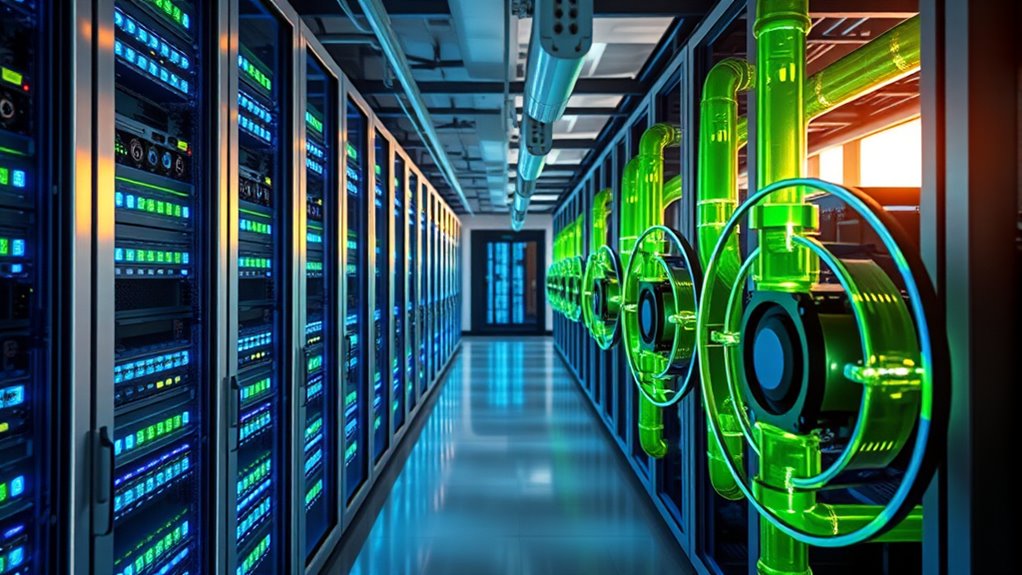

To adopt sustainable computing, focus on energy-efficient chips and hardware that reduce power consumption and lower environmental impact. Implement effective cooling solutions to improve efficiency and prevent overheating without wasting energy. Embrace circular practices like recycling, device upgrades, and refurbishments to extend product lifespans and minimize e-waste. Supporting sustainable design and responsible disposal helps protect ecosystems. Keep exploring to discover how these strategies work together to create eco-friendly tech solutions.
Key Takeaways
- Implementing advanced cooling solutions reduces energy consumption and thermal waste in data centers and high-performance computing systems.
- Developing energy-efficient chips with optimized architectures minimizes power use while maintaining performance.
- Promoting circularity through hardware reuse, refurbishment, and recycling extends device lifespan and decreases e-waste.
- Designing modular, repairable, and upgradeable devices supports a circular economy and reduces environmental impact.
- Adopting sustainable practices in cooling systems, chip manufacturing, and product lifecycle management fosters eco-friendly computing.

As technology becomes an integral part of our daily lives, the demand for powerful computing solutions continues to grow, but this often comes at the expense of the environment. To address this, focusing on energy-efficient hardware becomes essential. By choosing components designed to consume less power, you reduce your carbon footprint without sacrificing performance. Modern processors, for example, are built with energy efficiency in mind, utilizing advanced architectures that deliver high performance while minimizing energy use. This not only cuts down on electricity bills but also lessens the strain on power grids, especially when scaled across data centers and large organizations.
Choosing energy-efficient hardware reduces your carbon footprint and cuts costs while supporting sustainable tech practices.
Alongside adopting energy-efficient hardware, recycling e-waste plays a pivotal role in sustainable computing. Every year, tons of electronic waste pile up, containing hazardous substances like lead, mercury, and cadmium that threaten ecosystems and human health. You can contribute by properly disposing of outdated devices or supporting e-waste recycling programs. Recycling e-waste ensures that valuable materials such as gold, copper, and rare earth elements are recovered and reused, reducing the need for mining new resources. It also prevents harmful chemicals from leaching into the environment, making recycling a crucial step toward circularity in tech.
Implementing circular economy principles in your tech habits means extending the life of your devices through repair or upgrades instead of discarding them prematurely. When you buy new hardware, consider options like refurbished or second-hand equipment, which reduces demand for new manufacturing and minimizes waste. Participating in take-back schemes or recycling initiatives helps close the loop, ensuring that old electronics are repurposed or responsibly disposed of rather than ending up in landfills. Supporting sustainable design practices by choosing products with longer lifespans and repairability further promotes environmental responsibility.
Furthermore, manufacturers are increasingly designing products with sustainability in mind. You can support companies that prioritize modular designs, making repairs easier and upgrading more straightforward. This approach prolongs device lifespan and reduces e-waste generation. When you’re shopping, look for certifications or labels indicating environmentally friendly practices, such as ENERGY STAR or EPEAT. These standards ensure your devices meet energy efficiency and environmental impact criteria, aligning your consumption with sustainable principles.
In essence, your role in sustainable computing is about making conscious choices—opting for energy-efficient hardware, supporting recycling e-waste, and advocating for circularity. These actions collectively reduce environmental harm, conserve resources, and foster a more sustainable digital future. By integrating these practices into your daily tech use, you help create a healthier planet while still enjoying the benefits of modern technology.
Frequently Asked Questions
How Can Sustainable Computing Reduce Overall Energy Costs?
Sustainable computing can reduce your energy costs by maximizing energy efficiency and utilizing renewable energy sources. You can implement energy-efficient hardware and optimize system performance to lower power consumption. Switching to renewable energy like solar or wind reduces reliance on costly grid power and cuts long-term expenses. These strategies help you save money while decreasing environmental impact, making your operations more sustainable and cost-effective over time.
What Are the Main Barriers to Implementing Circular Computing Models?
Have you ever wondered what keeps circular computing from becoming mainstream? The main barriers include inconsistent recycling policies that hinder reuse, and complex supply chains that make tracking and refurbishing components difficult. These issues slow down the shift toward sustainable practices. Overcoming these challenges requires coordinated efforts to improve policies and streamline supply chains, making it easier for you to adopt and support circular computing models.
How Does Cooling Technology Impact Data Center Sustainability?
Cooling technology markedly impacts data center sustainability by enhancing thermal management and reducing energy consumption. Liquid cooling, in particular, efficiently dissipates heat, allowing you to operate servers at higher densities with less power use. This not only lowers greenhouse gas emissions but also extends equipment lifespan. By adopting advanced cooling methods like liquid cooling, you can make your data center more environmentally friendly and cost-effective, supporting your sustainability goals effectively.
Are Recycled Chips as Reliable as New Ones?
Recycled chips can be just as reliable as new ones, but reliability concerns do exist. When you choose recycled chips, make sure they undergo thorough testing and refurbishment. Proper quality control guarantees that recycled chips meet industry standards, reducing potential failures. While some worry about longevity, advances in recycling technology and rigorous validation processes help mitigate these concerns, making recycled chips a sustainable and dependable option for your computing needs.
What Future Innovations Will Drive Sustainable Chip Manufacturing?
You’ll see future innovations like eco-friendly materials and renewable energy powering sustainable chip manufacturing. These advancements will reduce environmental impact, making production more efficient and eco-conscious. Expect new materials that lower energy consumption and improve durability, while renewable energy sources like solar and wind will cut carbon emissions. By adopting these technologies, you’ll help create a more sustainable computing industry that minimizes waste and promotes circularity, ensuring a greener future for electronics.
Conclusion
Just as Da Vinci envisioned innovation harmonized with nature, your choices in sustainable computing shape a greener future. By prioritizing efficient cooling, eco-friendly chips, and circular design, you become part of a larger movement—one that transforms technology from a resource drain into a force for good. Remember, your actions echo through time, much like the ripples in a pond. Embrace these practices now, and you’ll help forge a legacy of responsibility and resilience for generations to come.