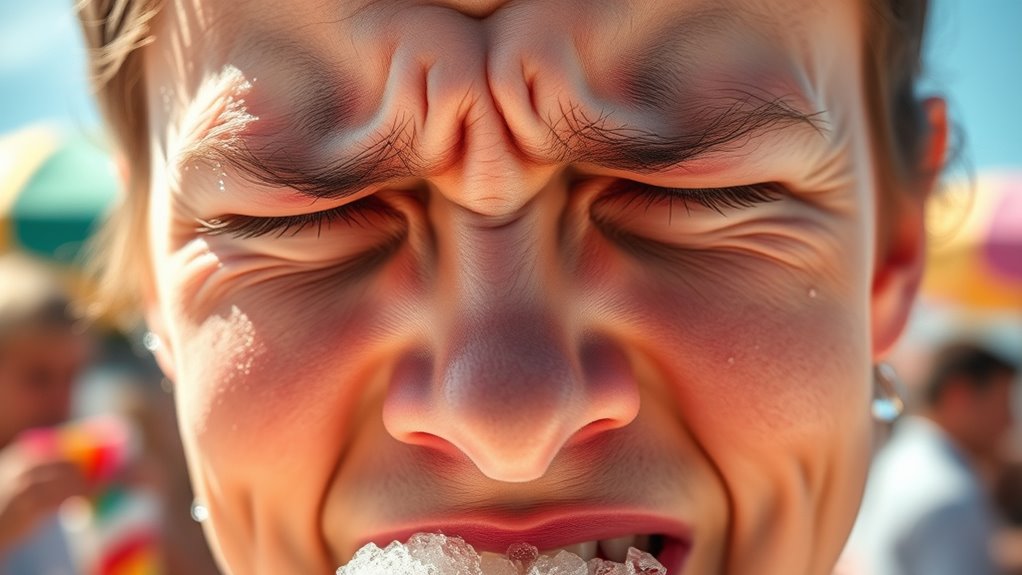

Brain freeze is that sudden, sharp headache you feel when cold foods or drinks touch the roof of your mouth quickly. It happens because the cold cools the palate rapidly, triggering nerve responses via the trigeminal nerve, which sends pain signals to your brain. This pain is a quick reflex, often mistaken for dental issues, but it’s harmless and temporary. Want to understand how this fascinating nerve reaction works? Keep exploring to learn more.
Key Takeaways
- Brain freeze is a sudden, sharp headache caused by rapid cooling of the roof of the mouth.
- It occurs when cold foods or drinks cool the palate, triggering nerve responses via the trigeminal nerve.
- The pain is a reflex response that sends signals to the brain, resulting in brief headache discomfort.
- It typically subsides within seconds and can be alleviated by warming the palate or pressing the tongue against it.
- Brain freeze is harmless and distinct from dental pain or other health issues caused by cold sensitivity.
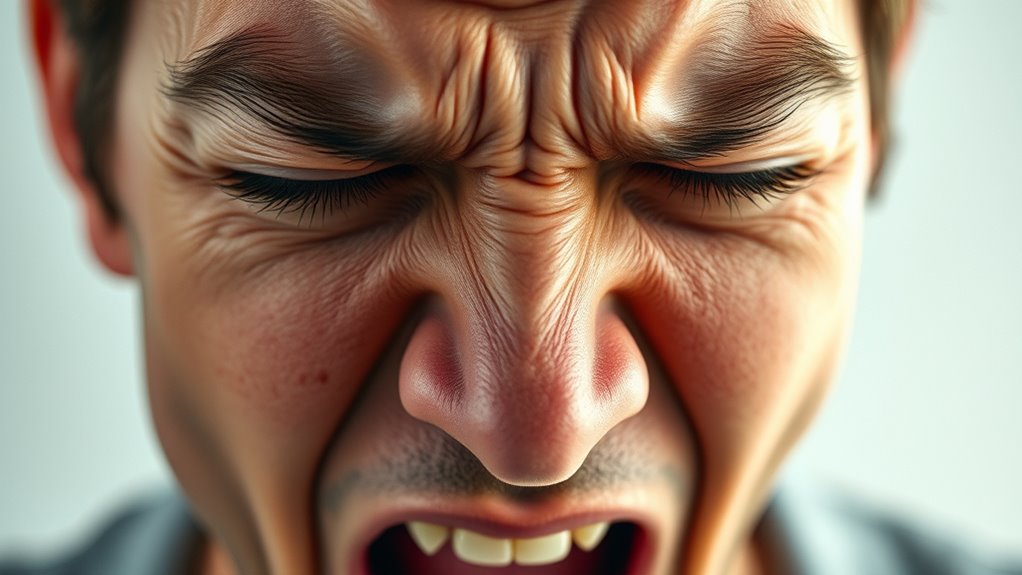
Have you ever experienced a sudden, intense headache after taking a bite of something cold? That sharp, fleeting pain is commonly known as a brain freeze. While it might feel like your head is about to explode, it’s actually a brief response to cold exposure inside your mouth. This sensation often catches you off guard, especially if you weren’t expecting it. You might even wonder if it’s related to dental pain or some other health issue. Rest assured, brain freeze is a harmless reflex, but understanding what causes it can help you avoid the discomfort.
A sudden, sharp headache after eating cold foods is called a brain freeze—harmless but surprising.
When you consume something cold—like an ice cream cone or a chilled drink—the cold temperature quickly cools the roof of your mouth, particularly the palate. This rapid cooling triggers a response from the nerves in that area, mainly the maxillary nerve, a branch of the trigeminal nerve responsible for sensation in your face. The sudden cold causes blood vessels in the palate to constrict rapidly and then dilate again. This swift change is what sends a pain signal to your brain, interpreted as a headache. This process is similar to how you might feel dental pain or cold sensitivity, where nerves react sharply to temperature changes. But unlike dental pain, which often results from cavities or other dental issues, brain freeze is a reflex involving the nerves in your mouth and head.
The pain from a brain freeze usually peaks within seconds and subsides just as quickly. It’s a temporary phenomenon, but it can be surprisingly intense. Many people try to stop it by pressing their tongue to the roof of their mouth or drinking warm liquids to help warm the palate. This action helps slow down the nerve response and reduces the discomfort. It’s a simple trick that works because it warms the area, calming the nerve response that’s causing the headache.
Understanding this mechanism also sheds light on why cold sensitivity, in general, can be uncomfortable or even painful for some people. If you have sensitive teeth or dental pain, cold foods and drinks can trigger sharp sensations that mimic brain freeze. But with brain freeze, the pain is brief because it’s a reflex, whereas dental pain may persist and require treatment. Recognizing the difference can help you manage your discomfort better. So next time you feel that sudden head rush, remember: it’s just a nerve reflex reacting to cold, not a sign of anything serious. Knowing what causes brain freeze can help you enjoy cold treats without the surprise pain that catches many off guard.

Haagen-Dazs Summer Berry Ice Cream Cones, 4ct
One 4 count box of Haagen Dazs Summer Berry ice cream cones
As an affiliate, we earn on qualifying purchases.
As an affiliate, we earn on qualifying purchases.
Frequently Asked Questions
Can Brain Freeze Cause Lasting Brain Damage?
No, brain freeze from ice cream headaches doesn’t cause lasting brain damage. When you get an ice cream headache, nerve responses trigger blood vessel constriction and dilation, causing the sensation. This rapid response is temporary and harmless, even if it feels intense. You might experience discomfort for a few seconds, but it won’t harm your brain. Rest assured, brain freeze is just a fleeting, harmless reflex.
How Long Does Brain Freeze Typically Last?
Brain freeze usually lasts just a few seconds to a minute, but it can feel like an eternity when you’re experiencing it. When you eat cold foods, your nerve response kicks in rapidly to the cold sensation, causing that sharp headache. Typically, the pain subsides quickly as your brain adjusts. To reduce it, try warming the roof of your mouth or drinking warm liquids. The whole experience is a fleeting but intense nerve response.
Does Age Affect Susceptibility to Brain Freeze?
Your susceptibility to brain freeze varies with age groups, as younger people often experience it more intensely, likely due to differences in cold sensitivity and brain size. Susceptibility factors include nerve responses and individual pain thresholds. While age can influence how easily you get brain freeze, everyone’s experience depends on personal factors like how quickly you eat cold foods and your body’s reaction to cold stimuli.
Are There Any Health Conditions Linked to Brain Freeze?
Brain freeze can sometimes be linked to health conditions like dental sensitivity and migraine triggers. When you experience a sudden, sharp pain, it’s as if your head is caught in a storm. Conditions like dental sensitivity make you more prone, and migraines might intensify the pain. If you notice frequent or severe episodes, it’s wise to consult a healthcare professional to rule out underlying issues and find relief.
Can Eating or Drinking Slowly Prevent Brain Freeze?
Yes, eating or drinking slowly can prevent brain freeze. When you take small bites or sips, you’re exposing your mouth to less cold ice cream or drink at once, which helps keep the temperature from dropping too quickly. Using sipping techniques and waiting a bit between bites can give your mouth time to warm up, reducing the chances of that sharp, sudden headache caused by rapid exposure to cold temperatures.
Lonicera Digital Cooking Thermometer for Bread Baking, Food and Water Temperature Measurement. Waterproof and Long Stem with Meat Temp Guide, Display with Backlit (Red)
WATERPROOF & LONG PROBE – Cooking thermometer with IPX6 rated waterproof, clean it freely under running water. Keep…
As an affiliate, we earn on qualifying purchases.
As an affiliate, we earn on qualifying purchases.
Conclusion
So, next time you get a brain freeze, remember it’s your own body’s way of saying, “Whoa, slow down!” You’d think such a sharp, sudden pain would be a sign to stop, but instead, you keep eating or drinking without a second thought. Ironically, it’s a tiny reminder that your body’s quick reactions can sometimes be the biggest pain—literally—highlighting how even the smallest sensations can pack a punch.

Biotene OralBalance Moisturizing Gel, Alcohol Free Gel and Dry Mouth Gel, Flavor Free – 1.5 oz
One 1.5 oz tube of Biotene OralBalance Moisturizing Gel, Alcohol Free Gel and Dry Mouth Gel, Flavor Free
As an affiliate, we earn on qualifying purchases.
As an affiliate, we earn on qualifying purchases.
tongue depressor for cold relief
As an affiliate, we earn on qualifying purchases.
As an affiliate, we earn on qualifying purchases.