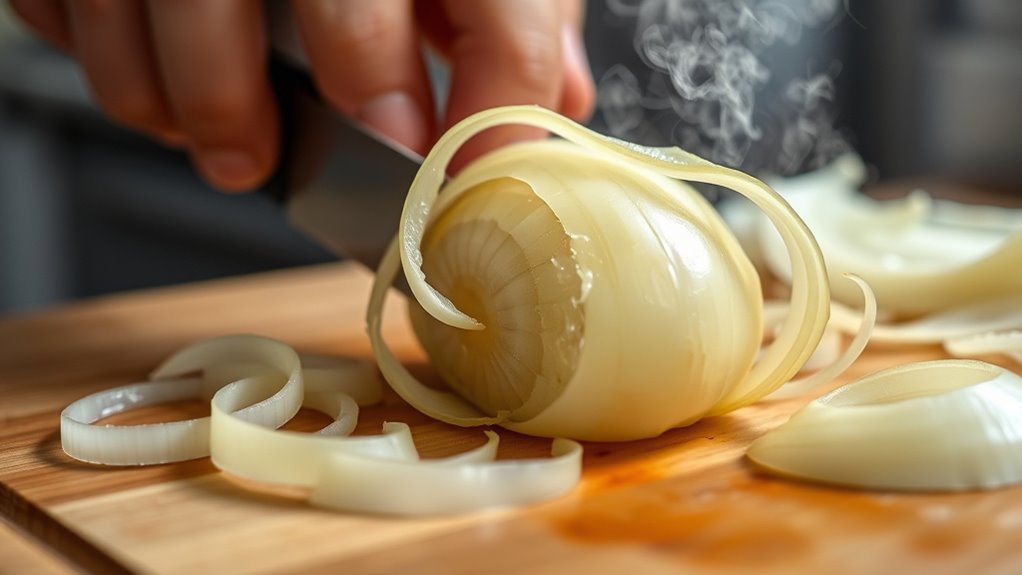

When you cut into an onion, it releases enzymes called alliinases that react with sulfur compounds stored in its cells. This reaction produces a volatile gas called syn-propanethial-S-oxide, which irritates your eyes and triggers tears. To protect itself, the onion releases these irritating compounds, which act as a natural defense. If you want to understand more about how these chemicals cause tears and ways to minimize them, keep exploring.
Key Takeaways
- Cutting onions releases enzymes that react with sulfur compounds, producing a volatile gas that irritates the eyes.
- The gas reaches the eyes and triggers a reflex tear response to dilute and flush out the irritant.
- Sulfur compounds in onions serve as a natural defense mechanism against pests and damage.
- Cooking onions alters sulfur compounds, reducing their pungency and milder effect on eyes.
- Techniques like chilling, using sharp knives, or cutting the root last can help minimize tear production.
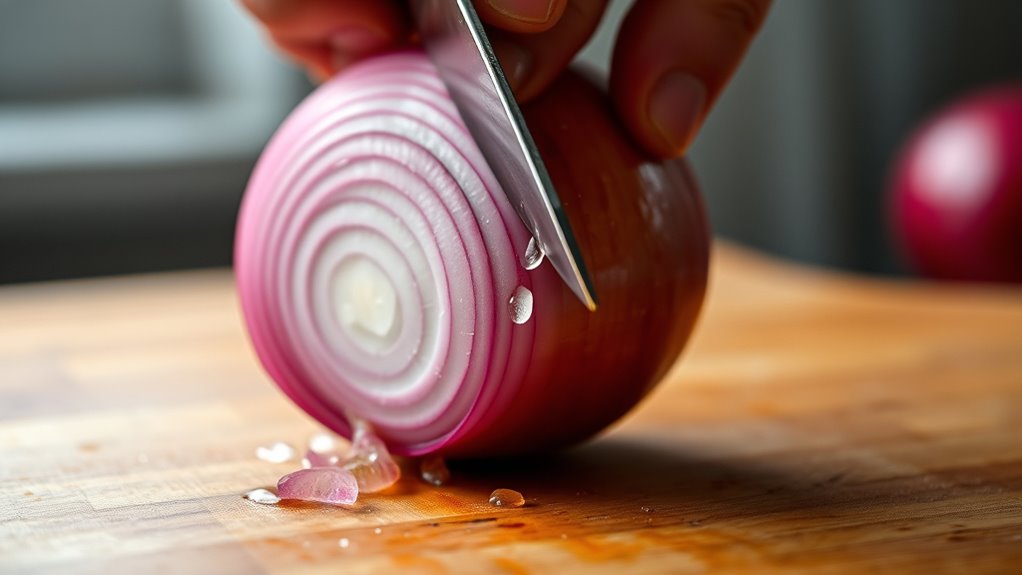
Have you ever wondered why chopping onions makes your eyes tear up? It all comes down to a complex chemical reaction that occurs when you cut into these flavorful vegetables. Onions contain sulfur-containing compounds that are stored separately within their cells. When you slice through the onion, you rupture these cells, releasing enzymes called alliinases. These enzymes react with sulfur-containing molecules called sulfoxides, transforming them into a volatile gas known as syn-propanethial-S-oxide. This gas is what makes its way to your eyes, triggering a reflexive tearing response. Your eyes produce tears to dilute and flush out the irritant, which is why the sensation feels so sharp and uncomfortable. This process is a natural defense mechanism for the onion, protecting itself from pests or damage by releasing these irritating compounds. Interestingly, scientific research on volatile sulfur compounds**** has helped develop various methods to reduce tearing during chopping.
Understanding this chemical reaction helps explain why onions are so popular in culinary uses. Their pungent aroma and flavor are a result of these sulfur compounds, which add depth and complexity to countless dishes worldwide. Chefs and home cooks alike appreciate onions for their ability to enhance flavors, from caramelized sweetness to sharp, tangy notes. However, the very compounds that make onions delicious also cause discomfort when chopping. Many cooks have developed techniques to minimize tearing, such as chilling the onion beforehand, using sharp knives to reduce cell damage, or cutting the root last, since it contains the highest concentration of sulfur compounds. These methods aim to slow the release of the irritating gas or prevent it from reaching your eyes.
Despite the inconvenience, the chemical reaction responsible for tearing up when chopping onions is also what makes them so versatile in the kitchen. The sulfur compounds contribute to the savory aroma and taste that characterize many culinary creations. When cooked, these compounds undergo transformations that mellow their pungency, making onions sweeter and more palatable in soups, stews, and sautés. Their ability to add depth to dishes makes them a staple across various cuisines. The same chemical properties that cause tears also give onions their unique ability to enhance flavors and add complexity to food. So, while chopping onions might bring tears to your eyes, it’s also what makes them such an essential ingredient in the culinary world.
Frequently Asked Questions
Can Cutting Onions Cause Eye Infections?
Cutting onions typically doesn’t cause eye infections, but it can lead to eye irritation from chemical exposure. When you slice onions, they release sulfur compounds that irritate your eyes, causing tears. To avoid discomfort, use a sharp knife, chill the onion beforehand, or work in a well-ventilated area. While eye irritation is common, it doesn’t increase the risk of infections unless bacteria enter through cuts or contaminated surfaces.
Are There Onion Varieties That Don’t Make You Cry?
Some onion varieties, like sweet onions (e.g., Vidalia or Walla Walla), tend to make you cry less because they contain lower levels of the tear-inducing sulfur compounds. If you have allergy considerations, choose milder varieties and consider wearing goggles or chilling onions before cutting. By selecting the right onion varieties and taking precautions, you can reduce tears and enjoy your cooking without discomfort.
Does Chopping Onions Release Harmful Chemicals?
Chopping onions releases chemical irritants so potent, they could make your eyes feel like they’ve been hit by a lightning bolt! These sulfur compounds can cause tears and irritation, but don’t worry—most are harmless to your eye health in small amounts. To minimize this, try chilling onions first or using a sharp knife. These tricks help reduce the release of irritants and keep your eyes comfortable while cooking.
Can Crying While Cutting Onions Be Prevented Completely?
You can’t prevent crying completely while cutting onions, but you can reduce it. Store onions in a cool, dry place to slow chemical release, and chill them before chopping. Use sharp knives to minimize cell damage and consider wearing goggles. Keep in mind, different onion varieties have flavor variations that might affect how much they make you cry. While no method is foolproof, these tips can help lessen tears considerably.
Is There a Way to Cook Onions Without Making You Cry?
Cooking onions without tears is like sailing smooth waters—you can do it. Use sharp knives to reduce cell damage, and chill onions beforehand to slow release of the irritants. Try cooking techniques like sautéing or caramelizing, which lessen the fumes. Alternatively, onion substitutes like shallots, leeks, or garlic can add flavor without tears. These methods help you enjoy cooking without the fiery eye drama.
Conclusion
Next time you chop onions and feel those tears, remember you’re revealing their secret. Like peeling back layers of a mystery, each tear reveals a tiny story of nature’s chemistry. Imagine your eyes as brave explorers, bravely steering through a storm of sulfuric compounds. While those tears might seem frustrating, they’re proof you’re engaging with something powerful and alive. So, embrace the tearful journey—your eyes are simply celebrating the onion’s hidden magic.