
When you heat popcorn, the moisture inside the kernel turns into steam, causing pressure to build up. The tough outer shell holds in this pressure until it can’t anymore, then suddenly bursts open. This explosion transforms the starch inside into the fluffy popcorn you enjoy. The process relies on physics principles like pressure and expansion, making popcorn popping a fascinating mechanical event. If you want to understand exactly how this happens, keep exploring the science behind it.
Key Takeaways
- Moisture inside the kernel turns into steam when heated, increasing internal pressure.
- The tough pericarp traps steam until pressure reaches a critical level.
- Once pressure exceeds the shell’s strength, it ruptures suddenly, causing the explosion.
- The rapid release of pressure gelatinizes and expands the starch, forming fluffy popcorn.
- Proper moisture content is essential to generate enough pressure for effective popping.
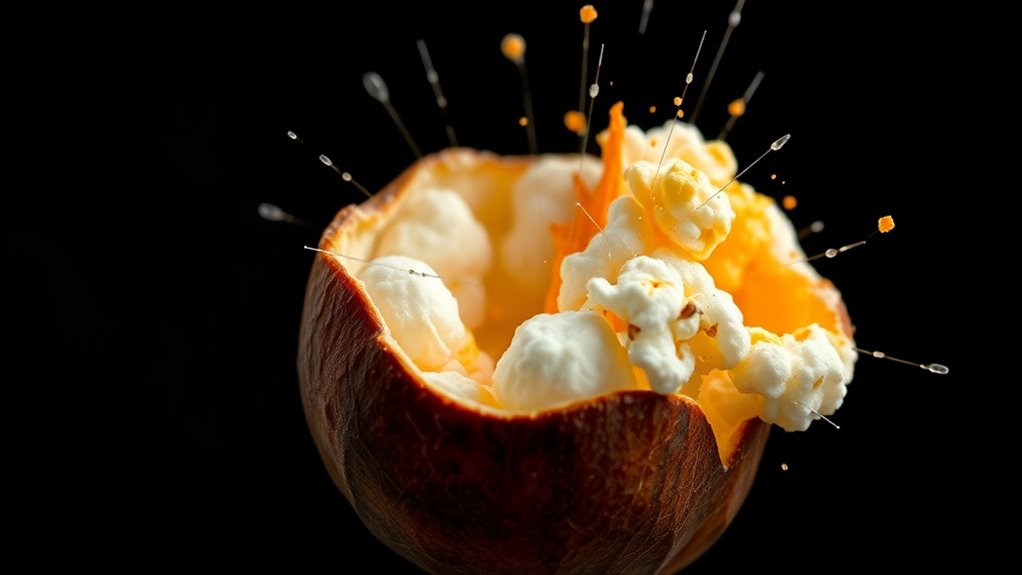
Have you ever wondered what causes popcorn to burst into fluffy white pieces? It’s a fascinating process rooted in physics, specifically moisture expansion and pressure buildup inside the kernel. When you heat popcorn, the moisture trapped within the hard shell begins to turn into steam. As the temperature rises, the water molecules expand, creating more and more vapor. Because the kernel’s outer shell, called the pericarp, is both tough and nearly airtight, this expanding moisture results in a significant pressure buildup inside the kernel.
When heated, moisture inside popcorn turns to steam, building pressure until the kernel explodes into fluffy popcorn.
This pressure continues to increase as the heat persists. The moisture inside needs space to expand, but the shell resists. As the temperature hits around 180°C (356°F), the pressure inside can reach up to 135 pounds per square inch — a force that the shell can’t withstand forever. At this critical point, the pressure becomes too much for the shell to contain, causing it to rupture suddenly. This rapid release of pressure is what creates the explosion that turns the kernel inside out, transforming it into the fluffy, white popcorn you love.
The process is incredibly efficient because the moisture inside the kernel is essential for the popping action. Without enough moisture, the pressure won’t build sufficiently, and the kernel might just dry out and burn instead of pop. Conversely, if the moisture content is too high, the kernel might not pop properly or could produce an uneven texture. Ideally, popcorn kernels contain about 13-14% moisture, enough to generate the necessary steam for popping without risking overpressure or burning.
Once the shell bursts, the sudden release of pressure causes the starch inside to expand rapidly and gelatinize. The starch then cools and solidifies almost instantly, forming the characteristic airy structure of popcorn. This transformation depends on the precise interplay of moisture expansion and pressure buildup—without it, the explosion wouldn’t happen, and you’d be left with unpopped kernels. That’s why the science behind popcorn popping is so intriguing: it’s a perfect example of how physical principles like pressure and expansion work together to produce a delicious snack.
A key factor in achieving perfect popcorn is maintaining the optimal moisture content, as it directly influences how effectively the pressure builds up inside the kernel. So next time you hear that popcorn pop, remember, it’s the dramatic result of moisture turning to steam and building enough pressure to burst open the shell in a spectacular show of physics in action.
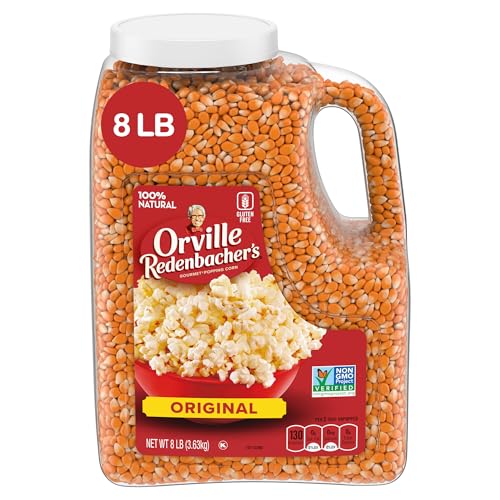
Orville Redenbacher's Gourmet Popcorn Kernels, Original Yellow, 4g Fiber Per Serving, 8 lb.
One 8 lb. jug of Orville Redenbacher's Original Gourmet Popcorn Kernels
As an affiliate, we earn on qualifying purchases.
As an affiliate, we earn on qualifying purchases.
Frequently Asked Questions
Why Does Popcorn Only Pop at Certain Temperatures?
You see, popcorn only pops at certain temperatures because the kernel’s moisture needs to turn to steam at the right heat. Once it reaches the popping temperature, pressure builds inside until the shell bursts. If the temperature’s too low, there’s not enough steam to pop. If it’s too high, the moisture escapes too quickly. So, preserving the right temperature guarantees the perfect pop every time.
How Does Moisture Content Affect Popping Quality?
Moisture levels in popcorn are like Goldilocks’ porridge — too much or too little, and the popping suffers. When moisture content is just right, it creates steam inside the kernel, building enough pressure to pop perfectly. If moisture levels are off, the kernel may crack or not pop well, compromising kernel integrity. Preserving proper moisture ensures a fluffy, tasty popcorn experience every time.
Can Popcorn Pop in a Microwave Without Oil?
Yes, you can pop popcorn in a microwave without oil. Just place the kernels in a microwave-safe container, cover them loosely, and microwave until popping slows. Keep in mind, kernel moisture is essential—too little moisture, and they won’t pop well. You can add popcorn flavoring after popping for taste, but avoid adding oil beforehand if you want a healthier snack. The result is light, crunchy popcorn with your favorite seasoning.
What Makes Some Kernels Pop Bigger Than Others?
You notice some kernels pop bigger than others because larger kernels have more internal moisture and a bigger size, allowing for more expansion. The key factors are kernel size and popping pressure; bigger kernels require higher pressure to burst, resulting in larger popcorn. Additionally, the uniformity of moisture and the kernel’s integrity influence how much it can expand, making some popcorns noticeably bigger than their smaller counterparts.
Is There a Way to Predict When a Kernel Will Pop?
You can’t precisely predict when a kernel will pop, but you can get pretty close by monitoring its kernel moisture and popping temperature. If the moisture is just right and the temperature hits the perfect popping point, it’s like the universe’s secret code aligning for that explosive burst. Keep kernels stored properly and heat them evenly, and you’ll maximize your chances of predicting that perfect popcorn pop every time.
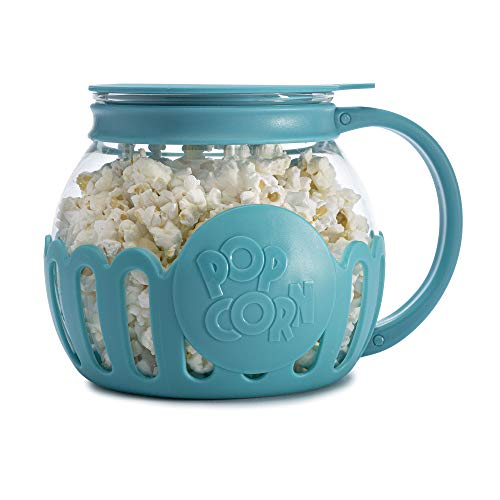
Ecolution Patented Micro-Pop Microwave Popcorn Popper with Temperature Safe Glass, 3-in-1 Lid Measures Kernels and Melts Butter, Made Without BPA, Dishwasher Safe, 1.5-Quart, Teal
FAST GOURMET POPCORN: Choose beautiful, durable temperature safe borosilicate glass for better popcorn popping experiences. No oil or…
As an affiliate, we earn on qualifying purchases.
As an affiliate, we earn on qualifying purchases.
Conclusion
Now that you know the physics inside a popcorn kernel, you see it’s like a tiny pressure cooker ready to burst. When the heat builds up, the steam inside pushes against the shell, waiting for its moment to explode into fluffy popcorn. Understanding this process makes you see each pop as a small fireworks show, bursting with energy and science. So next time you enjoy popcorn, remember the incredible physics happening inside every single kernel.
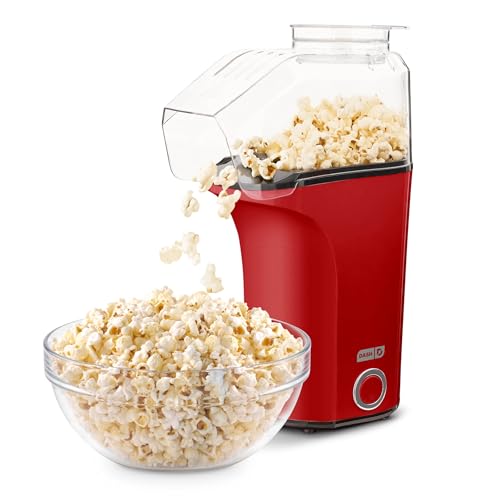
DASH Fresh Pop Popcorn Maker – Oil-Free, Air Popcorn Popper – With Measuring Cup & Recipe Guide – Perfect for Movie Nights – 16 Cups, Red
Convenient Popcorn Maker: Pop it like it’s hot; The Dash Fresh Pop Popcorn Maker cooks using only hot…
As an affiliate, we earn on qualifying purchases.
As an affiliate, we earn on qualifying purchases.

Wabash Valley Farms Real Theatre Popcorn Packs — Gourmet Kernel Kit for Popcorn Machines, Stovetop Poppers, and At-Home Movie Night Snacking — Perfect for Use with The Original Whirley Pop — 5 Pack
Quick Perfect Popcorn: In just 3 minutes the Wabash Valley Farms Real Theatre Popcorn Popping Kit makes a…
As an affiliate, we earn on qualifying purchases.
As an affiliate, we earn on qualifying purchases.