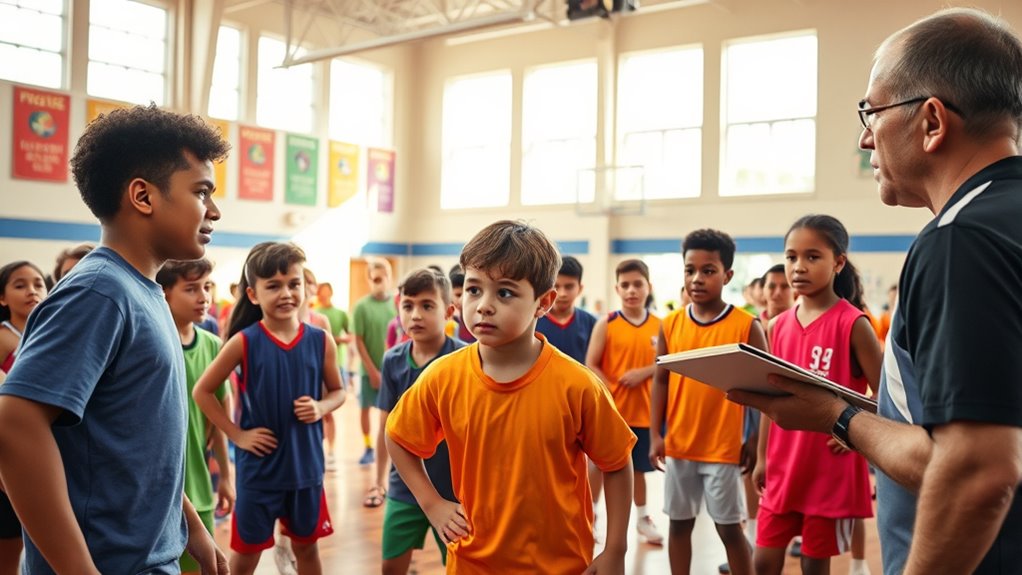

Youth academies build talent pipelines through proactive scouting in local leagues, schools, and community events. They evaluate players based on ability, potential, work ethic, and passion, using data and video analysis to compare performances. Development programs then refine skills, physical conditioning, and mental resilience, ensuring a continuous flow of promising players. By maintaining strong relationships with local clubs and tracking progress, you can create a sustainable pipeline that nurtures talent over the long term—discover how this process works in detail.
Key Takeaways
- Scouting involves active searches in local communities, schools, and leagues to identify promising talent early.
- Talent pipelines rely on holistic assessments, considering potential, work ethic, and mental resilience beyond technical skills.
- Development programs are tailored to age and skill level, focusing on technical, physical, tactical, and mental growth.
- Continuous analysis using data and video tools helps monitor and compare player progress, ensuring a steady talent flow.
- Long-term strategies foster an environment for sustained player development, preparing athletes for higher competition levels.

Have you ever wondered how young athletes and students develop their skills and reach their full potential? The answer often lies in the way youth academies operate, especially through carefully crafted scouting strategies and development programs. These academies serve as the foundation for identifying and nurturing talent early on, giving promising individuals a structured environment to grow. When you’re involved in a youth academy, the first step is often the scouting process. Scouts and coaches actively search for talented players in local leagues, schools, and community events. They look for more than just raw ability; they assess potential, work ethic, coachability, and passion. This targeted approach guarantees that the right talent is brought into the fold, creating a pipeline of promising athletes. Once identified, players are integrated into development programs designed to refine their skills, enhance their physical conditioning, and build mental resilience. These programs aren’t just about improving technical ability—they also focus on holistic growth, including teamwork, discipline, and strategic understanding of the sport. Youth academies tailor their development programs to suit age groups and skill levels, making certain that each player receives appropriate training that promotes steady progression. As part of these programs, young athletes often participate in regular training sessions, competitions, and workshops, which expose them to different playing styles and coaching philosophies. These experiences are essential in helping players adapt to higher levels of competition and develop confidence. The academies’ scouting strategies are also designed to keep a continuous flow of new talent. Coaches and scouts maintain relationships with local clubs and schools, constantly monitoring emerging prospects. They use data and video analysis to compare players’ performances and predict future potential. This proactive approach allows academies to stay ahead of the curve, making sure they don’t miss out on promising talent. Additionally, incorporating vintage patterns and materials in apparel and decor can evoke a nostalgic feel that aligns with many youth sports environments. The development programs within youth academies are usually comprehensive and long-term. They aim to develop all facets of a player’s game—technical skills, tactical awareness, physical fitness, and mental toughness—so that when players reach the professional level, they’re well-rounded and prepared. By combining strategic scouting with tailored development programs, youth academies create a nurturing environment where talent can flourish. They serve as a essential bridge between early promise and professional success, helping young athletes turn potential into achievement. Whether you’re a young player dreaming of a professional career or a coach seeking the best talent, understanding how these talent pipelines operate reveals their indispensable role in shaping the future of sports.

X-UMEUS Agility Ladder Speed Training Equipment Set-20ft Agility Ladder,12 Soccer Cones,4 Hurdles, Jump Rope, Running Parachute| Basketball Football Soccer Training Equipment for Kids Youth Adults
"Most Complete Speed and Agility Training Set": A versatile soccer agility training equipment set include everything your need-…
As an affiliate, we earn on qualifying purchases.
As an affiliate, we earn on qualifying purchases.
Frequently Asked Questions
How Do Youth Academies Identify Promising Talent Early?
You can spot promising talent early by leveraging scouting technology, which helps analyze players’ skills and potential objectively. Youth academies focus on talent development by observing performances in local matches, tournaments, and school programs. They often use data-driven insights to identify young athletes with high potential, ensuring they nurture these players with specialized training and exposure, ultimately building a strong pipeline of future professionals.
What Criteria Do Scouts Use to Select Young Players?
Think of scouts as treasure hunters discovering hidden gems. They use keen scouting techniques to evaluate young players’ potential, focusing on technical skills, game intelligence, and physical attributes. They also consider attitude, work ethic, and coachability, which indicate future player development. By observing consistency in performance and how players adapt under pressure, scouts select those most likely to grow into professional talents, ensuring the pipeline stays filled with promising prospects.
How Do Academies Balance Education and Training?
You find that academies balance education and training by integrating an academic curriculum alongside sports development. They prioritize student well-being by ensuring schedules allow time for studies, rest, and personal growth. Coaches and educators work together to create a supportive environment, emphasizing both athletic progress and academic success. This approach helps young players develop holistically, preparing them for careers in sports and life beyond the academy.
What Is the Success Rate of Youth Academy Graduates Turning Professional?
You might think every youth academy graduate becomes a star, but surprisingly, only about 10-20% turn pro. Player development is a tricky game, and many struggle with the career shift. While some soar, most face tough challenges, proving that the path from academy to professional isn’t as smooth as it seems. Ironically, the dream often outshines the reality, making success a rare gem in the talent pipeline.
How Do Academies Fund Their Programs and Facilities?
You fund your youth academy programs through sponsorship partnerships, which provide essential financial support and resources. Additionally, you secure investments for facilities to create top-tier training environments. These collaborations and investments help maintain high standards, upgrade equipment, and expand your academy’s reach. By building strong relationships with sponsors and stakeholders, you guarantee your facilities remain state-of-the-art and your programs sustainable, fostering future talent development.
Utilizing Technology for Enhanced Coaching: Analytics and Video Breakdown Tools
As an affiliate, we earn on qualifying purchases.
As an affiliate, we earn on qualifying purchases.
Conclusion
As you walk through the gates of a youth academy, you see young talents shaping their futures like sculptors carving stone. Every drill, game, and practice session fuels their journey, building a pipeline of skill and passion. Remember, these academies aren’t just training grounds—they’re launching pads where dreams take flight, and potential blossoms into greatness. With each step, you realize that nurturing talent today creates the champions of tomorrow, shining brightly in the arena of life.

Training and Conditioning Young Athletes
Description|Table of Contents|Author|Excerpts
As an affiliate, we earn on qualifying purchases.
As an affiliate, we earn on qualifying purchases.

Football Scouting Methods
As an affiliate, we earn on qualifying purchases.
As an affiliate, we earn on qualifying purchases.