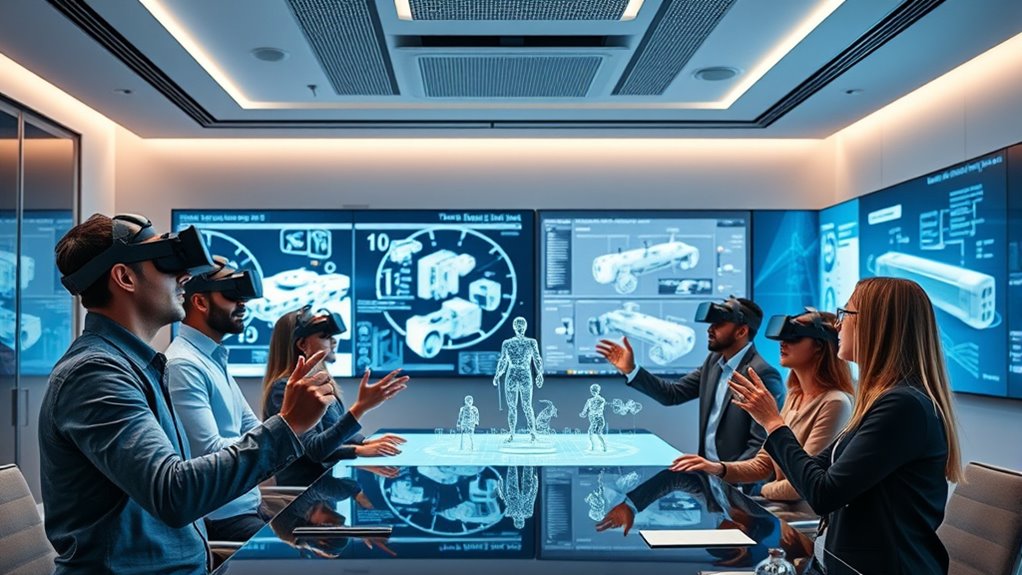

AR and VR are transforming your workplace by making training, design, and collaboration more immersive and efficient. You can explore virtual walkthroughs, interact with 3D models, and participate in realistic simulations that improve understanding and retention. These tools foster better teamwork and streamline project reviews, saving time and resources. As these technologies continue evolving, you’ll find new ways to connect and innovate—keep exploring to discover how AR and VR can enhance your work environment.
Key Takeaways
- AR and VR enable immersive training simulations, enhancing skill retention and providing safe practice environments.
- They facilitate real-time collaboration on 3D models, improving design accuracy and reducing development cycles.
- Virtual walkthroughs and interactive experiences streamline onboarding and remote work integration.
- AR and VR tools support virtual prototyping, visualizing concepts early to minimize waste and accelerate innovation.
- Security considerations, such as ethical hacking, ensure safe and protected virtual collaboration environments.

Augmented reality (AR) and virtual reality (VR) are transforming the way we work by offering immersive, interactive experiences that boost productivity and collaboration. These technologies are especially impactful when it comes to remote onboarding and virtual meetings. Instead of relying solely on videos or static documents, you can now walk new employees through your office environment or complex procedures in a virtual space, making onboarding more engaging and effective. With AR and VR, new hires can explore your workspace or equipment virtually, gaining a realistic understanding of their roles without the need to be physically present. This approach reduces onboarding time and helps new team members feel more connected, even if they’re thousands of miles away. During virtual meetings, AR and VR bring a new level of interaction that traditional video calls can’t match. Instead of just seeing and hearing colleagues, you can share a 3D model, manipulate data together, or collaborate on a virtual whiteboard, creating a sense of presence and immediacy. This immersive experience encourages more active participation and reduces misunderstandings, which can often occur in standard virtual meetings. For teams that work on design, AR and VR enable real-time collaboration on complex projects. You can view and modify 3D models as if they were physically present, streamlining the review process and ensuring everyone is literally on the same page. This eliminates the need for multiple revisions and miscommunications, saving time and resources. Training also benefits immensely from AR and VR, especially for hands-on tasks. Instead of reading lengthy manuals or watching videos, you can engage in interactive simulations that mimic real-life scenarios. This approach enhances retention and skill acquisition, making training more efficient and less costly. Whether it’s practicing machinery repair or emergency procedures, AR and VR give you a safe environment to learn and make mistakes without consequences. Additionally, understanding the capabilities of ethical hacking can help organizations better secure their virtual environments against potential threats. These technologies are also transforming design workflows by allowing you to visualize and test prototypes before any physical production begins. This reduces waste and accelerates project timelines. As AR and VR continue to evolve, their integration into everyday work processes will become even more seamless, making collaboration more natural and training more effective. You’ll find that these tools not only improve productivity but also foster a more innovative, flexible work culture. Embracing AR and VR means you’re stepping into a future where distance is no longer a barrier to effective teamwork, training, and design.
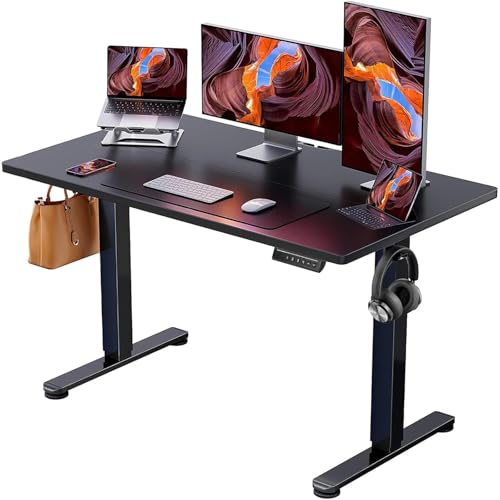
ErGear Height Adjustable Electric Standing Desk, 48 x 24 Inches Sit Stand up Desk, Memory Computer Home Office Desk, Black
Electric Height Adjustable Standing Desk for Comfortable Work - Switch effortlessly between sitting and standing with this electric...
As an affiliate, we earn on qualifying purchases.
Frequently Asked Questions
What ARe the Cost Implications of Implementing AR and VR Systems at Work?
Implementing AR and VR systems at work involves significant costs upfront, including hardware costs for devices like headsets and controllers. You’ll also face ongoing maintenance expenses to keep the equipment updated and functioning smoothly. While these investments can be high initially, they may lead to long-term savings through improved training efficiency and collaboration. Carefully evaluate your budget and potential benefits before committing to guarantee the costs align with your organizational goals.
How Do AR and VR Impact Employee Productivity and Engagement Levels?
AR and VR boost your employee productivity and engagement by making remote collaboration seamless and immersive. When you use these technologies, employees stay motivated because they experience more interactive and realistic training and teamwork. This heightened engagement encourages faster learning and better communication. As a result, your team becomes more efficient, motivated, and connected, which ultimately improves overall workplace performance and satisfaction.
What ARe the Best Practices for Integrating AR and VR Into Existing Workflows?
To seamlessly integrate AR and VR into your workflows, start with user onboarding by offering hands-on training and clear instructions. Emphasize remote collaboration tools within these platforms to enhance communication across teams. Regularly assess how these technologies fit into your processes, gather feedback, and make adjustments. By doing so, you guarantee smooth adoption, boost productivity, and foster a more engaged, innovative work environment.
How Do AR and VR Solutions Address Data Privacy Concerns?
Your AR and VR solutions shield your data like a fortress. They address privacy concerns by implementing robust data encryption, ensuring your sensitive information stays secure. User authentication adds an extra layer of protection, verifying only authorized users access the system. Together, these measures prevent breaches and keep your data safe, so you can focus on innovation without worrying about privacy threats.
What Future Developments Can We Expect in AR and VR Technology for Workplaces?
You can expect future AR and VR workplace tech to feature advanced haptic feedback, making interactions feel more realistic, and enhanced spatial mapping for precise environment integration. These innovations will improve training, design, and collaboration by creating more immersive, intuitive experiences. As technology evolves, you’ll likely see lighter, more affordable devices, smarter AI integration, and seamless real-world data syncing, making virtual workspaces more practical and engaging for you.

PU Leather Executive Office Chair, Ergonomic High-Back Computer & Gaming Chair with Adjustable Height, Rolling Swivel & Flip-Up Armrests, Comfy Padded Seat for Home Office-Black
Ergonomic Design:Our mid-back computer chair boasts a contoured wrap-around backrest that follows your body's natural curves, delivering lumbar...
As an affiliate, we earn on qualifying purchases.
Conclusion
As you step into the world of AR and VR at work, think of these technologies as your new compass and map, guiding you through uncharted territories of training, design, and collaboration. They transform your workspace into an immersive landscape where ideas come alive and teamwork feels like a shared adventure. Embracing AR and VR isn’t just adopting new tools; it’s opening a whole new universe of possibilities, ready to be explored with curiosity and confidence.

FlexiSpot E6 Bamboo 3-Stage Dual Motor Electric Standing Desk 55 x 28 Sit Stand Up Desk, Holds 220 lbs, Adjustable Height w/ Memory Presets, Solid Bamboo Desktop & White Frame, Ships in 2 Boxes
【BAMBOO IS STRONGER THAN STEEL】: Mature bamboo is highly flexible and has a tensile strength of 28000 pounds...
As an affiliate, we earn on qualifying purchases.

Hurom H320 Cold Press Juicer Machine, Easy to Clean Masticating Slow Juicer, Coarse Strainers, Self-Feeding, Hands Free, Family Size, Quiet Motor, Easy Assembly (Kale/Dark Green)
ULTRA LOW PULP: Features a control lever and fine and coarse strainers, enabling you to adjust the pulp...
As an affiliate, we earn on qualifying purchases.