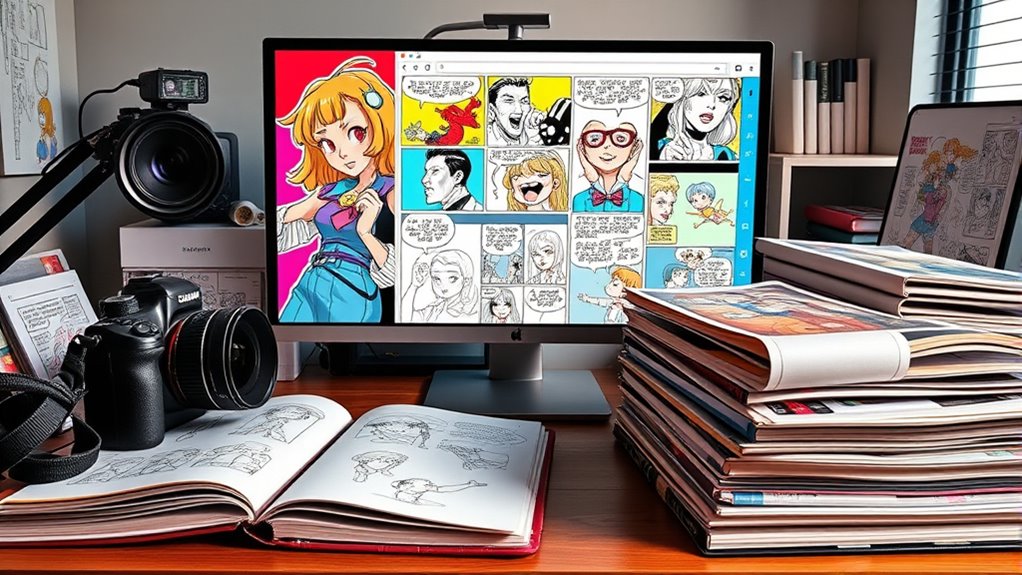

Digital innovations have transformed comics and webtoons from traditional printed pages into vibrant, interactive stories that reach a worldwide audience through screens. You can experience stories with vertical scrolling, animations, and high-quality visuals on smartphones and tablets. Platforms encourage community sharing, real-time updates, and creator engagement, making stories more dynamic than ever before. If you keep exploring, you’ll discover how these digital pathways continue to reshape storytelling possibilities across the globe.
Key Takeaways
- Digital adaptation transforms comics into webtoons with vertical scrolling and animated elements for mobile-friendly viewing.
- Webtoons reach global audiences through online platforms, breaking geographical barriers and enabling international fan communities.
- Fan translations and community engagement boost story popularity and foster interactive discussions around plot and characters.
- Digital formats allow creators to develop longer, more complex stories with frequent updates and multimedia features.
- Webtoon-to-screen adaptations, like TV series or movies, leverage digital storytelling to expand narratives into mainstream media.
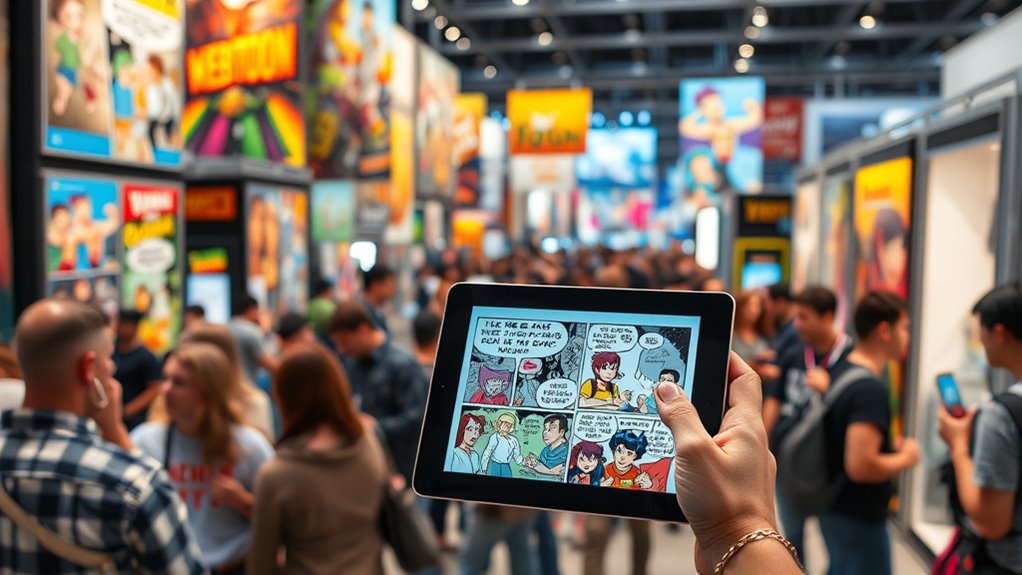
Have you ever wondered how comics and webtoons have become such popular forms of storytelling? The answer lies in their ability to evolve and adapt to new platforms and audiences. Digital adaptation plays a pivotal role here, transforming traditional comics into accessible, vibrant webtoons that can be enjoyed on smartphones and tablets. This shift not only broadens the reach of these stories but also encourages creators to experiment with innovative formats, such as vertical scrolling and animated elements, making the reading experience more engaging. As a result, webtoons have gained a massive global following, especially in regions where digital consumption dominates. Fans worldwide now access these stories instantly, breaking down geographical barriers that once limited comic distribution. Additionally, high-quality digital displays support color accuracy, which enhances the visual appeal of webtoons and comics alike. Fan translations have also fueled the explosive growth of comics and webtoons outside their original languages. When enthusiasts translate and share stories online, they create a ripple effect that helps these works reach new audiences rapidly. You might have noticed how fan translations appear on various platforms, often before official versions are released in other languages. These translations help build a dedicated community of international readers who passionately discuss plot twists, character development, and upcoming episodes. While fan translations can sometimes raise copyright concerns, they undeniably contribute to the global popularity of webtoons and comics, introducing stories to people who might not otherwise have had access. For many fans, these translations serve as the gateway to official releases and even inspire creators to produce content that resonates across cultures. The digital landscape also allows creators to experiment with new storytelling techniques, blending visual art with interactive elements that traditional print couldn’t support. This adaptation to digital formats means comics and webtoons are no longer confined by page limits or printing costs. Instead, creators can develop longer, more intricate storylines, with updates delivered weekly or even daily. This ongoing engagement keeps fans hooked and eager for the next installment. Additionally, digital platforms often incorporate features like comments, likes, and sharing options, making the experience more communal. Fans can discuss theories, share artwork, or connect with creators directly, fostering a sense of community that fuels further interest and creativity.
Top picks for "comic webtoon page"
Open Amazon search results for this keyword.
As an affiliate, we earn on qualifying purchases.
Frequently Asked Questions
How Do Creators Protect Their Intellectual Property Rights?
To protect your intellectual property rights, you should register your work for copyright enforcement, which gives you legal proof of ownership. Additionally, use licensing agreements to specify how others can use or adapt your creations, ensuring you maintain control. Regularly monitor the use of your work online and offline, and take action against unauthorized use to uphold your rights and prevent infringement.
What Are the Biggest Challenges in Adapting Comics to Screen?
Imagine building a bridge between two worlds, but each has its own language. Adapting comics to screen challenges you to maintain visual consistency amidst shifting styles and pacing challenges that can disrupt storytelling flow. You must navigate these hurdles carefully, ensuring the story remains true to its roots while fitting the new medium. It’s a delicate dance, requiring precision to keep audiences engaged without losing the original magic.
How Do Fan Communities Influence Adaptation Decisions?
Fan communities greatly influence adaptation decisions through fan theories and community feedback. You might see creators adjusting storylines or characters based on popular theories or strong feedback from fans. This engagement helps shape the adaptation to meet audience expectations, ensuring the project resonates with fans’ desires. Your enthusiasm and input can sway creative choices, making adaptations more aligned with what the community values, ultimately strengthening the connection between fans and the final product.
Are There Differences in Adaptation Approaches Between Western and Asian Comics?
A picture is worth a thousand words, and you’ll see this in adaptation approaches. Western comics often focus on dynamic visual storytelling, emphasizing action and broad appeal. Asian comics, or webtoons, incorporate cultural nuances and detailed cultural references into their visuals, guiding adaptations to respect origins. You recognize that these differences shape how creators translate comics into screen versions, blending cultural authenticity with storytelling techniques.
What Tools Are Used to Visualize Webtoon-To-Screen Transitions?
You use digital storyboards to plan the webtoon-to-screen shift, helping visualize scenes and pacing. Tools like CG rendering bring static images to life by adding depth, movement, and realistic lighting. These technologies allow you to create detailed visualizations that bridge the gap between static webtoon art and dynamic screen scenes. By combining digital storyboards with CG rendering, you guarantee a smoother, more engaging adaptation process that captures the original’s essence.
Conclusion
Your journey from comics and webtoons to screen is like turning a spark into a blazing fire—full of potential and passion. As these stories leap from page to screen, they ignite imaginations and connect hearts worldwide. Embrace this transformation, knowing each adaptation is a brushstroke in a grand masterpiece. Keep your eyes open; the next big story might just be waiting to burst into flames and light up your world.