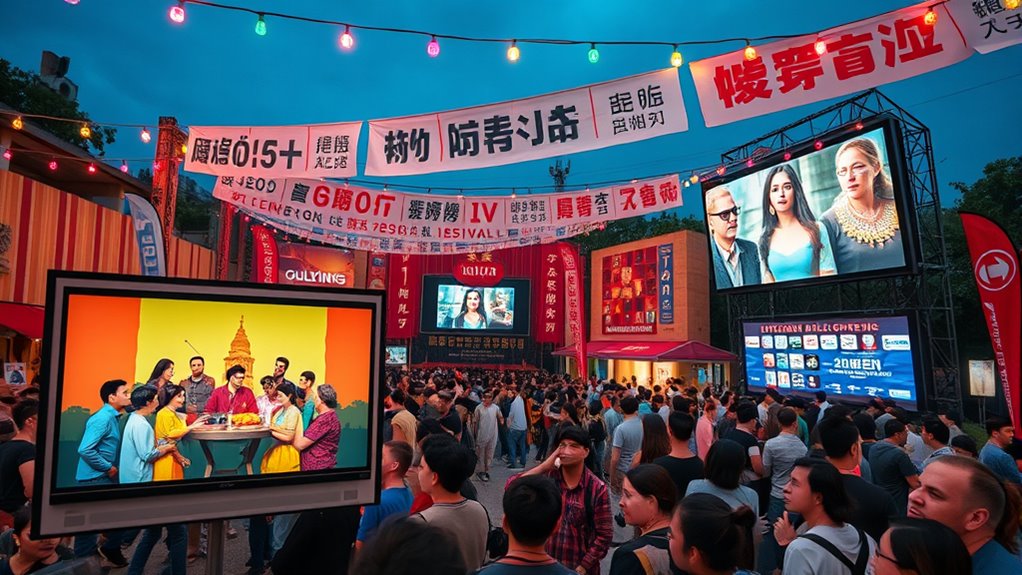

When shows go global, they become powerful cultural exports that showcase your country’s identity, values, and creativity worldwide. Your audience’s reception matters, as it influences how well the content resonates across borders. To succeed, the shows often undergo cultural adaptation, ensuring they relate to different audiences while staying authentic. A well-executed localization can foster understanding and enthusiasm. Keep exploring to discover how effective adaptations and cultural sensitivity bring international audiences closer together.
Key Takeaways
- Cultural exports showcase a country’s identity and values, fostering international influence and cross-cultural understanding.
- Audience reception determines a show’s global popularity, influenced by emotional and intellectual connections.
- Content is adapted through localization methods like subtitles and plot modifications to suit different cultural contexts.
- High-quality adaptations enhance acceptance, while poor ones can lead to misunderstandings and rejection.
- Balancing authenticity with relatability helps shows resonate globally, building a diverse and engaged international audience.

Cultural exports are powerful tools for countries to showcase their identity, values, and creativity on the global stage. When you watch a show from another country, you’re experiencing more than just entertainment—you’re engaging with a slice of that culture’s worldview. But for these exports to truly resonate beyond borders, they must navigate the complex process of audience reception and cultural adaptation. Audience reception plays a vital role in determining whether a show gains popularity or fades into obscurity. It’s not enough for a production to be well-made; it needs to connect emotionally or intellectually with viewers unfamiliar with its cultural context. That’s why producers and creators often tailor content, considering what aspects will resonate or need explanation. For example, humor, social norms, or references that are common in one country might not translate seamlessly elsewhere. Recognizing this, creators sometimes adapt their shows to suit different audiences, either through localization or cultural tweaking. This process, known as cultural adaptation, helps bridge gaps and makes content more accessible. You might notice subtitles, dubbing, or even plot adjustments designed to align with local customs and sensibilities. These adaptations aren’t just about language—they’re about ensuring the story remains authentic while respecting local nuances. When done well, cultural adaptation can lead to widespread acceptance and enthusiastic reception from diverse audiences. Conversely, poor adaptation can alienate viewers or cause misunderstandings, undermining the show’s global success. As a viewer, you might not always be aware of these behind-the-scenes efforts, but they profoundly influence how well a show is received across different cultures. Successful cultural exports often strike a delicate balance: they stay true to their origin while being flexible enough to resonate with international audiences. Additionally, understanding content localization and cultural nuances is crucial for creating an engaging experience. This approach helps build a global fan base that appreciates the show for both its authenticity and its relatability. Ultimately, the journey of a show from its homeland to international screens hinges on understanding audience reception and effectively managing cultural adaptation. When these elements align, you get a compelling, engaging experience that transcends borders, bringing diverse stories into your living room. It’s a reflection of how cultural exports foster understanding, spark curiosity, and celebrate shared human experiences, all while showcasing the unique creativity of their country of origin.

A Minute's Silence
As an affiliate, we earn on qualifying purchases.
As an affiliate, we earn on qualifying purchases.
Frequently Asked Questions
How Do Cultural Nuances Affect International Reception of Shows?
You’ll find that cultural nuances greatly influence how international audiences receive shows. Linguistic barriers can make it hard for viewers to understand jokes or references, while cultural symbolism might be misunderstood or lost. When creators consider these nuances, they help guarantee that humor, themes, and messages resonate across borders. Adapting content thoughtfully allows viewers from different backgrounds to connect emotionally, making your show more successful globally.
What Role Do Streaming Platforms Play in Global Distribution?
Streaming platforms play a vital role in global distribution by expanding your show’s reach worldwide. They enable you to access diverse audiences and provide a platform for content localization, making your show more relatable across cultures. With their vast global reach, these platforms help you break geographic barriers, ensuring your content gets seen by viewers everywhere. They also offer tools to adapt your show to different languages and cultural nuances, broadening your international appeal.
How Do Local Regulations Impact International Broadcasting?
Local regulations can considerably impact your international broadcasting efforts by creating regulatory challenges and licensing hurdles. You need to navigate different countries’ rules on content, censorship, and licensing requirements, which can delay or restrict your show’s reach. Staying informed about these regulations and working with local legal experts helps you comply and smooths the path for your content to go global. Ignoring these factors risks fines, bans, or limited distribution.
What Are the Economic Benefits of Cultural Exports?
You gain economic benefits through cultural exports by fueling market expansion, increasing revenue growth, and boosting local economies. When your shows go global, you tap into new audiences, diversify income streams, and attract international investments. This expanded reach not only enhances your brand’s global presence but also creates jobs and stimulates commerce. Ultimately, cultural exports turn entertainment into a powerful economic engine, making your industry more competitive and sustainable worldwide.
How Do Cultural Exports Influence International Perceptions?
Your cultural exports shape international perceptions by showcasing cultural symbolism that highlights your unique identity. When your shows engage audiences worldwide, they foster a deeper understanding and appreciation of your culture. This increased audience engagement helps break down stereotypes and build positive images, influencing perceptions positively. Ultimately, your cultural exports act as powerful tools to promote cultural understanding, making your country more relatable and respected on the global stage.

Cultural Adaptations: Tools for Evidence-Based Practice With Diverse Populations
Used Book in Good Condition
As an affiliate, we earn on qualifying purchases.
As an affiliate, we earn on qualifying purchases.
Conclusion
So, as you watch your favorite show go global, remember it’s more than entertainment—it’s your culture quietly taking over the world. Ironically, while it spreads, you might forget where it all started. What began as local stories now shape perceptions worldwide, proving that in sharing your culture, you might just lose a piece of your own. Sometimes, the biggest export isn’t just a show; it’s a silent transformation you barely notice.
dubbing software for international shows
As an affiliate, we earn on qualifying purchases.
As an affiliate, we earn on qualifying purchases.

HOW THE HELL… Do I Get My Film Financed?: Book One: TAX INCENTIVES : How Choosing The Right Location Can Help You Get Your Film Or TV Show Financed And Produced!
As an affiliate, we earn on qualifying purchases.
As an affiliate, we earn on qualifying purchases.