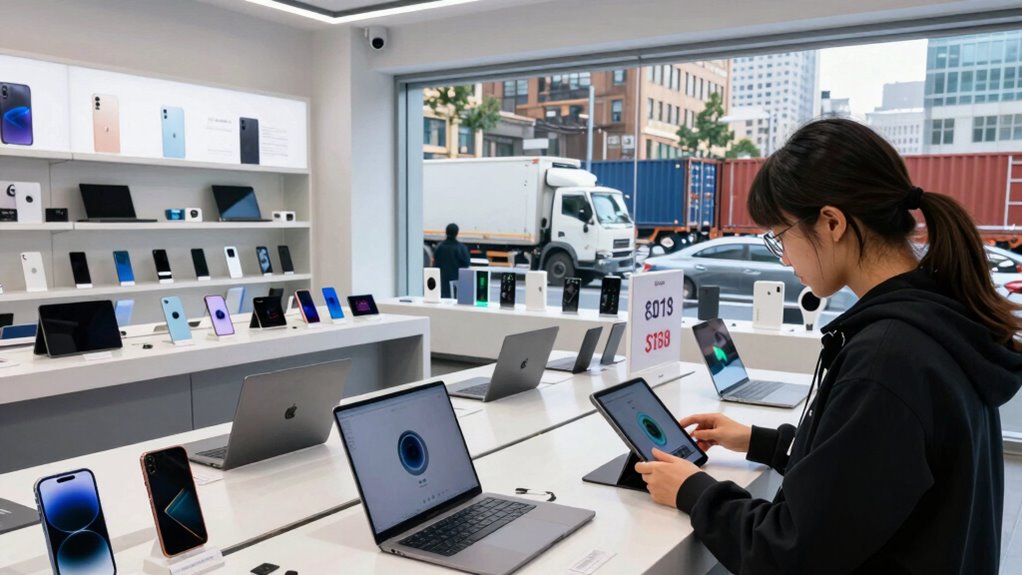

Trade tensions cause costs to rise and disrupt supply chains, which directly impacts tech and retail prices. Tariffs and import restrictions lead to delays and shortages of key components like semiconductors. As a result, manufacturers face higher raw material costs, and retailers struggle to keep shelves stocked, often passing these costs to you. This price volatility also lowers consumer confidence, slowing demand. If you want to understand how these factors connect, keep exploring the details ahead.

Get movie nights delivered free with Prime
- Fast, free delivery on millions of items
- Prime Video, Amazon Music and more included
- Member-only deals all year
Key Takeaways
- Trade tensions lead to tariffs and import restrictions, increasing costs for raw materials and components.
- Supply chain disruptions cause shortages of key parts, raising production costs and retail prices.
- Higher prices and shortages reduce consumer confidence, decreasing demand for tech and retail goods.
- Companies may delay inventory purchases and pass increased costs to consumers, impacting affordability.
- Ongoing trade conflicts can slow innovation and cause market volatility across sectors.
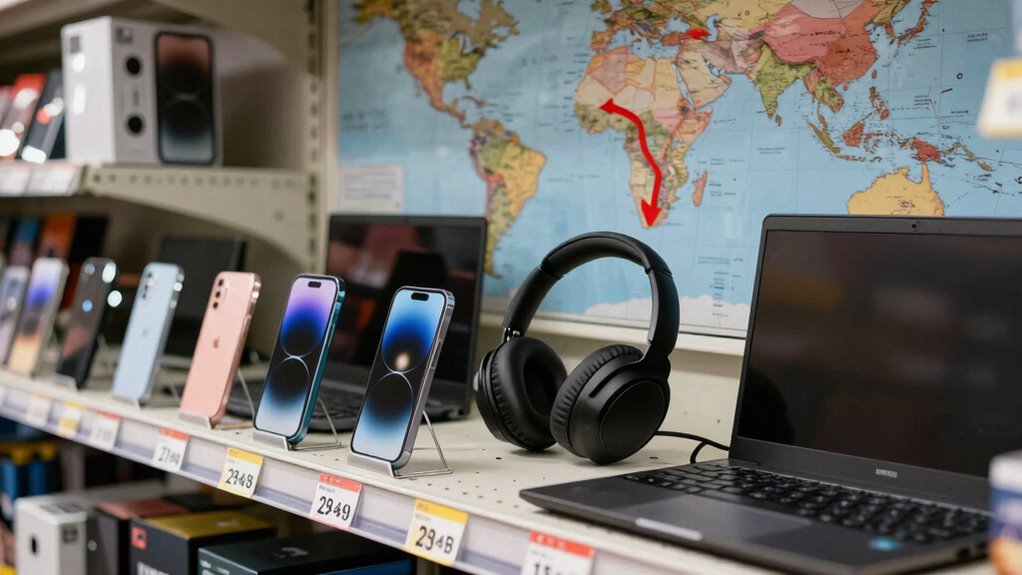
Trade tensions are causing significant fluctuations in global prices, affecting markets across industries. When countries impose tariffs or restrict imports, the ripple effects reach manufacturers, retailers, and consumers alike. In the tech and retail sectors, these disruptions are particularly noticeable because they rely heavily on complex supply chains that stretch across multiple nations. Supply chain disruptions lead to delays and increased costs for raw materials and components. For example, shortages of semiconductors or electronic parts can halt production lines, forcing companies to adjust their pricing strategies. As a result, consumer electronics and gadgets become more expensive, and retailers struggle to keep shelves stocked at previous price points.
Supply chain disruptions raise costs and cause shortages, making tech gadgets more expensive and harder to find.
These supply chain issues don’t just affect the manufacturers; they influence consumer confidence directly. When prices for popular tech items or everyday retail goods rise unexpectedly, shoppers become more cautious about spending. They worry about further price hikes or product shortages, which can slow down overall demand. This decline in consumer confidence often prompts shoppers to delay purchases or seek cheaper alternatives, further impacting retail sales. For tech companies, the uncertainty can lead to lower sales projections and tighter profit margins, which the market quickly picks up on, causing stock prices to fluctuate.
You, as a consumer, might notice these changes in several ways. Maybe the latest smartphone or gaming console is harder to find, or it costs more than last year. Retailers might also pass on increased costs to you, knowing that supply chain disruptions have made inventory more expensive to acquire. This can make it feel like your purchasing power is shrinking, even if your income remains stable. In some cases, companies might attempt to absorb the higher costs to maintain competitiveness, but they often can’t do this indefinitely. As a result, prices rise, and your perception of affordability shifts.
Trade tensions also create an environment of uncertainty that impacts the entire supply chain ecosystem. Manufacturers might stockpile components, leading to shortages elsewhere, and retailers may hold back on large orders, expecting prices to stabilize later. This uncertainty fuels volatility in prices, which affects not only the immediate market but also investor confidence in tech and retail stocks. Over time, persistent trade tensions could slow down innovation and disrupt growth in these sectors, further influencing prices in unpredictable ways. Additionally, the reliance on specific key brands and their supply networks makes the entire sector even more vulnerable to these disruptions. Understanding the derating factors such as altitude and temperature is crucial for companies planning long-term investments in manufacturing and distribution. Moreover, these supply chain challenges emphasize the importance of diversifying sourcing strategies to mitigate risks associated with geopolitical conflicts. Recognizing the role of global trade policies can help companies better prepare for and adapt to these ongoing disruptions.
semiconductor shortage electronics
As an affiliate, we earn on qualifying purchases.
As an affiliate, we earn on qualifying purchases.
Frequently Asked Questions
How Do Trade Tensions Affect Emerging Markets Differently?
Trade tensions hit emerging markets hard, causing currency fluctuations that can weaken their economies. You’ll see higher costs for imports, which push up prices for consumers and businesses alike. These tensions can also reduce foreign investment, slowing growth. As a result, you might notice increased inflation, decreased purchasing power, and disrupted supply chains, making it tougher for emerging markets to stabilize and thrive amid global trade uncertainties.
What Role Do Tariffs Play in Consumer Electronics Pricing?
Tariffs directly increase the cost of importing consumer electronics, which means higher prices for you. You might think supply chain disruptions could be the main culprit, but tariffs add a significant markup, especially when consumer demand is high. They make it more expensive for manufacturers to bring in components or finished products, and those costs often get passed on to you, leading to pricier gadgets and devices on store shelves.
Can Trade Disputes Lead to Innovation in Tech Industries?
Trade disputes can indeed spur innovation in tech industries. When tensions rise, companies prioritize protecting their intellectual property and seek alternative markets, which fuels competition. This increased market competition pushes firms to develop new, better technologies to stay ahead. You might notice faster innovation cycles as companies invest in unique solutions to navigate trade barriers, ultimately benefiting consumers and driving the industry forward despite the challenges posed by trade disputes.
How Quickly Do Prices Typically Respond to Trade Policy Changes?
You might think prices change slowly after trade policy shifts, but market volatility and supply chain disruptions can cause rapid responses. When tensions rise, prices often react within days or weeks, reflecting immediate concerns and uncertainties. These disruptions force companies to adjust swiftly, passing costs to consumers quickly. So, in volatile trade environments, you’ll notice prices shifting more rapidly than you might expect, often in real-time as markets react.
Are Small Retailers More Vulnerable to Trade-Related Price Shifts?
Yes, small retailers are more vulnerable to trade-related price shifts. Supply chain disruptions hit them harder because they often lack the resources to quickly adapt or source alternatives. Additionally, consumer sentiment can decline during trade tensions, reducing sales and profit margins. As a result, small retailers feel the impact more acutely, experiencing fluctuating costs and uncertain demand, which makes managing prices and inventory more challenging.
consumer electronics price increase
As an affiliate, we earn on qualifying purchases.
As an affiliate, we earn on qualifying purchases.
Conclusion
As you navigate the tech and retail markets, remember that trade tensions aren’t just headlines—they impact prices you pay. Did you know that tariffs can add up to 25% to the cost of electronics? That’s a significant jump for consumers like you. Staying informed about these tensions helps you make smarter buying decisions and prepare for potential price swings. Keep an eye on global trade news—your wallet will thank you.
As an affiliate, we earn on qualifying purchases.
As an affiliate, we earn on qualifying purchases.
Halloween Picks
halloween
As an affiliate, we earn on qualifying purchases.