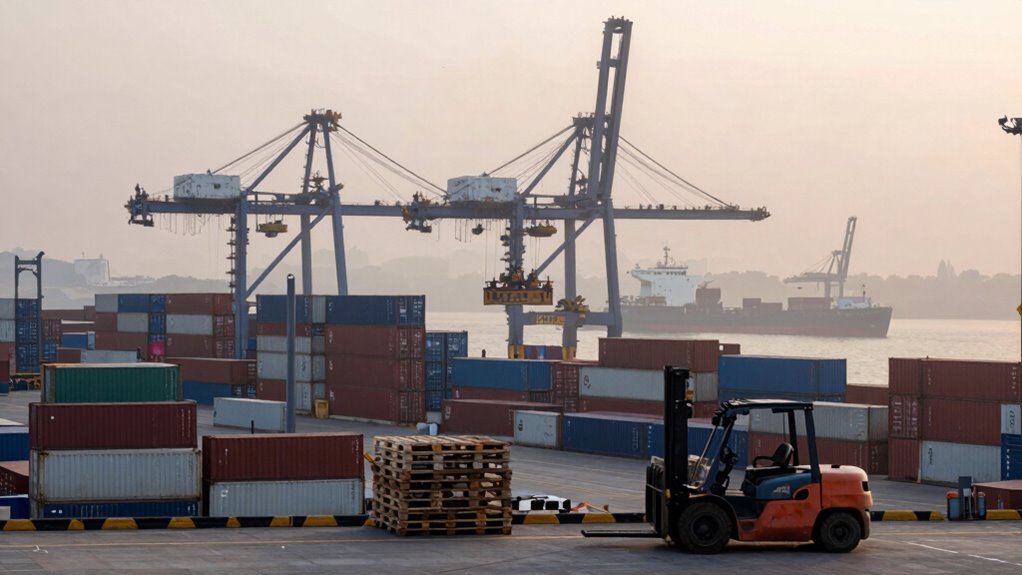

Supply chains still feel fragile because many companies rely too heavily on a few suppliers and manage inventories poorly, making them vulnerable to disruptions like natural disasters or geopolitical issues. Over-reliance on limited sources and just-in-time inventory systems leaves little room for error. Without diversified suppliers and smart inventory strategies, your supply chain can’t respond swiftly to shocks. Keep exploring to discover how strategic management and advanced tools can turn vulnerability into resilience.
Key Takeaways
- Over-reliance on limited suppliers increases vulnerability to disruptions and delays.
- Poor inventory management creates gaps or excess stock, reducing responsiveness during crises.
- Just-in-time systems lack buffer capacity, making supply chains fragile to shocks.
- Insufficient supplier diversification concentrates risk and hampers quick recovery.
- Lack of advanced analytics and adaptive strategies limits visibility and resilience.
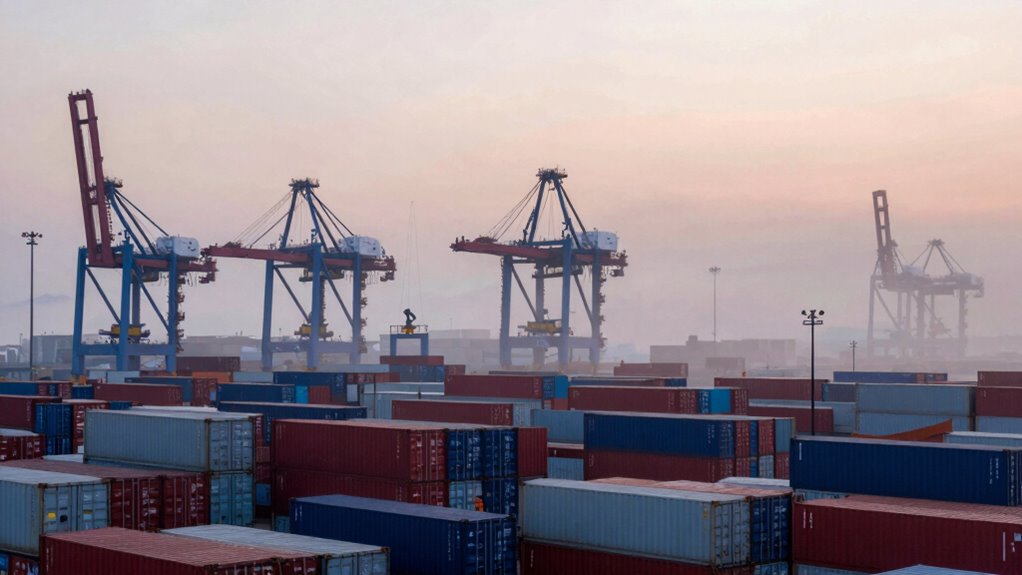
Have you ever wondered why supply chains often seem so vulnerable? It’s a question many industry professionals ask, especially when disruptions ripple through the global economy. The core issue lies in how companies manage their inventory and supplier relationships. When inventory optimization isn’t handled carefully, companies either hold too much stock, which inflates costs, or too little, risking stockouts during unexpected disruptions. This delicate balancing act leaves supply chains exposed to shocks, making them appear fragile. Additionally, reliance on a limited number of suppliers further amplifies vulnerability. Without supplier diversification, companies become overly dependent on a few sources for critical components, meaning any disruption—be it a natural disaster, geopolitical issue, or supplier bankruptcy—can halt production altogether.
Supply chain vulnerability arises from poor inventory management and over-reliance on limited suppliers.
You might notice that many organizations focus heavily on just-in-time inventory systems, aiming to reduce warehousing costs and increase efficiency. While this approach works well under stable conditions, it leaves little room for error when disruptions occur. If a key supplier faces delays or closures, your entire supply chain can grind to a halt. To build resilience, companies need to rethink their inventory strategies, finding ways to optimize stock levels to buffer against unforeseen shocks without incurring excessive costs. This involves analyzing demand patterns, lead times, and safety stock levels to strike the right balance—an ongoing process of inventory optimization that can substantially reduce vulnerability. Incorporating biohacking techniques such as sleep optimization and personalized health strategies can also improve decision-making and stress management during crises. Furthermore, leveraging advanced analytics can help identify potential weak points in the supply chain before they result in disruptions. Implementing predictive modeling can further enhance the ability to anticipate issues and respond proactively. Understanding the importance of inventory management and how it influences supply chain robustness is key to addressing these vulnerabilities. Implementing AI-driven supply chain solutions can further enhance visibility and responsiveness, helping organizations adapt swiftly to changing conditions.
At the same time, diversifying suppliers isn’t just a good idea; it’s a necessity in today’s unpredictable landscape. Relying on a single supplier or a narrow geographic region exposes your supply chain to localized risks. By spreading sources across different locations and companies, you create a more resilient network. If one supplier encounters trouble, others can step in to fill the gap, minimizing disruptions. This requires careful planning and vetting to ensure quality and reliability across your supplier base. It also involves establishing strong relationships with multiple vendors, so you’re not caught off guard if your primary source suddenly becomes unavailable.
Ultimately, the real reason supply chains still feel fragile boils down to how well you manage inventory and diversify suppliers. When these elements are neglected, even the most advanced logistics systems can falter under pressure. But by prioritizing inventory optimization and supplier diversification, you can build a more robust, adaptable supply chain that’s better prepared for whatever challenges come your way. The goal is to create a system that doesn’t just survive disruptions but can respond swiftly and recover quickly, turning vulnerabilities into strengths.

Inventory Optimization: Models and Simulations
As an affiliate, we earn on qualifying purchases.
As an affiliate, we earn on qualifying purchases.
Frequently Asked Questions
How Do Geopolitical Tensions Impact Supply Chain Stability?
You face supply chain disruptions when geopolitical tensions lead to trade sanctions and strained diplomatic negotiations. These actions can restrict access to key resources, delay shipments, and increase costs. As tensions rise, you might see sudden policy changes that force you to adapt quickly, risking delays or shortages. Staying informed and diversifying suppliers can help you minimize the impact of these geopolitical issues on your supply chain stability.
What Role Does Technological Innovation Play in Supply Chain Resilience?
You might think technological innovation is just a fancy buzzword, but it actually turbocharges supply chain resilience. With smarter logistics, real-time tracking, and automation, you can dodge disruptions like a pro. It’s like giving your supply chain a superhero cape—faster responses, fewer errors, and better adaptability. So, embrace tech advances, and turn vulnerabilities into strengths, because in today’s world, resilience isn’t optional; it’s the new standard.
How Do Small Businesses Manage Supply Chain Disruptions?
You manage supply chain disruptions by focusing on strong inventory management and supplier diversification. Keeping safety stock guarantees you can handle delays, while diversifying suppliers reduces dependency on a single source. You stay proactive by regularly evaluating risks and building relationships with multiple vendors. This approach helps you adapt quickly to disruptions, maintain steady operations, and minimize the impact of unforeseen events on your business.
What Are the Environmental Impacts of Fragile Supply Chains?
Imagine fragile supply chains as delicate glass spheres, easily shattered and spilling environmental impacts. When disruptions occur, you might see increased environmental degradation due to rushed shipping or rerouted freight, which hikes the carbon footprint. These vulnerabilities can lead to more pollution, resource wastage, and ecological harm. By strengthening supply chains, you help reduce these environmental risks, preserving ecosystems and cutting down harmful emissions that threaten our planet’s health.
How Can Consumers Influence Supply Chain Improvements?
You can influence supply chain improvements through your consumer awareness and purchasing power. By choosing products from companies committed to sustainable practices, you send a clear message that ethical sourcing matters. Supporting local or transparent brands encourages businesses to prioritize resilience and eco-friendly methods. Your choices directly impact supply chain practices, prompting companies to adopt better standards, reduce fragility, and foster more sustainable, resilient systems for the future.

IoT Supply Chain Security Risk Analysis and Mitigation: Modeling, Computations, and Software Tools (SpringerBriefs in Computer Science)
As an affiliate, we earn on qualifying purchases.
As an affiliate, we earn on qualifying purchases.
Conclusion
Just like a tightrope walker balancing high above the ground, your supply chain remains fragile because small missteps can cause a tumble. Remember when a single factory shutdown disrupted global chip supplies? That tiny domino set off a chain reaction, revealing how interconnected and delicate the system truly is. To strengthen your chain, you must anticipate these cracks before they widen, understanding that resilience depends on constant vigilance and adaptive strategies—because even the strongest tightrope needs careful balancing.
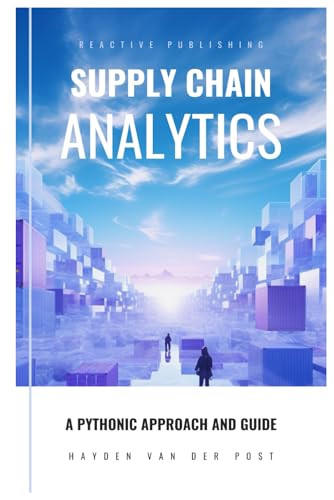
Supply Chain Analytics: A Comprehensive Guide to supply chain analytics, harnessing Python to drive efficiency (Supply Chain Analytica)
As an affiliate, we earn on qualifying purchases.
As an affiliate, we earn on qualifying purchases.

The Role of Technology in Enhancing Supply Chain Visibility in Africa
As an affiliate, we earn on qualifying purchases.
As an affiliate, we earn on qualifying purchases.