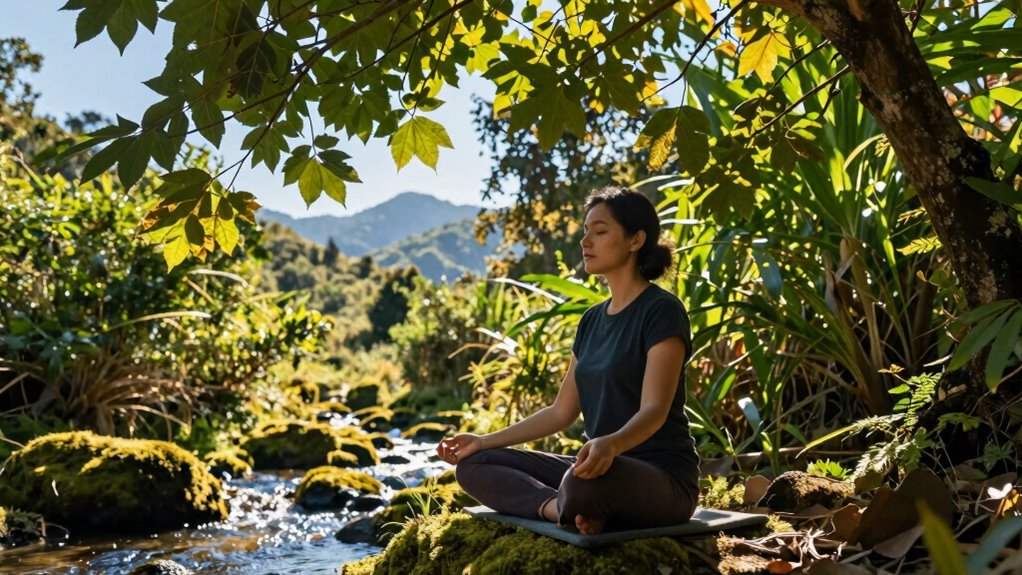

Mindfulness keeps evolving beyond traditional meditation because it adapts to meet your modern needs in different settings, like work and education. Its roots in ancient practices give it a solid foundation, while scientific research proves its benefits for reducing stress and improving focus. As life gets faster and more complex, mindfulness offers practical tools to stay present, manage emotions, and connect better with others. If you want to discover more, you’ll find how these developments help you navigate daily challenges effectively.

Get movie nights delivered free with Prime
- Fast, free delivery on millions of items
- Prime Video, Amazon Music and more included
- Member-only deals all year
Key Takeaways
- Mindfulness has expanded from traditional meditation to practical tools for stress reduction and well-being in daily life.
- Its scientific validation encourages adaptation across diverse settings like education and workplaces.
- The core principles of awareness and presence remain relevant, allowing flexible integration into modern environments.
- Growing recognition of mental health needs drives innovation and broader application beyond meditation practices.
- Its versatility addresses universal human needs for connection, clarity, and emotional balance in complex worlds.

Mindfulness has come a long way from its roots in ancient meditation practices to becoming a mainstream approach for managing stress and improving well-being today. Its evolution reflects a shift from solitary meditation sessions to widespread applications across various areas of life, including education and workplaces. You might have experienced mindfulness as a tool to calm your mind or improve focus, but its reach now extends far beyond individual practice.
Mindfulness has evolved from ancient meditation to a vital tool for stress management and well-being in daily life.
In education, mindfulness is transforming how students and teachers approach learning and emotional regulation. Schools are incorporating mindfulness in education to foster better attention spans, reduce anxiety, and promote emotional resilience. You could find programs that teach students to pause and breathe before reacting impulsively or to stay present during lessons. This not only enhances classroom behavior but also helps students develop skills that serve them throughout life. When you engage in mindfulness activities with students, you’re contributing to an environment where learning becomes more inclusive and supportive. Additionally, the integration of natural environments in mindfulness practices can further enhance its effectiveness by promoting a sense of calm and connection with nature. Research indicates that regional flavors and environments can influence the sensory experience and effectiveness of mindfulness practices, making each session uniquely impactful. Recognizing the importance of evidence-based insights helps ensure that these practices are grounded in scientific research, increasing their credibility and effectiveness. Furthermore, understanding the scientific foundations of mindfulness can deepen your appreciation of its benefits and guide its application more effectively.
Similarly, mindfulness in workplaces is reshaping how organizations prioritize employee well-being and productivity. Instead of viewing stress as a mere obstacle, companies now see mindfulness as a strategic tool to boost focus, creativity, and emotional intelligence. You might participate in workplace mindfulness sessions, mindful breaks, or even cultivate a mindful approach to meetings and communication. These practices help reduce burnout and foster a culture of awareness and empathy. When you bring mindfulness into your work environment, you’re not just managing your own stress but also contributing to a healthier, more collaborative atmosphere.
The reason mindfulness keeps evolving beyond meditation lies in its versatility and proven benefits. It adapts well to different settings, addressing the unique challenges of each. Whether you’re in a classroom or a corporate office, the core principles of mindfulness—being present, observing without judgment, and cultivating awareness—remain relevant. And as research continues to validate its advantages, more institutions and organizations recognize its potential to create positive change. Additionally, its foundation in ancient meditation practices helps explain its enduring relevance and capacity for adaptation.
You might wonder why mindfulness has expanded so rapidly. The answer is simple: it meets a universal need for connection, clarity, and calm in an increasingly complex world. Its evolution from traditional meditation to a practical, everyday tool highlights its ability to adapt and thrive. So, whether you’re a student, teacher, employee, or employer, mindfulness continues to grow as an essential part of modern life—helping you navigate stress and find balance in every aspect of your day.
mindfulness meditation tools for stress reduction
As an affiliate, we earn on qualifying purchases.
As an affiliate, we earn on qualifying purchases.
Frequently Asked Questions
How Does Mindfulness Incorporate Technology in Modern Practice?
You can incorporate technology into mindfulness through digital integration, using apps and wearable devices that guide your practice and track progress. Virtual mindfulness sessions enable you to connect with instructors or groups remotely, making practice accessible anywhere. These tools help you stay consistent, deepen your awareness, and adapt your mindfulness journey to your lifestyle. By embracing digital integration and virtual mindfulness, you make your practice more flexible, engaging, and personalized.
Can Mindfulness Be Effective Without Meditation?
Yes, mindfulness can be effective without meditation. You can practice daily awareness through mindfulness applications, which offer quick exercises and reminders to stay present. By integrating moments of mindfulness into your routine—like mindful eating or walking—you cultivate a sustained sense of calm and focus. These practices help you develop awareness outside traditional meditation sessions, making mindfulness accessible and impactful throughout your day.
What Role Does Neuroscience Play in Mindfulness Evolution?
Neuroscience plays a vital role in mindfulness evolution by revealing how brain plasticity allows your brain to change through mindful practices. It shows that consistent mindfulness can strengthen neural pathways associated with attention, emotional regulation, and stress reduction. This understanding motivates you to explore diverse techniques beyond meditation, knowing that your brain adapts and rewires itself for greater mental clarity and resilience.
How Is Mindfulness Adapted for Different Cultural Contexts?
You adapt mindfulness for different cultural contexts by blending traditional practices with local beliefs and customs. This process of cultural adaptations guarantees the approach resonates deeply and feels authentic. For example, incorporating local rituals or philosophies helps people connect more meaningfully. By respecting traditional practices, you make mindfulness accessible across diverse communities, fostering acceptance and engagement, and ensuring its evolution remains inclusive and relevant worldwide.
What Are Future Trends in Mindfulness Research?
Future trends in mindfulness research blend tradition with innovation, exploring mindfulness aesthetics to enhance emotional resilience. You’ll see studies integrating art, nature, and technology, creating immersive experiences that deepen mindfulness practice. Researchers will focus on personalized approaches, using data to tailor techniques for individual needs. This evolution fosters stronger mental health outcomes, making mindfulness more accessible and engaging, ultimately transforming how you incorporate awareness into everyday life while fostering resilience against stress.
mindfulness in education programs
As an affiliate, we earn on qualifying purchases.
As an affiliate, we earn on qualifying purchases.
Conclusion
As you continue exploring mindfulness, you’ll see it evolving beyond meditation into daily life and workplaces. Notably, a recent study shows that 60% of companies now incorporate mindfulness programs to boost employee well-being. This shift proves that mindfulness isn’t just a trend—it’s becoming an essential part of modern living. So, embrace its growth, and you’ll find new ways to improve your mental clarity, resilience, and overall happiness every day.
workplace mindfulness meditation sessions
As an affiliate, we earn on qualifying purchases.
As an affiliate, we earn on qualifying purchases.
mindfulness activity kits for adults
As an affiliate, we earn on qualifying purchases.
As an affiliate, we earn on qualifying purchases.
Halloween Picks
halloween
As an affiliate, we earn on qualifying purchases.