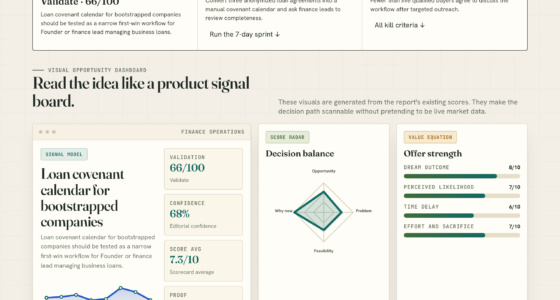

📊 Full opportunity report: Forward-Deployed Engineer Economics 2.0: The Unit Economics Math, Six Months Later on ThorstenMeyerAI.com — validation score, market gap, and execution plan.
TL;DR
Six months after initial analysis, the economics of Forward-Deployed Engineers (FDEs) have shifted significantly. Compensation has risen sharply, and the role’s profitability depends heavily on contract size and customer cohorts. This update assesses whether FDEs are a sustainable revenue driver for AI labs.
Six months after initial reports on Forward-Deployed Engineers (FDEs), the economic landscape has changed markedly, with compensation packages soaring and the role institutionalizing across multiple labs and industries. This update assesses whether FDEs are financially sustainable at scale, based on recent data and contract analysis.
Since the original dispatch in late 2025, FDE roles have expanded rapidly, with job postings increasing over 800% from January to September 2025. Major firms such as Palantir, Salesforce, EY, and Naver Cloud have committed to large-scale FDE programs, transforming the role from a niche tradecraft into a central enterprise AI deployment model.
Recent data from Levels.fyi shows the median total compensation for an Anthropic FDE, termed Applied AI Engineer, at $582,500, with senior levels reaching $756,000 and top packages reported at $920,000. Palantir’s baseline for FDEs remains lower, averaging around $238,000, but staff-levels can exceed $630,000. Industry composites estimate OpenAI’s mid-to-senior FDE compensation in the $350,000–$550,000 range.
Fully loaded costs for FDEs now range between $220,000 and $400,000 annually, with a significant portion of postings (70%) including equity, reflecting high growth expectations and high valuation prospects. Customer industries are diversified, with financial services, government, and healthcare leading, and over 500 customers generating more than $1 million annually for firms like Anthropic.
Financial analysis indicates that at high-value enterprise contracts, FDEs contribute a margin of 3 to 15 times their fully loaded costs, making the model profitable at scale. Conversely, deploying FDEs against smaller accounts or the long tail results in subsidized distribution costs, risking operating losses.
The unit economics math.
Six months later, the FDE compensation ladder has steepened. The customer-mix discipline is now the difference between margin and operating loss.
FDE postings +800% Jan–Sept 2025. Comp ladder spread now 4.6× from Palantir baseline to Anthropic top-end. Salesforce committed 1,000 FDEs. EY launched UK + Ireland practice. BCG renamed BCGX engineers. Korea, Japan, India scaling. The role institutionalized. The math is now computable.
From $200K to $920K. Same job title.
Levels.fyi data, May 5 2026. Palantir set the original FDE benchmark. Anthropic + OpenAI re-priced the role for frontier-lab competition. Total compensation packages including equity. The 4.6× spread reflects the gap between defense-and-finance customers vs. Fortune 10 enterprise agentic deployment.

Applied Machine Learning and AI for Engineers: Solve Business Problems That Can't Be Solved Algorithmically
As an affiliate, we earn on qualifying purchases.
As an affiliate, we earn on qualifying purchases.
Three customer scenarios. Three different answers.
Fully-loaded FDE cost at a frontier lab: $845K/year midpoint ($350-756K TC + 30% benefits + tooling + travel + management overhead). Revenue per FDE depends entirely on customer-mix discipline. The labs that maintain Scenario A targeting capture margin. The labs that chase volume across Scenarios B and C produce operating losses.
Anthropic profile (8 of Fortune 10, 500+ at $1M+/yr) sits decisively here. Profit center + distribution simultaneously. Margin captured.
Some accounts profitable, some break-even. Discipline-dependent. Likely OpenAI primary mix · contributes to operating loss profile. Knife-edge.
Each engagement loses ~$500–700K/yr fully-loaded. Subsidizing distribution. Unsustainable as scaled motion. Volume trap.

Corsair AI Workstation 300 Desktop PC – AMD Ryzen AI Max 385 CPU – AMD Radeon 8050S iGPU (Up to 48GBs vRAM) – 64GB LPDDR5X 8000MHz Memory – 1TB M.2 SSD – Black
AI-Optimized Compact Workstation: Experience AI performance out of the box with the compact 4.4L form factor, built for…
As an affiliate, we earn on qualifying purchases.
As an affiliate, we earn on qualifying purchases.
Agentic dominates. Top 3 industries = 59%.
Bloomberry analysis of 1,000+ FDE postings. The skill mix has shifted decisively from RAG to agentic. The customer-industry distribution explains where the unit economics work. Financial Services + Government + Healthcare are the absorbing categories.

NIMO 17.3" AI Laptop, 12 Cores AMD Ryzen AI 9 HX 370 64GB RAM 2TB SSD (Beat Ultra 9 285H Up to 5.1GHz), Radeon 890M, 100W Fast PD 144Hz FHD Backlit KB USB 4.0 for Gamer & Business 2-Yr Warranty
【Copilot+ & Next-Gen AI Performance】Step into the AI PC era with the AMD Ryzen AI 9 HX 370…
As an affiliate, we earn on qualifying purchases.
As an affiliate, we earn on qualifying purchases.
Five categories. 40-60 institutional employers.
From a dozen frontier-AI labs and Palantir two years ago to ~50 institutional employers globally now. Total category: 15,000–25,000 FDE roles. Actively employed: ~8,000–12,000. Demand exceeds supply by 2×. Compresses to 1.2–1.5× by 2028 as consulting + international supply scales.
The labs that maintain customer-mix discipline capture margin. The labs that chase volume across Scenarios B and C produce operating losses. The math is now computable.

Ergonomic Office Chair for Long Hours, Full-Body Support, Relieve Neck & Back Pressure, 330LBS Capacity, Ideal for Home Office, Office & Study
【Full-Body Comfort for Long Workdays】Designed to support your body from head to hips, this ergonomic office chair helps…
As an affiliate, we earn on qualifying purchases.
As an affiliate, we earn on qualifying purchases.
Four assignments. By role.
Negotiate aggressive equity at frontier labs now.
Comp ladder at peak premium. Frontier-lab roles will moderate by 18–24 months as talent pool expands (consulting + international supply). Pre-IPO equity at Anthropic has highest expected value now. Skills to develop: agentic-loop production debugging, MCP server engineering, customer-facing technical communication.
Maintain Scenario A discipline.
Resist competitive pressure to deploy against Scenarios B and C accounts even when volume looks attractive. Build customer-mix dashboards that explicitly track contract size distribution. The FDE motion is profitable on the right side and unprofitable on the left. Anthropic’s mix is structurally healthy; OpenAI’s mix is at risk.
Two implications: quality and pricing.
FDE-led deployment at $3M+ annual contract sizes produces high-quality outcomes. Expect to pay for it in contract pricing. Don’t accept FDE-light deployment from labs whose comp data suggests they’re using junior engineers as branded FDEs. The economics don’t work; the deployment quality won’t either.
The window is 24–36 months.
FDE practice is the most strategically important new line of business in professional services in 15 years. After 24-36 months, the category consolidates around firms that scaled fastest. BCG, EY, and early movers have structural advantage. Firms that delay materially in 2026 will compete from a lower position through 2030.
Implications of FDE Role Economics for AI Lab Profitability
The evolving economics of FDEs directly impact the financial sustainability of frontier AI labs. When deployed against high-value contracts, FDEs generate substantial margins, enabling labs to scale profitably. However, if deployed broadly against smaller accounts, the model risks losses that could undermine growth and investor confidence. Understanding this math is critical for strategic scaling and investment decisions in enterprise AI.
Rapid Growth and Institutionalization of FDEs in AI Industry
Since the role’s inception in 2023 at Palantir, the FDE has transitioned from a tradecraft to a core deployment model, with industry-wide adoption accelerating in 2025. Major firms announced large commitments, including Salesforce’s plan for 1,000 FDEs and EY’s new practice in the UK and Ireland. The role’s compensation and deployment scale have grown in tandem, driven by enterprise demand for AI integration.
Prior to this update, analysis focused on initial growth metrics and the strategic importance of FDEs. Now, with six months of data, the focus shifts to unit economics—how the costs and revenues of FDE deployment align at scale, and whether the model is sustainable long-term.
“The math is unambiguous: at frontier-lab scale, with high-value enterprise contracts, the FDE motion is structurally profitable as a service line in addition to its distribution role.”
— Thorsten Meyer
Unresolved Questions About FDE Cost-Effectiveness and Scale
It remains unclear whether the current high compensation levels and deployment strategies are sustainable long-term, especially against the long tail of smaller accounts. The precise break-even contract size and the impact of potential market saturation are still under analysis. Additionally, the actual margins realized at scale, factoring in operational overheads, have not been fully disclosed or validated.
Next Steps for Validating FDE Economics and Scaling Strategies
Further industry disclosures and detailed financial reports from leading labs are needed to confirm the long-term profitability of FDEs. Monitoring contract sizes, customer retention, and the evolution of compensation packages will be key. Additionally, strategic decisions on whether to focus on high-value accounts or broaden deployment will shape the future of the FDE model.
Key Questions
Are FDEs currently profitable for AI labs?
Based on recent data and contract analysis, FDEs appear profitable when deployed against high-value enterprise contracts, with margins of 3-15x their fully loaded costs. However, deployment at smaller scales or with lower-value accounts risks losses.
How has FDE compensation changed recently?
Median total compensation for FDEs has risen significantly, with Anthropic’s median at $582,500 and top packages exceeding $900,000. This reflects high demand and competitive hiring in frontier AI.
What factors influence the profitability of FDE deployment?
The key factors include contract size, customer industry, and the ability to scale deployment against high-value accounts. Cost structures and equity components also play crucial roles.
What are the main uncertainties in FDE economics?
Uncertainties remain about the long-term sustainability of current compensation levels, the true margins at scale, and the viability of broad deployment versus targeted high-value contracts.
What will determine the future growth of FDEs?
Future growth depends on whether labs can reliably secure large enterprise contracts, manage costs effectively, and balance deployment strategies to maximize profitability without overextending.
Source: ThorstenMeyerAI.com