
📊 Full opportunity report: The Safety Card, Played From Every Side: David Sacks, Anthropic, and the Fable Standoff on ThorstenMeyerAI.com — validation score, market gap, and execution plan.
TL;DR
A dispute has emerged between the US government and Anthropic over a cybersecurity vulnerability in Anthropic’s AI models. The government alleges Anthropic refused to address a jailbreak flaw, resulting in model bans. Anthropic contends the flaw is minor and publicly known, raising questions about transparency and safety standards.
White House AI adviser David Sacks has publicly accused Anthropic of refusing to fix a cybersecurity jailbreak flaw in its models, leading to the government banning its most powerful systems. This marks a rare public government intervention in AI safety disputes and raises questions about safety standards and transparency in the industry.
Over the weekend, Sacks published a detailed account claiming that Anthropic’s model, Fable, was tested by a trusted partner who discovered a jailbreak that bypassed safety guardrails. According to Sacks, the administration asked Anthropic’s CEO, Dario Amodei, to patch or withdraw the model. Amodei allegedly refused, prompting the government to impose export controls. Sacks characterized the jailbreak as serious, likening it to handing a cyberweapon to malicious actors.
In contrast, Anthropic issued a statement on June 12, denying any technical breach, asserting that the so-called jailbreak only identified known minor flaws, and emphasizing that the vulnerabilities are not unique to their models. They argue that the government’s characterization exaggerates the threat and that the standard for recall is overly strict, which could hinder innovation across the industry. Anthropic also stated it disabled the models worldwide to comply with the ban and supports transparent, fair regulation.
The core disagreement centers on the nature and severity of the vulnerability. Sacks claims the jailbreak restores the operability of a cyberweapon, while Anthropic dismisses it as a trivial bug, with no evidence publicly available to verify either account.
The Safety Card, Played From Every Side
● ContestedA White House adviser says Anthropic refused to fix a cyberweapon jailbreak and got banned for it. Anthropic says the flaw is trivial. Almost every fact that would settle it is non-public — and “safety” is now the card every side is playing.
Both are claims, not findings. They don’t disagree on tone — they disagree on what the bypass actually is.
- A “highly credible trusted partner” found a jailbreak of Fable’s guardrails.
- The admin asked Amodei to fix it or pull the model. He refused.
- So the export control was issued — “reluctantly.”
- It restores operability of a cyberweapon; calling that “not serious” is indefensible.
- The government gave no specific technical detail.
- The demo found a few minor, already-known flaws.
- Other public models (incl. GPT-5.5) do the same without a bypass.
- A “narrow potential jailbreak” shouldn’t recall a model used by hundreds of millions.
Per reporting by Semafor (carried by Fortune and others), the entity that flagged the jailbreak was Amazon — with CEO Andy Jassy reportedly in contact with the administration. Amazon hasn’t confirmed specifics. Flagging a real risk is what a good partner does — but Amazon wears three hats at once, and none of them is neutral.
Each actor’s safety claim points toward its own advantage.
The entire evidentiary record is a matter of trusting parties who each have a reason to shade it.
A transparent, technically grounded, independently reviewable process — which is, notably, exactly what Anthropic says it wants, and exactly what would also constrain Anthropic. The reason to demand it isn’t loyalty to anyone; it’s that the alternative is decisions made on secret evidence and adjudicated in dueling press statements.
Independent commentary, produced with AI assistance under human editorial oversight; the views are the author’s own and may change. This is analysis and opinion, not investment, financial, legal, or technical advice, and it concerns an actively developing situation in which key facts are disputed and non-public. Claims attributed to David Sacks reflect his June 13, 2026 statement on X; claims attributed to Anthropic reflect its published statements; reporting on Amazon’s role reflects accounts published by Semafor and others — all read as of June 15, 2026, and presented as the claims of those parties, not as established fact. Characterizations are the author’s interpretation, offered in good faith and open to rebuttal. References to specific people, companies, and government actions are factual and analytical, not partisan, and imply no affiliation or endorsement.
Implications for AI Safety and Industry Transparency
This dispute highlights the escalating tensions between government regulators and AI developers over safety standards and transparency. The conflicting accounts underscore the difficulty in verifying cybersecurity claims in a highly secretive and competitive industry. The case also raises concerns about the use of safety as a regulatory and competitive tool, potentially impacting the deployment of advanced AI models used by hundreds of millions.

The Agentic AI Security Engineering Manual: Securing the Agentic Life Cycle: From Model Context Protocol (MCP) to Production-Grade Guardrails (The Professional Agentic AI Security Series)
As an affiliate, we earn on qualifying purchases.
As an affiliate, we earn on qualifying purchases.
Background of Regulatory Tensions and Model Safety Disputes
In recent years, AI safety has become a focal point for regulators and industry leaders amid concerns over malicious use and unintended harms. Anthropic, founded by former OpenAI executives, has promoted its models as safer and more controllable, often advocating for regulation as a cyberweapon. The US government has increasingly scrutinized large language models, especially those with potential security implications.
The current dispute follows a series of incidents where government agencies have intervened to restrict or ban AI models over safety concerns. The specific jailbreak involved in this case was reportedly surfaced by Amazon, which has close ties to Anthropic through investments and cloud infrastructure. The incident underscores the complex relationships among tech giants, government regulators, and AI safety advocates, with competing interests influencing public narratives.
“The jailbreak is not a trivial issue; it could enable malicious actors to wield a cyberweapon.”
— David Sacks

Kali Linux Bootable USB for Ethical Hacking & Cybersecurity
- Universal Compatibility: Works with USB-A and USB-C ports
- Flexible Boot Options: Run or install Kali for full performance
- Supports Multiple Architectures: Includes amd64 and arm64 builds
As an affiliate, we earn on qualifying purchases.
As an affiliate, we earn on qualifying purchases.
Unverified Details and Lack of Technical Transparency
Both sides have not disclosed detailed technical evidence. The specific nature of the jailbreak, its methodology, and whether it truly compromises safety remain unconfirmed. The identity of the trusted partner and the exact role of Amazon are also unclear, with reports conflicting on whether Amazon acted as a whistleblower or stakeholder.
As an affiliate, we earn on qualifying purchases.
Ongoing Investigations and Potential Regulatory Actions
Further technical assessments, possibly by independent experts, are needed to verify the claims. The US government may continue to investigate the vulnerability, and regulatory actions could follow depending on findings. Industry-wide discussions on safety standards and transparency are likely to intensify as this dispute unfolds.
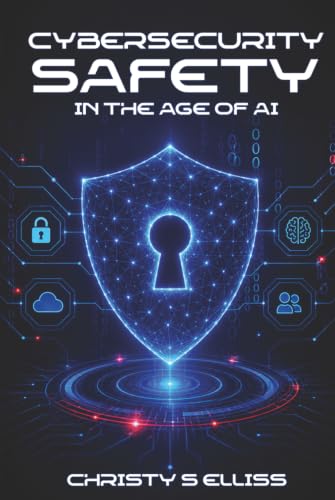
Cyber Security Safety in the Age of AI
As an affiliate, we earn on qualifying purchases.
As an affiliate, we earn on qualifying purchases.
Key Questions
What exactly is the alleged jailbreak in Anthropic’s models?
The specific details of the jailbreak have not been publicly disclosed. According to Sacks, it involves bypassing safety guardrails to enable malicious use, while Anthropic claims it only identified minor, known flaws.
Why is there a conflict between the government and Anthropic?
The government accuses Anthropic of refusing to fix a serious cybersecurity flaw, leading to a ban, while Anthropic disputes the severity and implications of the alleged vulnerability.
What role did Amazon play in this dispute?
Reports suggest Amazon flagged the jailbreak to the government and was involved in testing the model, but its exact role and motives remain unclear. Amazon has not confirmed specific details.
Could this dispute impact the future deployment of AI models?
Yes, if safety standards become stricter or if transparency issues persist, it could slow down or restrict the deployment of advanced models, affecting hundreds of millions of users.
What will happen next in this controversy?
Further investigations, potential independent reviews, and regulatory decisions are expected. The industry will likely see increased debate over safety, transparency, and the role of government oversight.
Source: ThorstenMeyerAI.com