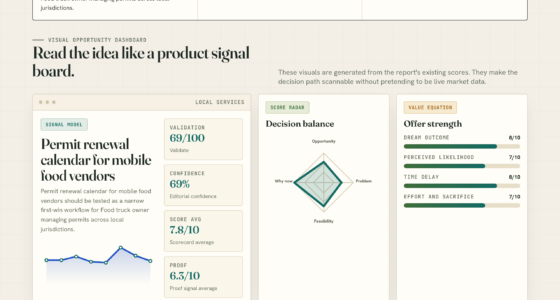

📊 Full opportunity report: How The AI Act Changed The Game On August 2Nd: The Shrinking Deadline on ThorstenMeyerAI.com — validation score, market gap, and execution plan.

Get movie nights delivered free with Prime
- Fast, free delivery on millions of items
- Prime Video, Amazon Music and more included
- Member-only deals all year
TL;DR
The European Union’s AI Act saw its high-risk enforcement date delayed by over a year due to new legislation, but transparency and disclosure rules under Article 50 became effective as scheduled on August 2, 2026. This shift impacts organizations using AI systems, especially generative AI, with compliance deadlines moving forward.
On August 2, 2026, the European Union’s AI Act’s high-risk compliance obligations were officially postponed by more than a year, but Article 50 transparency and disclosure rules came into force as planned. This development significantly alters the compliance landscape for organizations deploying AI systems across Europe, especially those using generative AI, which must now adhere to new disclosure and labeling requirements.
The delay stems from a late amendment known as the Digital Omnibus on AI, approved in June 2026, which split the original enforcement date. High-risk obligations under Annex III, including risk management, documentation, and conformity assessments, are now scheduled for enforcement on December 2, 2027 for certain systems, and August 2, 2028 for AI embedded in regulated products like medical devices and machinery.
However, the Article 50 transparency obligations, which require AI providers and deployers to disclose AI interactions, generate synthetic content, and label deepfakes, went into effect on August 2, 2026, as initially planned. Enforcement of these transparency rules is managed by national authorities, not the EU AI Office, and is now active across member states. Notably, a narrow grace period extends the labeling requirement for legacy systems until December 2, 2026, but new systems must comply immediately.
Additionally, a new ban on AI-generated non-consensual intimate imagery was introduced, effective on the original timeline, reinforcing the EU’s stance on harmful AI practices.
The AI Act’s 2 August deadline didn’t disappear — it split in two. The heavy high-risk regime slid past 2027. The transparency duties that apply to almost anyone touching generative AI landed exactly on schedule, with national enforcement behind them.
▲ Journalism, not legal advice · verify with counselThe Digital Omnibus cleaved one date into two speeds. If your mental model of “the deadline” was the high-risk regime, the pressure genuinely eased — but that was never the obligation most organisations actually had.
Not a high-risk provision, not tied to Annex III. It applies to specific categories of AI regardless of risk — in practice, to every business using generative AI to produce content or run a system that talks to users.
Three true stories collided and the headlines merged them into one false one.
Start with an inventory of every system that talks to a user or generates content on your behalf. Three duties are live today — not December.
you deferred the wrong obligation.
Implications for AI Compliance and Enforcement
This development underscores a complex compliance environment for organizations operating in Europe. While the high-risk obligations are effectively postponed, the immediate enforcement of transparency and disclosure rules means companies must act now to avoid penalties. The split timeline creates potential pitfalls for organizations that might assume all deadlines are delayed, risking non-compliance and fines if they overlook Article 50 requirements.
Moreover, the delayed high-risk regime reflects ongoing regulatory uncertainty, impacting AI deployment strategies and risk management planning. The EU’s approach signals a phased regulatory rollout, requiring organizations to stay vigilant across multiple compliance fronts.
AI transparency disclosure software
As an affiliate, we earn on qualifying purchases.
As an affiliate, we earn on qualifying purchases.
Background of the EU AI Act and Recent Amendments
The EU AI Act, formally known as Regulation (EU) 2024/1689, was adopted in 2024 to regulate high-risk AI systems, including those used in employment, education, law enforcement, and essential services. The original enforcement date was set for August 2, 2026, with obligations like risk management, documentation, and CE marking becoming mandatory.
However, a late legislative change—the Digital Omnibus—delayed these high-risk requirements by over a year, citing issues related to standards harmonization and readiness. The delay was approved through a series of legislative steps, culminating in the final text signed in July 2026. The delay affects only the high-risk obligations, not the transparency rules, which went into effect as scheduled.
Prior to this, the European Parliament and Council had debated the scope and timing extensively, with concerns about the readiness of standards and enforcement capacity influencing the decision to push back the high-risk deadlines.
"The delay of the high-risk obligations reflects regulatory pragmatism, but the immediate enforcement of transparency rules keeps pressure on AI providers and users."
— Thorsten Meyer, AI Regulation Expert
generative AI content labeling tools
As an affiliate, we earn on qualifying purchases.
As an affiliate, we earn on qualifying purchases.
Remaining Uncertainties About Future Enforcement
It is still unclear how strictly national authorities will enforce the Article 50 transparency obligations, especially given varying resources and priorities across member states. Additionally, the precise impact on AI providers and deployers, particularly regarding compliance strategies for legacy systems versus new deployments, remains to be seen. The timeline for full enforcement of high-risk obligations also depends on the development of harmonized standards, which are still under development.
AI compliance documentation software
As an affiliate, we earn on qualifying purchases.
As an affiliate, we earn on qualifying purchases.
Next Steps for AI Organizations and Regulators
Organizations using AI in Europe should focus on immediate compliance with Article 50 transparency and labeling requirements, including AI interaction disclosures and synthetic content marking. They must also prepare for the delayed high-risk obligations, which are now scheduled for late 2027 and 2028. Regulators are expected to clarify enforcement practices and standards in the coming months, while companies should monitor legislative updates and guidance from national authorities.
As an affiliate, we earn on qualifying purchases.
Key Questions
Does the delay mean I can ignore high-risk AI compliance now?
No. The high-risk obligations under Annex III are postponed until late 2027 or 2028, but transparency and disclosure rules under Article 50 are in effect from August 2, 2026. Organizations must comply with Article 50 now to avoid penalties.
What specific obligations under Article 50 are already in force?
Obligations include disclosing when users interact with AI systems, marking AI-generated content, labeling deepfakes, and disclosing AI-generated public-interest texts. Enforcement is handled by national authorities.
Will the delay affect AI development and deployment timelines?
Potentially. The delay provides some breathing room for high-risk system compliance but does not impact transparency requirements. Companies should adjust their deployment plans accordingly and stay updated on regulatory guidance.
Are there penalties for non-compliance with Article 50?
Yes. Enforcement is managed by national authorities, and penalties can include fines and restrictions, especially if transparency obligations are ignored or falsely claimed.
What should organizations do now to prepare?
Organizations should prioritize compliance with Article 50 transparency and labeling rules, review their AI systems for disclosure requirements, and monitor regulatory updates regarding the delayed high-risk obligations.
Source: ThorstenMeyerAI.com
Halloween Picks
halloween
As an affiliate, we earn on qualifying purchases.