
TL;DR

Get movie nights delivered free with Prime
- Fast, free delivery on millions of items
- Prime Video, Amazon Music and more included
- Member-only deals all year
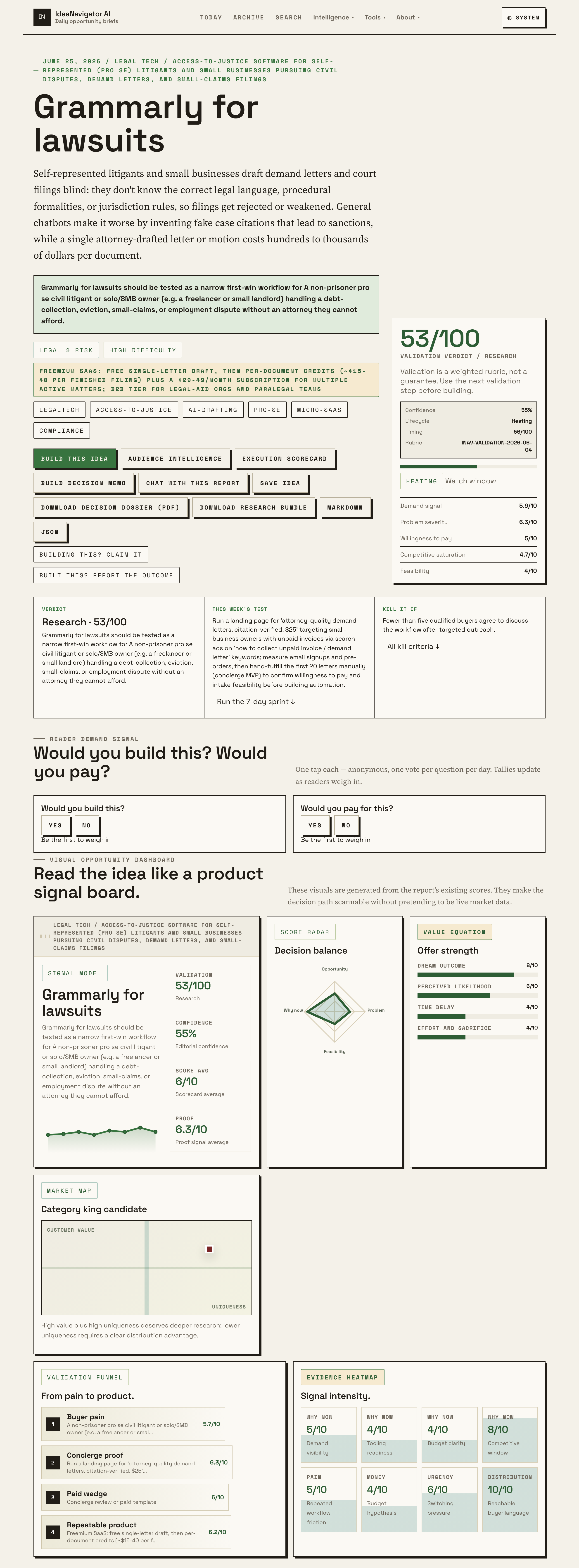
A new AI-powered web app is being developed to assist self-represented litigants and small businesses in drafting court documents. It verifies legal citations and ensures proper formatting, aiming to improve accuracy and court acceptance. This development addresses the high error rate in pro se filings and the need for accessible legal tools.
The development of a new AI-powered web application aims to assist self-represented litigants and small business owners in drafting court documents that meet legal standards. This tool, described as a ‘lawsuit Grammarly,’ verifies citations, checks procedural formatting, and generates court-ready filings. The initiative responds to the rising number of pro se litigants, who often struggle with legal language and court rules, leading to rejected or weakened filings.
The proposed application targets individuals handling debt collection, eviction notices, small claims, or employment disputes without legal representation. It guides users through structured intake questions about parties, amounts, contracts, and jurisdiction, then produces a formatted demand letter or court filing. The system performs a ‘verification pass’ that flags weak or missing legal elements and cross-checks all cited statutes and case law against a real legal database to prevent hallucinated citations. This process aims to reduce errors that can lead to sanctions or case dismissals.
According to sources familiar with the project, the tool is designed as a freemium SaaS platform, offering a free initial draft with optional paid credits for finalized documents, typically costing between $15 and $40. A subscription model is also planned, costing $29 to $49 per month for users managing multiple cases. The target market includes small businesses, landlords, and individuals pursuing civil disputes, with the goal of improving access to justice by making legal document drafting more affordable and accurate.
Impact of Citation-Verification on Court Filings
This tool could significantly improve the quality of filings submitted by self-represented litigants, who often lack legal training and rely on generic AI tools prone to hallucinating citations. By verifying references against real legal databases, it reduces the risk of sanctions, case dismissals, or delays caused by citation errors. Enhanced accuracy may also increase the likelihood of court acceptance, potentially transforming access to justice for individuals and small businesses unable to afford attorneys.
legal citation verification software
As an affiliate, we earn on qualifying purchases.
As an affiliate, we earn on qualifying purchases.
Growing Need for Accessible Legal Drafting Tools
Recent data indicates that approximately 60% of civil cases in the U.S. involve parties without legal representation, and 27% of federal civil cases from 2000 to 2019 had pro se litigants. Despite this, courts have seen an influx of filings with hallucinated or incorrect citations, especially from AI tools that lack verification layers. The development of this new application responds to the urgent need for reliable, court-aware drafting assistance that can prevent costly errors and improve the fairness of civil proceedings.
“This tool aims to bridge the gap between legal expertise and layperson understanding by ensuring every citation and procedural element is verified against actual legal standards.”
— an anonymous researcher
As an affiliate, we earn on qualifying purchases.
Remaining Challenges in Implementation and Adoption
It is not yet clear how effectively the verification system will perform in real-world court settings, or how courts will respond to filings generated by AI tools. User acceptance among non-lawyers and legal aid organizations remains to be tested, and the system’s ability to handle complex or nuanced legal issues is still under development. Additionally, regulatory and privacy considerations around AI-based legal drafting are still being addressed.
As an affiliate, we earn on qualifying purchases.
Next Steps for Testing and Deployment
The project plans to pilot the platform with a small group of small-business owners and pro se litigants by early 2024. Feedback from these users will inform further refinements, especially around citation verification accuracy and user interface. Following successful testing, the developers aim to launch a public beta, with plans for broader adoption and integration into legal aid services. Monitoring court acceptance rates and error reductions will be key metrics for success.
pro se litigant legal document templates
As an affiliate, we earn on qualifying purchases.
As an affiliate, we earn on qualifying purchases.
Key Questions
How does the AI verify legal citations?
The system cross-references all cited statutes and case law against a real legal database to confirm their existence and relevance, preventing hallucinated or incorrect references.
Will this tool replace lawyers for small claims or civil disputes?
No, it is designed to assist non-lawyers in drafting accurate documents, not replace legal professionals. It aims to improve access and reduce errors, not provide legal advice.
Is the platform secure and compliant with privacy laws?
The developers are addressing privacy and security considerations, but detailed compliance measures are still under development as the platform moves toward public testing.
When will the tool be available for general use?
A pilot phase is planned for early 2024, with a broader public launch expected later in the year depending on pilot results.
Can this tool handle complex legal issues?
Currently, it is focused on straightforward filings like demand letters and small-claims statements. Handling complex legal issues will require further development.
Source: IdeaNavigator AI
Halloween Picks
halloween
As an affiliate, we earn on qualifying purchases.