
🔍 Read the full analysis: Hollow House: How We Made An AI Horror-Comedy In One Night—and Fixed A Boring First Draft on ThorstenMeyerAI.com

Get movie nights delivered free with Prime
- Fast, free delivery on millions of items
- Prime Video, Amazon Music and more included
- Member-only deals all year
TL;DR
Thorsten Meyer published a behind-the-scenes account of Hollow House, a 97-second AI-generated horror-comedy made over one night and three versions. He says the first cut looked polished but felt boring; the final version used shorter segments and a quicker rhythm, with a reported 2,220 Higgsfield credits spent across the attempts.
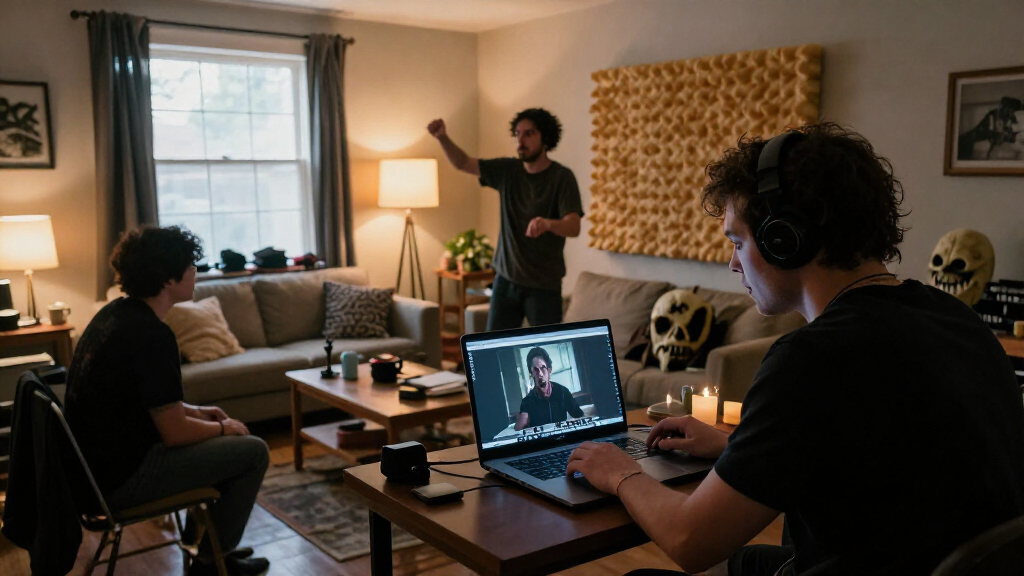
Thorsten Meyer has published Hollow House, a 97-second AI-generated horror-comedy, alongside a behind-the-scenes account of how he made it in one night and three versions. Meyer says the first cut looked good but was “terribly boring and amateurish”; he changed the editing rhythm and production approach before arriving at the final short, in which a real ghost joins an extreme haunted attraction’s staff.
According to Meyer’s account on ThorstenMeyerAI.com, work began in the early evening of October 27 and continued until about 1:30 a.m. the next day. The project went through three cuts: a 2-minute-15-second version built from 20 shots, a 2-minute-21-second version with 66 fast cuts, and the final 1-minute-37-second film, assembled from three roughly 30-second segments generated with one model given references for the full cast.
Meyer says the first version’s imagery was not the main problem. Its 20 shots averaged 5.6 seconds per cut, while the earlier short that inspired the project averaged about 1.8 seconds, by his count. He concluded that the slower pacing weakened the comedy. The final version’s faster-cut approach was part of the revision, though the source does not provide a final cut count or average shot length.
The film’s characters, voices and sets were AI-generated, using tools including Google’s Nano Banana 2 image model, Veo 3.1 video generation and ElevenLabs audio. Meyer reports spending 2,220 Higgsfield credits across all three versions, which he estimates at about $95 at his plan price, as well as about 2,100 ElevenLabs characters for music and sound effects. These are his production figures, not independently verified costs.
Hollow House:
Three Cuts to the Laugh
A 97-second horror-comedy took one night and three versions to find its rhythm. Thorsten Meyer says the first cut looked polished—but the jokes landed flat.
From slow build to sharp cuts
The images were not the main issue. Meyer says the first cut had consistent faces, costumes and color, but its measured pace drained energy from the jokes.
Polished, but flat
Twenty shots across 2:15. At an average 5.6 seconds per shot, the rhythm felt slow beside the inspiration’s roughly 1.8-second average.
More cuts, more pace
The second version ran 2:21 and used 66 fast cuts. The project kept evolving as Meyer reconsidered how the cast and material were assembled.
Three segments, 97 seconds
The finished film used three roughly 30-second segments generated with one model supplied with references for the full cast.
Why the first cut fell flat
Comedy depends on timing. Meyer’s revision put pacing back in human hands: he judged the first cut, changed the production approach and shaped the final edit.
Built from references, refined by people
Generative tools made the cast, voices and sets. Human review helped keep characters consistent and performances closer to the script.
Eight character sheets
One reference image for each character guided appearance, hair and clothing across later frames and clips.
Frames into scenes
Start frames were animated into video; the chosen workflow also produced dialogue and sound.
Listen and compare
Whisper speech recognition helped Meyer check generated clips against the script.
Prompt, edit, grade
Missed actions led to rewritten prompts or images; editing rhythm and the final color grade shaped the result.
Tools made the material
The account names several tools and reports creator-estimated usage. These figures describe this production, not a typical cost or guaranteed workflow.
Nano Banana 2
Used to create visual material, including character references and imagery for the production.
Veo 3.1
Used to animate start frames into clips and generate dialogue and sound alongside visuals.
ElevenLabs
About 2,100 characters reported for music and sound effects.
Meyer estimates this at about $95 at his plan price. The account does not itemize credits by version or include independent invoices.Creator-reported production figures · not independently verified
Generative output still needs direction
A coherent image does not guarantee a clear action, convincing performance or well-timed joke. The account describes both the useful results and the misses.
Problems the creator describes
- A shouted “HEY!” came out as the word followed by its spelled-out letters.
- A requested head turn became a body turn; other physical actions were blocked or rendered differently.
- The first cut looked consistent but felt “terribly boring and amateurish.”
What remains unknown
- The final cut count and average shot length are not stated.
- The account does not detail every change from version two to version three.
- No audience performance data, itemized costs or independent verification are supplied.
- One creator’s account does not establish typical results across prompts, plans or model versions.
“The decisive moves were human: calling the first cut boring, handing the whole cast to one model, and the final colour grade.”
Thorsten Meyer · describing the creative decisionsHollow House is available to watch
Meyer’s October 28, 2026 post includes the finished short and behind-the-scenes materials: character sheets, start frames, failed attempts and a contact sheet of the final cut. The source announces no further release or follow-up milestone.
Oct 28, 2026
Why the First Cut Fell Flat
The account offers a specific example of how AI-generated images and video can produce technically coherent shots without automatically creating a satisfying film. Meyer says the first cut had consistent faces, costumes and a deliberate haunted-house color scheme, but its slow rhythm undermined the jokes. His revision treats pacing as a human editorial decision rather than a result the generation tools could supply on their own.
For readers following AI filmmaking, the case also makes the production trade-offs more concrete. Meyer describes using character reference sheets to limit visual changes between shots, speech recognition to check generated dialogue, and rewritten prompts when actions did not render as intended. He credits human choices—including judging the first cut, changing how the cast was referenced and applying the final color grade—with shaping the result. The short is one creator’s account, not evidence that the same workflow or cost will apply to other productions.
Popular right now

Bose QuietComfort Wireless Bluetooth Headphones with Active Noise Cancellation, Mic, USB‑C Charging, Deep Bass, 24‑Hour Battery – White Smok

Dyson V8 Cordless Vacuum
Philips 5500 Series Fully Automatic Espresso Machine with LatteGo
As an affiliate, we earn on qualifying purchases.
From Character Sheets to Final Cut
Meyer says he started by making one reference image for each of eight characters, before generating any video. The images served as visual guides for later frames and clips, intended to keep details such as hair, clothing and appearance consistent. He generated start frames for the first version and animated them with Veo 3.1, which also produced dialogue and sound alongside the image.
The premise puts a supernatural threat inside a workplace comedy: a ghost appears at an extreme haunted attraction, and staff respond as if they are dealing with a new hire and routine safety procedures. A guest says the safe word “cotton candy,” but the scare does not stop. Meyer says the story structure was inspired by an AI horror-comedy short shared on X, while describing his own script, characters and jokes as original.
His account also records problems with generated performances. A shouted “HEY!” was spoken as the word followed by its spelled-out letters; a full head turn became a body turn; and some requested physical actions were blocked or rendered differently. Meyer says he checked clips against the script using Whisper speech recognition and reworked prompts or images when results missed the intended action.
““terribly boring and amateurish””
— Thorsten Meyer, describing his first cut
What the Account Leaves Open
The production details and cost figures come from Meyer’s own account; the source does not include independent verification, itemized invoices or a breakdown of how credits were divided among the three versions. It also does not state the final film’s cut count, explain in detail what changed between the second and third versions, or provide audience or performance data.
The source says the earlier short inspired the film’s structure but does not identify it in the supplied material. It also does not establish whether the tools’ behavior described by Meyer is typical across other prompts, subscriptions or model versions. The article documents one production rather than a controlled comparison of AI filmmaking methods.
The Short Is Available to Watch
Meyer’s October 28 post includes the finished Hollow House short and behind-the-scenes materials, including character sheets, start frames, failed attempts and a contact sheet of the final cut. No further release, follow-up production or additional project milestone is announced in the supplied source. The next available step for readers is to compare the published film with Meyer’s account of how its three versions developed.
Key Questions
What is Hollow House?
Hollow House is a 97-second horror-comedy short about a ghost appearing at an extreme haunted attraction. Meyer says its characters, voices and sets were AI-generated.
How long did it take to make?
Meyer says production ran from the early evening of October 27, 2026, until about 1:30 a.m. the next day, with three versions made during that period.
What changed between the first version and the final film?
The first version used 20 shots and ran 2 minutes 15 seconds. Meyer says he found its pacing dull; the final 1-minute-37-second version used three segments generated with one model that had references for the cast. The source does not give the final cut count.
How much did the production cost?
Meyer reports using 2,220 Higgsfield credits, which he estimates at about $95 at his plan price, plus about 2,100 ElevenLabs characters for music and sound effects. Those figures are his estimates and do not establish a general cost for AI filmmaking.
Source: ThorstenMeyerAI.com