
📊 Full opportunity report: How Business Owners Can Build Camera Confidence With A Practice App on IdeaNavigator AI — validation score, market gap, and execution plan.

Get movie nights delivered free with Prime
- Fast, free delivery on millions of items
- Prime Video, Amazon Music and more included
- Member-only deals all year
TL;DR
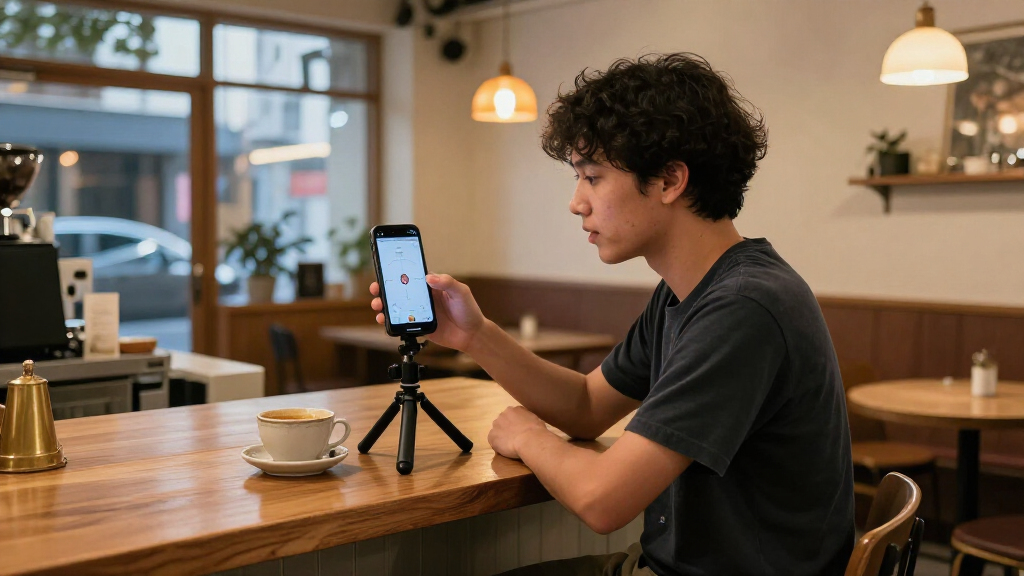
IdeaNavigator AI has outlined a proposed practice app for business owners who freeze when recording video, with two-minute exercises and private feedback on delivery. The concept is a product proposal, not a confirmed app launch; its suggested test would compare first-video publishing among 100 participants with a waitlist control.
IdeaNavigator AI has proposed a practice app to help business owners who struggle to record themselves, outlining short daily exercises and private feedback on delivery. The proposal matters to owners who want to use video for marketing but avoid recording; no app launch or test results have been reported.
According to IdeaNavigator AI’s proposal, the product is aimed at a specific user: a business owner who sees a role for video but freezes when recording. The proposal describes stumbling, self-criticism and repeated takes as barriers that can keep owners from posting at all. It argues that conventional public-speaking courses may not address the distinct experience of speaking alone to a camera.
IdeaNavigator AI proposes a minimum viable product with daily, two-minute prompted exercises, beginning with reading and moving toward speaking more freely. The proposal says it would analyze pace, filler words, eye line and energy, then show progress over time. It also suggests confidence streaks and gradually encouraging users to record actual business content.
For validation, IdeaNavigator AI proposes a 30-day cohort of 100 owners, with a waitlist control group. The suggested outcome is whether participants publish their first real video by day 45. The proposal also identifies consumer subscriptions as a possible revenue model, alongside a team tier for agencies that coach clients.
Build confidence before you press record
IdeaNavigator AI proposes a private practice app for business owners who freeze on camera: two-minute exercises, delivery feedback and a path from rehearsal to a first published video.
From camera pressure to a repeatable first take
For owners who want video in their marketing mix, recording alone can trigger stumbling, self-criticism and endless retakes.
Knowing is not doing
Advice to “post more” does not help someone get through a recording when the camera is on and the first take feels wrong.
Speaking to a lens
Traditional public-speaking training may not address solo recording, watching playback or deciding whether to start over.
Private, small steps
Short prompts could make practice feel more manageable before an owner records real business content.
A simple practice loop, gradually closer to real content
IdeaNavigator AI describes daily exercises and delivery feedback. The specific measurement methods and their accuracy are not provided.
Read a prompt
Start with a brief, two-minute reading exercise.
Speak more freely
Progress from reading toward unscripted responses.
Review delivery
Proposed feedback covers pace, filler words, eye line and energy.
Try real content
Build toward recording a video for the business.
Progress over performance. Confidence streaks and progress over time are proposed features, intended to encourage repeated practice.
Test whether practice leads to a first post
The suggested next step is a 30-day cohort with a waitlist control group. The outcome is whether participants publish a first real video by day 45. This is a proposed plan; no results are reported.
Publishing is a first step, not a business result
The proposal names a concrete behavior to measure. It does not claim that camera practice will grow an audience or generate sales.
Evidence, feedback quality and privacy still need answers
The available proposal does not report a launched product, completed trial or participant outcomes.
Is anyone building it?
No operator, development team, launch date, pricing or technical specifications are identified.
How are delivery signals scored?
The proposal does not explain how eye line or energy would be measured, or whether assessments are consistent.
What happens to recordings?
Data retention and privacy safeguards are not described, despite the possibility of rehearsing unpublished business content.
What would success establish?
A first post could be an early signal. Continued posting, usefulness across business types and marketing impact would need further study.
What business owners should know
Source: IdeaNavigator AI proposal. The concept remains proposed; no launch or test results are confirmed.
Has the app launched?
No launch or availability date is confirmed in the information provided.
Who is it for?
Business owners who want to use video but struggle to record themselves, including those caught in repeated takes or self-criticism.
What exercises are proposed?
Daily two-minute prompts that move from reading to freer speaking, with feedback on pace, filler words, eye line and energy.
How would it be tested?
A proposed 30-day cohort of 100 owners versus a waitlist control, measuring first real-video publishing by day 45.
Does practice guarantee marketing results?
No. The proposed measure is publishing a first video, not audience growth, customer acquisition, sales or return on investment.
What could come next?
If tested, further evidence could assess continued posting, feedback trustworthiness and whether results extend across different businesses.
Testing a Path From Practice to Posting
The idea focuses on a practical gap between knowing that video could support a business and actually recording it. If owners avoid the camera, advice to publish more often does not address the immediate obstacle: getting through a recording without abandoning it or repeating takes indefinitely. A private practice setting could offer a lower-pressure way to build familiarity before publishing.
The proposed test is useful because it names an observable outcome: whether users publish a first video, rather than relying only on app activity or self-reported confidence. Comparing a cohort with a waitlist control could provide an early signal about whether the exercises help people take that step. It would not, by itself, establish that the app improves marketing performance or leads to more customers.
For business owners, the distinction matters. A tool that makes practice easier may help with the first recording, but publishing is only one part of a broader marketing effort. The proposal does not claim that camera practice guarantees audience growth, sales or a return on investment.
Popular right now

Bose QuietComfort True Wireless Earbuds with Active Noise Cancellation, Black

Dyson W1 PencilWash Cordless Wet and Dry Floor Cleaner with Dock

Dyson Airwrap i.d. Multi-Styler for Straight and Wavy Hair
As an affiliate, we earn on qualifying purchases.
A Narrow Camera-Practice Concept
The proposal sits within the broader category of communication skills training, but narrows the target problem to solo video recording. Its premise is that skills for a live speech or presentation may not directly resolve camera-specific frustrations, including watching one’s own playback and deciding whether to start over.
IdeaNavigator AI presents the timing as favorable because video marketing pressure reaches businesses of different sizes and multimodal AI can analyze aspects of delivery. Those points describe the proposal’s rationale, not independently reported findings about adoption, demand or the accuracy of any particular scoring system. The proposed app’s core distinction is a repeatable private feedback loop that moves from simple prompts toward real content.
Demand and Feedback Accuracy
It is unclear whether a product is being built, who would operate it, or when it might become available. IdeaNavigator AI’s proposal provides no pricing, technical specifications, named development team or evidence that business owners have already tested the exercises.
The proposal also does not explain how the app would measure eye line or energy, how accurate or consistent those assessments would be, or what safeguards would apply to recordings. Privacy and data retention would matter for users rehearsing unpublished business content, but no policy is described. The suggested 100-person cohort and day-45 measure are a proposed validation plan, not completed results; no participant outcomes or comparison data are available.
A Cohort Would Test First Posts
IdeaNavigator AI’s proposal names a 30-day trial with 100 business owners and a waitlist control group as the next concrete step, followed by measurement of who publishes a first real video by day 45. No start date, recruitment details or outcome report has been announced in the information available.
If the test proceeds, its results could help show whether short prompts and feedback are associated with more first-time publishing in that group. Further evidence would still be needed to judge whether the approach works across different kinds of businesses, whether participants continue posting, and whether the feedback is useful and trustworthy. For now, the concept remains a proposed product and test rather than a launched service.
Source: IdeaNavigator AI proposal
Key Questions
Has the camera-confidence app launched?
No launch is confirmed. IdeaNavigator AI has outlined a proposed product, but no availability date or completed release is reported.
Who is the proposed app for?
IdeaNavigator AI describes it as intended for business owners who want to use video but struggle to record themselves, including people who stumble, criticize their performance or make repeated takes.
What would the app’s exercises include?
IdeaNavigator AI’s proposal calls for two-minute daily prompts that progress from reading to speaking more freely, with feedback on pace, filler words, eye line and energy.
How would the idea be tested?
IdeaNavigator AI suggests a 30-day cohort of 100 owners compared with a waitlist control. The proposed measure is whether participants publish a first real video by day 45; results have not been reported.
Would practice guarantee better marketing results?
No such result is established. The proposed test focuses on publishing a first video, not customer growth, sales or marketing return.
Source: IdeaNavigator AI