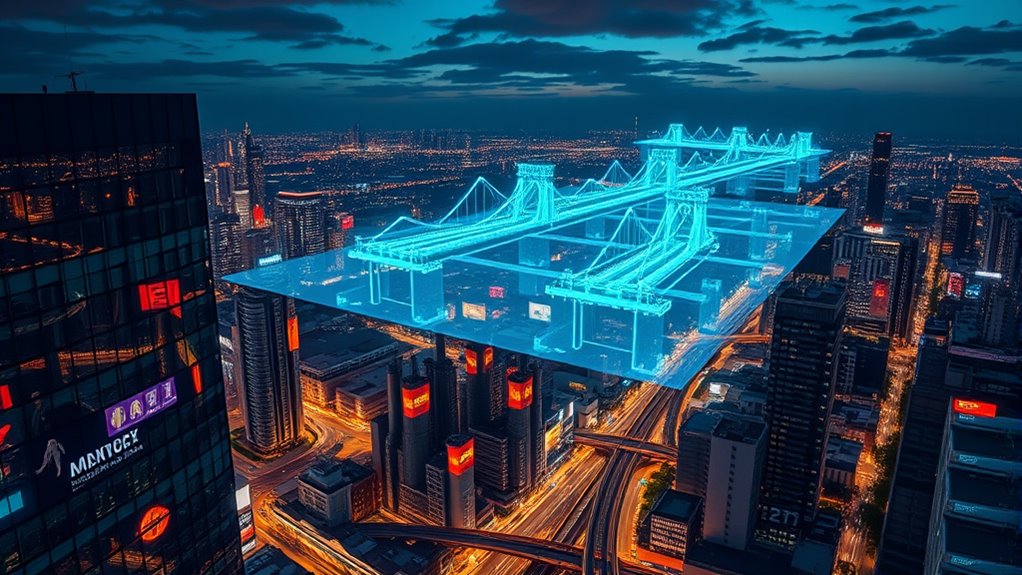

Digital twins are advanced digital models that mirror real-world factories or cities, allowing you to simulate, analyze, and optimize systems without physical disruptions. In factories, they help improve production and maintenance, while in cities, they provide real-time insights for smarter planning and infrastructure management. By integrating live data, they support proactive decisions that enhance safety, efficiency, and resilience. Explore further to discover how these virtual replicas are transforming urban and industrial landscapes.

Get movie nights delivered free with Prime
- Fast, free delivery on millions of items
- Prime Video, Amazon Music and more included
- Member-only deals all year
Key Takeaways
- Digital twins create real-time virtual models of factories and cities for simulation and optimization.
- They support proactive maintenance and asset management by monitoring physical systems continuously.
- Digital twins enable urban planning by simulating traffic, energy, and infrastructure scenarios before implementation.
- They help cities improve safety, resilience, and operational efficiency through dynamic data integration.
- The technology bridges manufacturing and urban development, fostering smarter, sustainable environments.
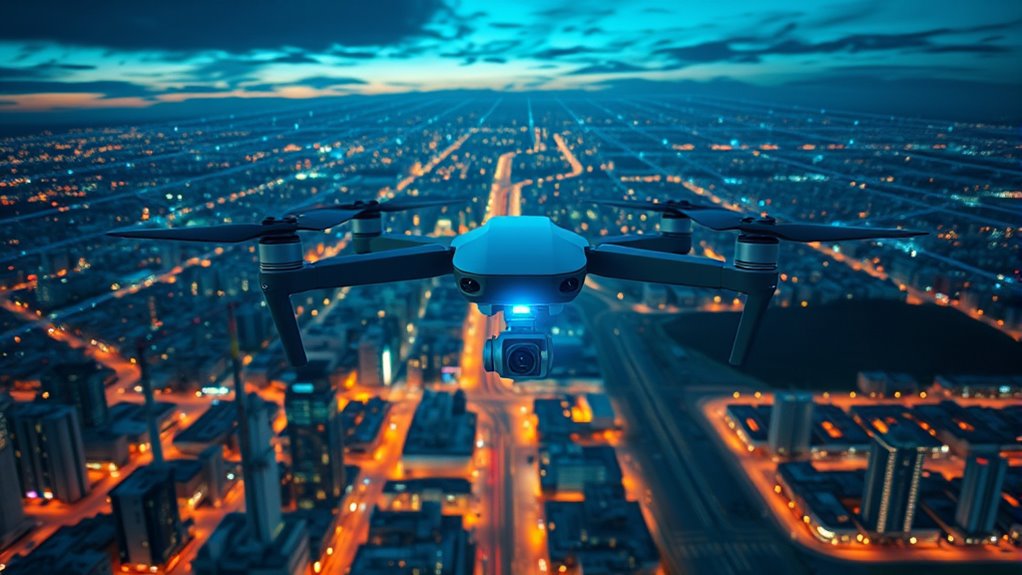
Have you ever wondered how technology can create a virtual replica of a physical asset? That’s exactly what digital twins do. They’re sophisticated digital models that mirror real-world objects or systems, enabling you to simulate, analyze, and optimize performance without directly interacting with the physical counterpart. This technology has revolutionized industries, especially in sectors like manufacturing and urban development.
When it comes to smart city planning, digital twins become invaluable. Imagine having a detailed, real-time simulation of an entire city—traffic flows, energy usage, water systems, and public transportation. With this virtual replica, you can identify bottlenecks, forecast future needs, and test solutions before implementing them in the real world. It’s like having a city’s blueprint that adapts dynamically, giving you insights into how changes will impact the urban environment. This proactive approach helps city planners make smarter decisions, improve infrastructure resilience, and enhance residents’ quality of life.
Digital twins provide real-time city simulations to optimize planning and improve urban living.
Asset management is another area where digital twins shine. Instead of relying solely on periodic inspections and reactive maintenance, you can continuously monitor the health of physical assets—whether they’re manufacturing equipment, bridges, or utilities. Digital twins provide real-time data and predictive analytics, alerting you to potential failures before they happen. For example, in a factory setting, a digital twin of a machine can track vibration, temperature, and performance metrics. If signs of wear or malfunction appear, you can schedule maintenance proactively, reducing downtime and saving costs. This not only extends asset lifespan but also optimizes resource allocation and operational efficiency.
Integrating digital twins into city infrastructure also enhances asset management on a broader scale. You can simulate scenarios like infrastructure upgrades or emergency responses, ensuring that investments deliver maximum value and that systems work harmoniously. By continuously updating the digital twin with live data, you maintain an accurate, up-to-date model that helps you make informed decisions swiftly. This dynamic capability reduces risks, improves safety, and streamlines workflows. Additionally, understanding the importance of father-daughter bonds and the shared commitment to growth and resilience can inspire a similar dedication to nurturing and maintaining our urban environments.
Popular right now

TCL 85 Designer Series QD-Mini LED TV (Model 85A400U) with Google Smart TV

iRobot Roomba 105 Vac Robot Vacuum

TCL 85-Inch QM6K Series QLED Mini LED 4K HDR Smart Google TV
As an affiliate, we earn on qualifying purchases.
Frequently Asked Questions
How Do Digital Twins Enhance Cybersecurity Measures?
Digital twins enhance cybersecurity by enabling you to monitor systems in real-time through IoT integration. This setup allows for early threat detection, helping you identify vulnerabilities before they become serious issues. With digital twins, you can simulate potential cyberattacks and test your defenses, making your security measures more robust. This proactive approach guarantees your infrastructure stays protected, minimizing risks and maintaining operational continuity.
What Are the Cost Implications for Small Businesses Adopting Digital Twins?
Cost concerns can cause cautiousness, but digital twins deliver definite dividends. You’ll face a cost investment upfront, yet scalability challenges diminish over time as you expand. Small businesses may worry about wallet weight, but manageable maintenance and flexible features help minimize expenses. With strategic planning, digital twins become a practical, powerful tool that boosts efficiency, innovation, and insight, ultimately making the initial investment worthwhile for growth and competitive edge.
How Is Real-Time Data Integration Managed in Digital Twin Models?
You manage real-time data integration in digital twin models through continuous data synchronization, ensuring your twin updates instantly with live information. This process relies on seamless sensor integration, where sensors capture real-world data and transmit it to the digital twin platform. By maintaining robust connections and efficient data flow, you keep your digital twin accurate, allowing for real-time analysis, decision-making, and responsive adjustments, ultimately enhancing your operational efficiency.
What Are the Ethical Considerations Surrounding Digital Twin Data Privacy?
You need to prioritize data privacy by ensuring clear data ownership and robust consent management. Always obtain explicit user consent before collecting or sharing digital twin data, and define who owns the data to prevent misuse. Respect individuals’ privacy rights, implement secure data handling practices, and be transparent about how data is used. This builds trust, complies with regulations, and protects everyone involved from potential privacy breaches.
How Do Digital Twins Support Sustainability Initiatives in Urban Planning?
Digital twins support sustainability in urban planning by enhancing urban resilience and resource optimization. You can simulate various scenarios to identify the most efficient ways to manage water, energy, and waste, reducing environmental impact. By analyzing real-time data, you gain insights to improve infrastructure, minimize resource waste, and adapt quickly to challenges. This proactive approach helps create smarter, more sustainable cities that better serve their communities and the planet.
Conclusion
Digital twins are like a mirror reflecting real-world systems, helping you optimize factories and cities alike. By embracing this technology, you can anticipate issues before they happen and make smarter decisions. It’s a powerful tool that bridges the physical and digital worlds, transforming how you manage complex environments. As you harness the potential of digital twins, you’ll find your operations becoming more efficient and resilient—like a well-tuned machine working seamlessly together.