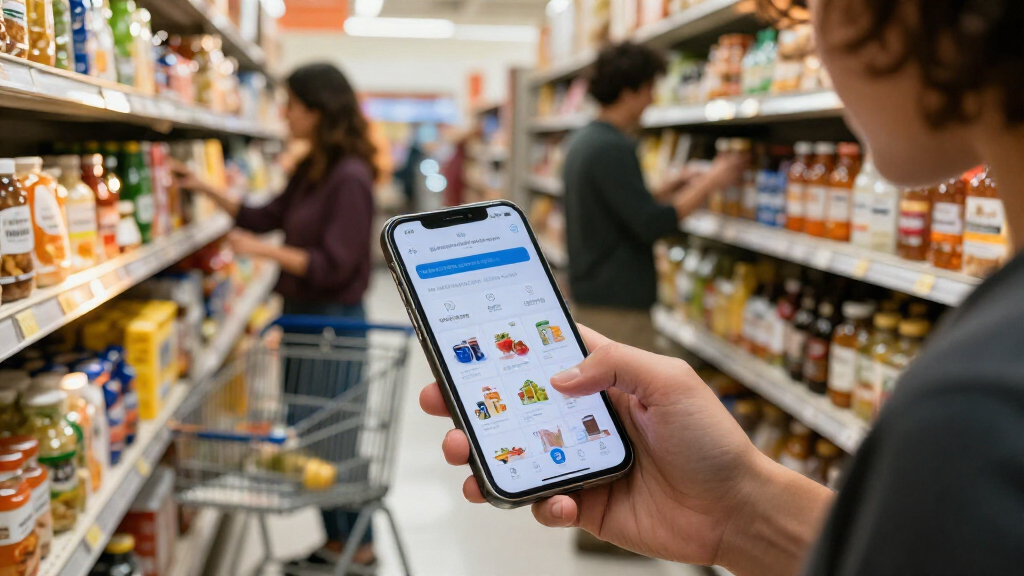

🔍 Read the full analysis: Amazon Blocks AI Shopping Agents While Walmart Welcomes Them. Who Owns The Customer? on ThorstenMeyerAI.com

Get movie nights delivered free with Prime
- Fast, free delivery on millions of items
- Prime Video, Amazon Music and more included
- Member-only deals all year
TL;DR
Amazon blocked Meta’s Muse from accessing its shopping site, citing its Conditions of Use and concerns about how the agent operates. Walmart is taking a different approach, announcing an Agent Gateway and profiles that let approved agents search and buy with customer-set limits. The competing strategies could affect who controls the shopping relationship and how purchases are attributed, but most agent activity still appears to involve research rather than checkout.
Amazon has blocked Meta’s Muse shopping agent from accessing its site, while Walmart announced an Agent Gateway for approved AI agents, setting out sharply different approaches to automated shopping. The divide matters because it could determine which companies control product discovery, checkout and the customer relationship when an AI does the shopping.
A Verge reporter asked Muse where granola bars cost the least per piece. The agent listed Sam’s Club, Walmart and Costco, then said it could not check whether Amazon was cheaper because Amazon had blocked access. The example illustrates a practical limitation: an agent can compare only the stores it can reach.
Amazon cut off Muse on September 20. A message shown to users said continued access by an unauthorized AI agent violated Amazon’s Conditions of Use. Amazon said Meta had not told it Muse would shop on the site, that the agent did not identify itself and that it appeared to capture and store customer credentials. Meta’s launch post said Muse had no visibility into users’ passwords or payment methods.
On October 21, Walmart announced its Agent Gateway and Agent Profiles. The gateway uses the Model Context Protocol, or MCP, to give approved agents a structured way to search inventory and make purchases. Profiles are intended to let users set controls such as spending limits. The source material does not establish that every agent can use the gateway or that all shopping transactions are already supported.
Agentic shopping
Three ways an AI agent buys for you
Every fight between shops and AI agents comes down to which of these three routes the agent uses, and whether the shop agreed to it.
The browser, like a human
The agent opens pages built for people, signs in with your login and clicks through checkout. Works almost anywhere, which is why shops object: they can't tell the agent from you.
Examples: Meta's Muse (from a virtual machine in Meta's cloud), Perplexity's Comet (from your own computer)
The shop's own agent door
Approved agents search and buy through a structured interface instead of clicking through pages. The shop sets the rules.
Examples: Walmart Agent Gateway (MCP, beta), Shopify MCP server and WebMCP checkout tools
Shared protocols
Common rules for who the agent is, what you allowed, and how the checkout and payment are confirmed.
Examples: Personal Agent Protocol (draft), Universal Commerce Protocol, Agentic Commerce Protocol
The protocols competing to be the standard
| Protocol | Backers | Covers | Status |
|---|---|---|---|
| Personal Agent Protocol (Poppy) | Sierra, Meta, Walmart, Shopify, Stripe + 35 design partners | Agent identity, customer permission, one session across site, API and company agent | Draft 0.1 (9 Oct 2026) |
| Universal Commerce Protocol (UCP) | Google, Shopify; site also lists Etsy, Wayfair, Target, Walmart, Amazon, Microsoft | Discovery, cart, checkout, orders; payment mandates via AP2 | Published |
| Agentic Commerce Protocol (ACP) | OpenAI, Stripe | Checkout between agent and merchant | Open source; ChatGPT's own checkout scaled back in March 2026 |
What a careful agent purchase looks like
- You give the task and a limit, for example a $50 cap.
- The agent identifies itself to the shop and gets only the access you approved.
- It prepares the cart and shows you an approval card.
- Payment goes through a token or one-time card, so the agent never sees your card.
- The shop’s normal returns apply if the agent got it wrong.
Sources: Meta (8 Sep 2026), Walmart (21 Oct 2026), TechCrunch on Shopify (28 Sep 2026), Sierra (9 Oct 2026), ucp.dev, agenticcommerce.dev, OpenAI (24 Mar 2026). Purchase steps: Walmart’s agent terms and Meta’s Muse description.
Powered by Thorsten Meyer AI
Who Controls the Shopping Relationship
The dispute is about more than whether an automated browser can reach a retailer. If an AI agent chooses products and carries out a purchase, the agent may become the shopper’s main point of contact, while the retailer risks losing control of how customers discover items, receive recommendations and complete checkout. Retailers want to govern access; agent makers want their tools to work across stores.
That conflict also affects how businesses get paid. The source reports that Amazon earned more than $68 billion in advertising revenue last year, citing GeekWire, and that Meta has said it expects to take a small fee from transactions. These figures and plans come from the cited reporting and company statements; they do not establish how much revenue agents will generate or how retailers will respond.
There is a separate attribution challenge for publishers and affiliate businesses. Amazon Associates commissions depend on a customer using a tracked link, according to the source. If an agent reads a review and completes a purchase without that click—or a shopper buys through a retailer’s own assistant—the referral may not be credited in the usual way. For consumers, the immediate issue is control: purchase approval, spending limits and clear responsibility for returns matter when an agent is authorized to act.
Popular right now

TCL 85 Designer Series QD-Mini LED TV (Model 85A400U) with Google Smart TV

TCL 85-Inch QM6K Series QLED Mini LED 4K HDR Smart Google TV

LG 85-inch QNED75B Mini LED Smart TV Bundle with HDMI and CPS Protection Plan
As an affiliate, we earn on qualifying purchases.
From Browser Bots to Retail Gateways
Meta launched Muse on September 8, describing it as an agent that can open a browser, fill out forms and negotiate on a user’s behalf. The source says it runs in a dedicated virtual machine in Meta’s cloud and uses Link by Stripe for payment with a one-time-use card. On September 23, Meta announced retail connectors involving Best Buy, Gap, Sephora, Walmart, Wayfair and Expedia. These announcements show an effort to extend Muse beyond a single retailer, but they do not mean every service is fully available for every transaction.
There are three broad ways agents can shop: by operating a browser as a person would, by using a retailer’s structured tools, or through shared protocols that define how agents and businesses communicate. Browser-based access can work on sites designed for people, but it can make it harder for retailers to identify an agent and manage its activity. Structured gateways give retailers more control over what agents can do. Protocols are an attempt to standardize parts of the process, though they differ in purpose and maturity.
In October, Meta and Sierra announced the Personal Agent Protocol, called Poppy, with Walmart, Shopify and Stripe among its participants. The source describes its October 9 draft as version 0.1 and says payment functions were left to extensions. Shopify has also offered tools for agents to complete checkout through structured interfaces. The source further notes that OpenAI stepped back from its initial ChatGPT Instant Checkout approach in March 2026, saying it would let merchants use their own checkout experiences while focusing on product discovery. The infrastructure is developing, but there is not yet one settled way for agents to shop everywhere.
“Continued access by an unauthorized AI agent violates Amazon’s Conditions of Use, to which our customers have agreed.”
— Amazon, in a message shown to Muse users
Access, Safety and Sales Still Unsettled
Several questions remain open. Amazon and Meta give different accounts of Muse’s access and handling of credentials, and the supplied material does not include technical evidence that resolves the disagreement. It also does not detail how Amazon will treat other agents or whether its restrictions will change.
Walmart’s announcement describes a gateway and agent profiles, but the material does not spell out the full rollout, eligibility rules, participating agents or the precise protections available to customers. Nor does it establish how often agents complete purchases. HUMAN Security data cited in the source says 81% of agent requests went to product and search pages, while 2.4% went to checkout and payment in its September data. Those figures describe requests in that dataset; they do not show the share of all online shopping done by agents or prove that purchases will remain uncommon.
It is also unclear how retailers, agent providers and publishers will divide transaction fees or credit referrals when an agent researches and buys across several services. The commercial effects will depend on adoption, retailer policies and the eventual technical standards.
Watch Gateway Rollout and Standards
The next evidence will come from the rollout of Walmart’s Agent Gateway and whether major agent providers connect to it. Retailers’ access rules, customer controls and the range of supported shopping actions will show whether structured access becomes a workable alternative to browser-based agents.
Protocol development is another milestone. Poppy remains a draft in the source material, while other commerce protocols address different parts of discovery, checkout and payment. Their adoption by retailers and payment providers will matter more than announcements alone. Consumers should check what an agent is allowed to buy, whether each transaction requires approval, what spending caps apply and which retailer’s return policy governs a purchase. For now, the confirmed divide is access: Amazon has blocked Muse, and Walmart is preparing a controlled route for agents.
Key Questions
Why did Amazon block Meta’s Muse?
Amazon said Muse was an unauthorized agent that did not identify itself and appeared to capture and store customer credentials, and it cited its Conditions of Use. Meta said Muse had no visibility into users’ passwords or payment methods. The two companies’ accounts differ, and the supplied material does not resolve the dispute.
What is Walmart’s Agent Gateway?
Walmart announced a gateway using the Model Context Protocol to let approved agents search inventory and make purchases through a structured connection. Walmart also announced Agent Profiles intended to support user controls such as spending limits. The source does not specify the full rollout or which agents can use it.
Can AI shopping agents already complete purchases?
Some systems and retailer tools are designed to support checkout, but access varies by store and agent. The source cites HUMAN Security data in which 2.4% of agent requests went to checkout and payment in September; that figure is limited to the dataset and is not a measure of all online purchases.
How could agents affect affiliate links?
If an agent reads a publisher’s review but buys without following a tracked affiliate link, the publisher may not receive credit under the usual referral process. The exact impact depends on how the agent, retailer and affiliate program record referrals.
Source: ThorstenMeyerAI.com