
TL;DR

Get movie nights delivered free with Prime
- Fast, free delivery on millions of items
- Prime Video, Amazon Music and more included
- Member-only deals all year
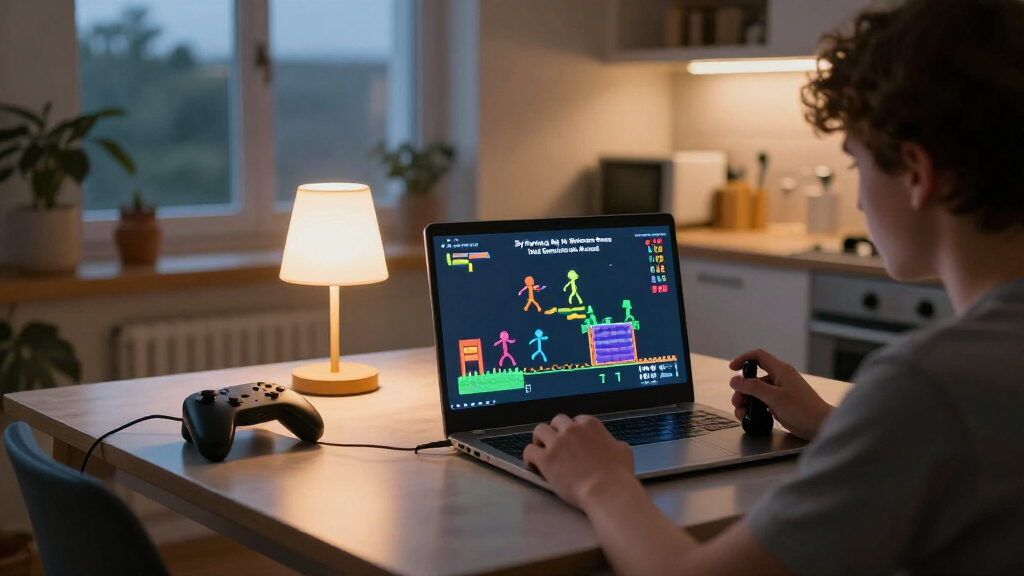
Developer Thorsten Meyer asked an AI model to design its own stickman game with no template. By the end of one day, Claude (Opus 5.5) had produced BEATDOWN, a rhythm-based stick-figure brawler, plus eight more games and an animator, all running in the browser.
A developer who gave an AI model a deliberately open-ended brief — build your own stickman game, no clone, no tutorial — ended the day with a full arcade. According to Thorsten Meyer, Claude (Opus 5.5) produced BEATDOWN, a rhythm-based stick-figure fighting game, in under an hour, and by evening had expanded it into a Stickman Arcade of ten titles: nine free games plus a stick-figure animator, all playable in a browser or on phones.
The headliner, BEATDOWN, is a brawler built around musical timing rather than button speed. Every input is judged against a soundtrack generated live in the browser: on-beat hits deal 1.5× damage, landing four on-beat hits in a row triggers a bonus shockwave attack, and enemies telegraph attacks one beat before striking, allowing counterattacks if the player guards as the blow lands. According to Meyer, rhythm is a bonus rather than a requirement — players can fight off-beat and still clear waves, but the game deals more damage and adds musical layers when played in time, with a Groove rank that climbs from MUTE to FEVER.
The roster consists of twelve original fighters, each based on a musical archetype — the Drummer, Conductor, DJ, Bassist, Punk, Soprano, MC, Jazz Cat, Shredder, Virtuoso, Beatboxer and Producer. Each fighter has a passive ability, two specials, a cooldown skill and an ultimate called the DROP, for sixty abilities in total. The arcade also includes a shared system of nine art styles — among them CHALK, RISO, LASER, PIXEL, NOIR and BLUEPRINT — that redraw the fighters, venues, effects and menus rather than simply changing colours.
BEATDOWN offers seven venues with distinct rules (a rooftop with no walls, a tilting cruise ship, a strobe rave that goes dark between beats) and multiple modes, including TOUR, BOSS RUSH, a two-minute BLITZ, a seeded DAILY MIX shared by all players that day, a practice SOUNDCHECK mode, and local VERSUS for two players on one keyboard or two gamepads. The remaining eight games include Stickman Dismount, Pose-Off, Beat Runner, Noir Heist, Band Defense, Stickman Boxing, Head Soccer and Beat Skate, plus the Stickman Animator, which supports joint-drag posing, in-between frames and GIF export.
What a One-Day AI Arcade Shows
The project is a data point in the debate over how much creative and technical work AI models can now carry end to end. Meyer states he wrote no code — his role was steering, answering the model’s questions and supplying reference screenshots — while the model produced roughly 24,500 lines of plain JavaScript with zero dependencies, including a custom GIF encoder. A playable fighting game delivered in under an hour, and a ten-title arcade within a day, suggests the bottleneck in small-game development is shifting from implementation to direction and taste.
The project also demonstrates a code-only asset approach: there are no image or audio files, with every fighter, venue and sound effect generated at runtime. The games collect no data, according to Meyer, with progress stored in the player’s own browser. For independent developers, the approach points to a model of very small, free, dependency-free browser games built at speeds that were previously impractical for a single person.
From One Brief to Ten Games
According to Meyer’s account, the project began with a deliberately loose prompt asking the AI to make its own stickman game rather than clone an existing title or follow a tutorial. The model returned BEATDOWN as its interpretation of the genre. Meyer then kept requesting additions over the course of the day. BEATDOWN became playable in under an hour and was live on his website in under two, he says. To build the wider arcade, the AI first wrote a shared game kit and an engine guide, then produced the eight additional games and the animator on that common foundation — which is why all titles share the same nine art styles and browser-based delivery. Meyer notes the post describing the project was itself created with AI assistance.
“I gave an AI model a deliberately loose brief: make your own stickman game. No clone, no tutorial project, just its own take on a genre everyone knows.”
— Thorsten Meyer
Claims Awaiting Independent Verification
The development timeline, the line count and the claim that a single person wrote no code are all reported by Meyer himself and have not been independently verified. It is not clear from the source material how much iteration, debugging or re-prompting was involved in practice, or how the games perform across the full range of browsers and devices beyond the stated support for desktop and phones. The gameplay descriptions — such as damage multipliers, ability counts and venue rules — are the author’s own account of features, and this publication has not tested them.
Where the Arcade Goes From Here
According to Meyer, the arcade is live and free to play now on his website. No roadmap of future titles or updates is stated in the source material, though the shared engine, common art-style system and game kit the AI built would make additional games on the same foundation straightforward. The Stickman Animator’s export options suggest user-created content could become part of the project’s appeal. Readers can evaluate the games directly in a browser.
Key Questions
What is BEATDOWN?
A free browser-based stick-figure fighting game built around musical timing. Attacks are judged against a live-generated soundtrack — on-beat hits deal 1.5× damage, and guarding as an enemy strikes triggers a counterattack.
Who actually wrote the code?
According to developer Thorsten Meyer, the AI model Claude (Opus 5.5) wrote all roughly 24,500 lines of JavaScript in one day. Meyer says his role was direction: answering questions and supplying reference screenshots.
How many games are in the Stickman Arcade?
Nine games plus the Stickman Animator, for ten cards in total. Titles include BEATDOWN, Stickman Dismount, Noir Heist, Stickman Boxing, Head Soccer, Beat Skate, Beat Runner, Pose-Off, Band Defense and the animator.
Do I need to install anything or have rhythm skills to play?
No. Everything runs in a browser or on phones with no installation, and no audio or image files are downloaded — assets are generated by code. In BEATDOWN, rhythm is optional: off-beat play still clears waves, just with less damage.
Does the arcade collect personal data?
According to Meyer, the games collect nothing, and player progress is stored locally in the user’s own browser. This claim has not been independently audited.
Source: Thorsten Meyer AI
Halloween Picks
halloween
As an affiliate, we earn on qualifying purchases.