How ByteDance’s AI4S Program Aims To Reverse Brain Drain In STEM
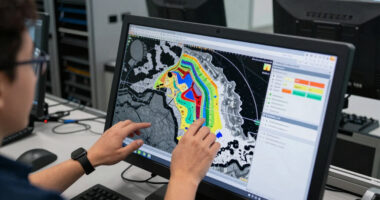
ByteDance has initiated the Seed STEM Scientist Program, seeking around 100 researchers for a six-month pilot in Beijing to advance AI in scientific research.
How Washington’s August 1 Deadline Turns AI Benchmarks Into A National Security Tool
U.S. government sets August 1 deadline for classified AI benchmarking, elevating AI evaluation to a matter of national security and industry influence.
How Frontier Lab Is Leveraging AI For Leasing, Land, And Energy Management
Frontier Lab leverages AI for land, leasing, and energy operations, emphasizing capacity infrastructure over research. This shift impacts AI development scalability.
Unlocking AI’s Power: The Scroll-Driven Depth Engine Of Abyssal Station
Abyssal Station introduces a novel scroll-driven depth engine simulating a descent to 3,800 meters, blending immersive visuals with precise water depth synchronization.
Radar That Never Blinks: What SAR Actually Does — for Companies, Institutions, and Governments
Explore how Synthetic Aperture Radar (SAR) works, its applications for companies, institutions, and governments, and why it’s a game-changer in Earth monitoring.