
TL;DR

Get movie nights delivered free — and shop member deals
- Fast, free delivery on millions of items
- Access to Prime Big Deal Days deals on October 6–7
- Prime Video, Amazon Music and more included
AI-driven digital twins are increasingly used in city surveillance and governance, transforming urban management but raising questions about privacy, control, and social costs. Key developments include shared ownership models and privacy-preserving architectures.
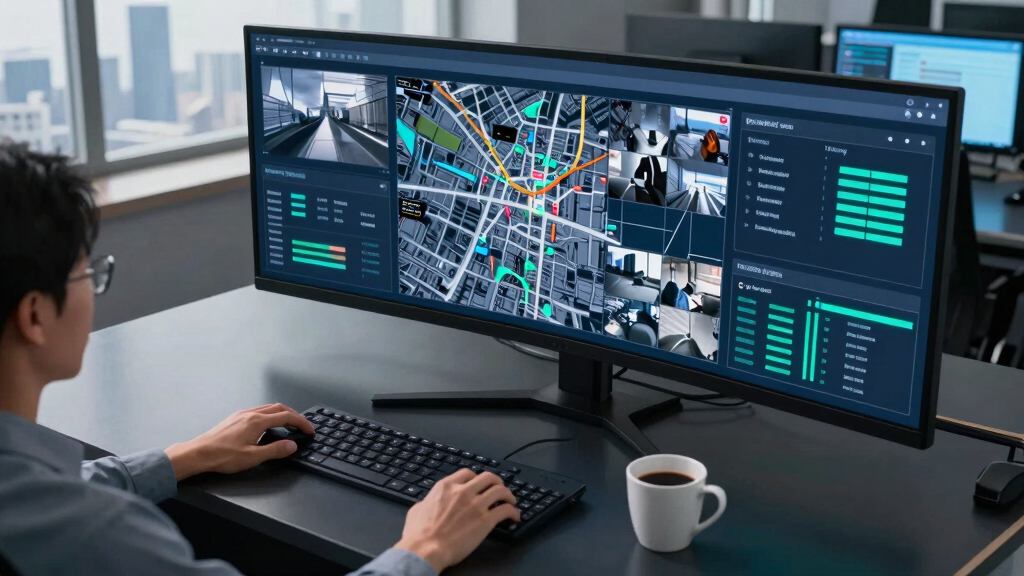
Artificial intelligence is increasingly embedded in city digital twins, transforming urban surveillance and governance. Recent projects in cities like Rotterdam and Barcelona demonstrate how AI-driven models are used for flood response, traffic management, and infrastructure planning, raising questions about control, privacy, and social costs. These developments mark a significant shift in city management, with implications for citizens and businesses alike.
City digital twins are virtual replicas of urban environments, fed by sensors, satellite imagery, and mobility data. Recent deployments incorporate AI to optimize traffic flow, predict flood risks, and streamline urban planning. Rotterdam’s initiative to develop a shared ownership model for its core city platform exemplifies efforts to avoid vendor lock-in, instead fostering joint governance of these digital infrastructures.
Meanwhile, commercial vendors dominate the market, creating dependencies that are difficult to unwind. Many city platforms embed operational data from businesses and citizens without explicit contractual agreements, raising legal and ethical questions under European data protection laws like GDPR. Privacy-preserving techniques, such as differential privacy, are emerging but are not yet standard practice, and concerns about data misuse persist.
Societally, the use of AI-powered twins extends beyond infrastructure management. They enable detailed behavioral profiling, which can influence planning, policing, and resource allocation. Critics warn of potential chilling effects on public assembly and expression, as well as the automation of biases, with some models evolving into tools for social control without direct democratic oversight.
Implications of AI-Driven City Digital Twins for Urban Governance
This trend has profound implications for how cities are managed and how citizens’ privacy and rights are protected. The shift toward shared ownership models could mitigate vendor lock-in and enhance public control, but adoption remains inconsistent. The increasing use of AI in city monitoring raises critical questions about transparency, accountability, and the social costs of surveillance. Ultimately, the trajectory of these technologies will determine whether cities serve their citizens or become increasingly dependent on private platform vendors, with significant societal consequences.
AI-powered city digital twin software
As an affiliate, we earn on qualifying purchases.
As an affiliate, we earn on qualifying purchases.
Evolution and Risks of AI-Enabled Urban Digital Twins
Digital twins of cities have evolved from simple models used for planning to complex, AI-powered platforms capable of real-time monitoring and decision-making. Since 2018, when Gartner first highlighted digital twins of business, the concept has expanded to government and citizens, with applications in flood modeling, traffic optimization, and infrastructure management. However, this expansion has coincided with concerns about vendor dependency, data privacy, and the potential for social control, especially as these models become more autonomous and integrated into governance processes.
Recent examples include Barcelona’s opaque data practices and Rotterdam’s pioneering shared ownership approach, which aims to keep city infrastructure under public control. Despite technological advances, legal and ethical debates about data control, purpose limitation, and societal impact remain unresolved, emphasizing the need for clear governance frameworks.
“The social costs of pervasive digital twins are often overlooked, yet they shape how cities govern and surveil their populations.”
— Thorsten Meyer, researcher
privacy-preserving data analytics tools
As an affiliate, we earn on qualifying purchases.
As an affiliate, we earn on qualifying purchases.
Unresolved Questions About AI and City Digital Twins
It remains unclear how widely shared ownership models will be adopted and whether they will effectively prevent vendor lock-in. The legal and ethical frameworks governing data control, purpose limitation, and transparency are still evolving, especially across different jurisdictions. Additionally, the societal impacts of AI-driven surveillance, such as chilling effects and automation biases, are difficult to quantify and monitor in real time. The pace of technological development and regulatory responses will influence future governance and privacy protections.
As an affiliate, we earn on qualifying purchases.
Future Developments in AI-Driven Urban Surveillance and Governance
Key developments to watch include the adoption of shared ownership structures like Rotterdam’s, which could serve as models for other cities. Progress in privacy-preserving AI architectures may improve data protection, fostering public trust. Regulatory frameworks are expected to evolve, potentially imposing stricter standards for transparency and purpose limitation. Additionally, increased scrutiny from civil society and legal bodies may influence how cities deploy AI in surveillance and governance, shaping a future where technological benefits are balanced against social costs.
As an affiliate, we earn on qualifying purchases.
Key Questions
How do city digital twins use AI to improve urban management?
AI enhances digital twins by enabling real-time data analysis, predictive modeling, and automated decision-making for traffic, flood response, and infrastructure planning.
What are the main legal concerns with AI-powered city surveillance?
Legal issues include data privacy, consent, purpose limitation, and accountability, especially under laws like GDPR, which govern data processing and citizen rights.
Can shared ownership models prevent vendor lock-in?
Shared ownership models, like Rotterdam’s, aim to give cities more control over their digital infrastructure, reducing dependency on single vendors, but their effectiveness depends on implementation and governance.
What social risks are associated with AI in city governance?
Risks include increased surveillance, potential biases in automated decisions, chilling effects on public assembly, and erosion of democratic contestability.
Are privacy-preserving AI techniques widely used in city digital twins?
While promising techniques like differential privacy are developing, their adoption in operational city platforms remains limited, and privacy concerns persist.
Source: ThorstenMeyerAI.com
Evergreen bestsellers Picks
bestsellers
As an affiliate, we earn on qualifying purchases.