
🔍 Read the full analysis: How AI Turns Credits Into A Living Exhibition In “After Action” on ThorstenMeyerAI.com

Get movie nights delivered free with Prime
- Fast, free delivery on millions of items
- Prime Video, Amazon Music and more included
- Member-only deals all year
TL;DR
After Action is a live, AI-built exhibition that frames 24 web experiences as productions in a fictional Wing V theater. Its continuous credit roll, code-generated sand-table scenes and accessibility controls turn a portfolio index into a film-like browsing experience; the military setting is fictional, not a report of real activity.
After Action, a live, AI-built browser exhibition, presents 24 fictional Wing V web experiences as the closing credits of an imagined theater rather than as a conventional portfolio grid. The project’s defining feature is a continuous, navigable credit roll interrupted by small, animated sand-table scenes; its Wing V framing is fictional and does not document real military activity.
The exhibition casts the visitor as an audience member in a nearly empty cinema. Its visual language uses cinema black, beam white, sand amber and credit gold, with compressed display lettering for production titles and monospace text for labels and controls. Letterbox bars, film-like grain, registration marks and a projected beam reinforce the screening-room conceit. The work is presented as a way to browse a collection of websites, not as a conventional gallery of thumbnails.
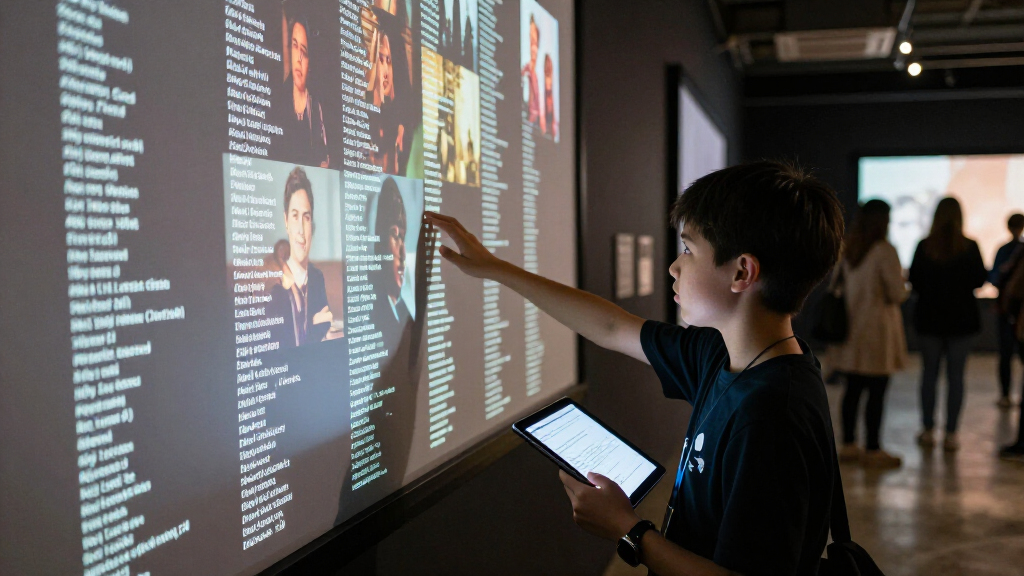
The credits name the 24 projects as productions, with links to their individual site paths, and divide them into sections such as “DIRECTED BY,” “EXECUTED BY” and “AUDITED AT.” The roll moves as one track, with chapter stops connected to a time display, locator line, labels and jump controls. After the moving sequence, a stationary linked index gives visitors another route through the same projects.
At intervals after groups of credits, the roll gives way to miniature scenes built in CSS. The source describes vignettes suggesting a shield formation, a catapult’s arc and two keys moving toward a shared lock. Tilted terrain, layered contour effects and raised markers create the sand-table look. The scenes use code-generated visual elements; the theater’s hero area, by contrast, uses a locally stored still image with added visual effects.
Room 125 of 175 · A browser exhibition
How AI Turns Credits Into a Living Exhibition in “After Action”
A live, AI-built exhibition turns 24 linked web experiences into productions in a fictional Wing V theater. A continuous credit roll, animated sand-table scenes and alternate ways to browse make the portfolio feel like a screening, rather than a grid of thumbnails.
01 / Exhibition format
A portfolio built like a film
The sequence turns browsing into an authored experience: credits establish rhythm, chapter controls give visitors agency, and short interludes break up the roll.
A nearly empty cinema
Cinema black, beam white, sand amber and credit gold shape the visual language. Letterbox bars, film grain and registration marks reinforce the theater setting.
Projects become productions
Twenty-four named projects appear under headings including “DIRECTED BY,” “EXECUTED BY” and “AUDITED AT,” with links to their individual site paths.
A roll visitors can navigate
Chapter stops connect to a time display, locator line, labels and jump controls. A stationary linked register offers another route to the same projects.
02 / Visitor journey
From opening frame to linked index
The exhibition layers atmosphere over familiar browsing tasks: orient, follow or jump, pause at a scene, then choose a destination.
03 / Sand-table scenes
Small worlds inside the roll
At intervals, miniature vignettes suggest a shield formation, a catapult’s arc and two keys moving toward a shared lock.
Tilted terrain, layered contour effects and raised markers evoke a miniature sand table. The visual elements are described as generated in code.
04 / Interaction & implementation
Designed around browser state
The supplied project account describes implementation choices and alternatives; these are reported details, not independent audit results.
Playback follows the page
The roll is described as time-driven and moved with a GPU-friendly transform. Playback pauses when the browser tab is hidden; an intersection observer activates miniatures as they enter view.
More than one way through
A manual-scroll option is described for people who prefer reduced motion. Moving names are removed from keyboard focus, while the stationary linked register keeps destinations available.
Media detail: The original brief requested code-made visuals and no required image assets. The account of the rendered room says an intended ambient video was unavailable, so the theater hero uses a locally stored still image with added visual effects. Optional synthetic projector audio is described as off by default.
“Unforgettable: the credits treating websites as films.”
Art-direction brief reproduced by After Action“AAR format.”
Art-direction brief reproduced by After Action“The credits are not a scrolling text illusion or a CSS marquee.”
Exhibition project description05 / The creative brief
Inside “After Action — Wing V Debrief Theater”
The page identifies itself as “Room 125 of 175” and presents the exhibition as the finale of a series of web experiences.
Credits with a finale
The brief calls for a credits roll, 24 project slugs, interludes roughly every eight credits and an ending title card.
Plain browser technologies
The brief specifies HTML, CSS and JavaScript, without frameworks, build tools, CDNs or external requests.
FABLE/175 pipeline
The supplied material credits the brief to Claude Fable 5 and says the project was produced through the FABLE/175 pipeline.
06 / What is not established
A project account, not an audit
The source describes the live site and intended interactions. It does not provide a launch date, visitor numbers, independent accessibility results, performance measurements or a full technical review.
It also does not confirm how many requested details appear exactly as specified, whether the unavailable ambient video was later restored, or whether the build was reviewed at every screen width.
Keep the frame clear: Wing V is fictional. The exhibition does not document a real military unit or operational activity, and this specific creative project is not evidence of AI’s general ability to build sites.
Trace the experience
Brief → theater → credits → miniatures → projects
A Portfolio Built Like a Film
After Action changes the way a collection of web projects is encountered: visitors follow a paced sequence and can jump between chapters, rather than scan a set of cards. That is the project’s central design proposition. It treats the credits themselves as the exhibition, using timing, typography and short visual interludes to give the portfolio a beginning, rhythm and ending.
The implementation also makes the cinematic idea subject to practical browser constraints. According to the project description, the animation is tied to the theater’s visibility and playback state, pauses when the browser tab is hidden, and offers a manual-scroll option for people who prefer reduced motion. The moving names are removed from keyboard focus, while a stationary linked register provides access to the same destinations. These choices show how a highly stylized browsing experience can include alternatives to following moving content.
For readers interested in AI-assisted web design, the project is an example of a brief being translated into a working interface with a distinct art direction. The supplied material says it was produced through the FABLE/175 pipeline from a brief credited to Claude Fable 5. It does not provide independent testing or evidence for broader claims about AI’s ability to build sites, so the exhibit is best understood as a specific creative project rather than proof of general performance.
interactive web exhibition display
As an affiliate, we earn on qualifying purchases.
As an affiliate, we earn on qualifying purchases.
The Brief Behind Wing V
The page identifies itself as “Room 125 of 175” and names its setting “After Action — Wing V Debrief Theater.” Its source material includes the art-direction brief that shaped the room, describing it as a finale for a series of web experiences. That brief specifies a credits roll, 24 named project slugs, interludes roughly every eight credits, and an ending title card: “War, staged. Craft, real. — WING V / FABLE 125.”
The brief calls for plain HTML, CSS and JavaScript, without frameworks, build tools, CDNs or external requests. The exhibition description says its moving roll is driven by JavaScript timing and a GPU-friendly transform, while an intersection observer activates miniatures only when they enter the viewing area. It also describes optional synthetic projector audio, off by default and stopped when disabled. These are details reported in the supplied project description, not results of an independent technical audit.
There is a distinction between the original specification and the described implementation. The brief asks for every visual to be made with code and says image assets should not be required. The account of the rendered room says an intended ambient video was unavailable, so the theater uses a local still image with visual effects instead. It describes the dioramas and atmospheric layers as code-generated, but does not claim the hero image is generated that way.
““Unforgettable: the credits treating websites as films.””
— The art-direction brief reproduced by After Action
As an affiliate, we earn on qualifying purchases.
What the Project Does Not Establish
The source material describes the live site and its intended interactions, but does not give a publication or launch date, visitor numbers, independent accessibility test results, performance measurements, or a full technical review. Claims about smooth performance, responsive behavior and implementation should therefore be read as project specifications or descriptions, not independently verified outcomes.
It is also unclear from the supplied account how many of the requested details in the original brief appear exactly as specified in the live build. The source names the 24 project slugs and describes the roll, scenes and accessibility alternatives, but does not report a completed review at every requested screen width. The ambient video was unavailable in the described build, and the source does not say whether it was later restored.
The fictional Wing V theater should not be mistaken for an actual military unit or operational record. The material explicitly frames it as an imaginative setting for a collection of web experiences. It gives no information about the people or organizations behind the individual linked projects beyond the production-style credits.
As an affiliate, we earn on qualifying purchases.
Explore the Live Credit Roll
The next step for visitors is to open the live After Action site and use its chapter controls or stationary index to reach the 24 linked projects. The source directs readers to the room at fable-25-830.netlify.app/sites/aftermath/. Visitors who prefer not to follow animation can use the manual-scroll alternative described for reduced-motion settings, or the linked register after the theater.
No future release, restoration of the unavailable ambient video, or further update is announced in the material provided. Any changes to the build, its media or its accessibility features remain unconfirmed.
digital portfolio display solutions
As an affiliate, we earn on qualifying purchases.
As an affiliate, we earn on qualifying purchases.
Key Questions
What is After Action?
After Action is a browser-based exhibition that presents 24 linked web experiences as productions in a fictional Wing V theater. It uses a continuous credit roll, chapter controls and interspersed miniature scenes instead of a standard portfolio grid.
Is Wing V a real military unit?
No. The supplied project description says the theater is fictional and is not an account of real military activity. The military language and miniature scenes are part of the exhibition’s art direction.
How does the credit sequence work?
The project description says JavaScript tracks elapsed time and moves a continuous credit track. Chapter stops link the time display, locator line, labels and jump controls, and a stationary linked index follows the theater.
Can visitors avoid the moving credits?
The description says reduced-motion users are offered a manual-scroll alternative. It also says the animation pauses when the page is hidden and the moving names are not included in keyboard focus; the stationary index provides links to the same material.
Are the miniature scenes images or code?
The source describes the sand-table miniatures as CSS-built scenes using tilted terrain, contour layers and markers. The theater’s hero area is different: the described build uses a locally stored still image with visual effects because the intended ambient video was unavailable.
Source: ThorstenMeyerAI.com
Halloween Picks
halloween
As an affiliate, we earn on qualifying purchases.