
TL;DR

Get movie nights delivered free with Prime
- Fast, free delivery on millions of items
- Prime Video, Amazon Music and more included
- Member-only deals all year
ByteDance has launched the Seed STEM Scientist Program, aiming to recruit about 100 scientists for a six-month pilot in Beijing focused on applying AI to scientific research. The initiative offers resources and paid positions but details on funding and impact remain unclear, as detailed in the original analysis.
ByteDance has launched the Seed STEM Scientist Program, a new initiative aiming to recruit about 100 scientists for a six-month pilot in Beijing focused on applying artificial intelligence to scientific research. The program, led by ByteDance Seed Edge, offers resources and paid positions, marking a significant step in the company’s efforts to develop AI for science amidst increasing competition for technical talent.
The Seed STEM Scientist Program was announced in July 2026, with applications due by September 30, 2026. It targets researchers in fields such as biology, chemistry, and materials science, providing access to computing resources and competitive compensation. The pilot will be conducted in Beijing’s Haidian district, a hub for Chinese universities and tech firms, and is expected to last approximately six months, reflecting ByteDance’s strategic focus on AI development in scientific research.
Details about the selected researchers, participating institutions, specific projects, and funding amounts have not been disclosed. ByteDance has not confirmed the total budget or whether participants will receive grants, salaries, or project-based payments. The initiative is positioned as a testbed for collaborations that could lead to longer-term research partnerships or hires, but its impact on reversing talent exodus from science fields remains unverified.
Potential Impact on Scientific Talent Retention
This initiative signifies ByteDance’s strategic move to attract scientific talent and develop AI tools tailored for research. If successful, it could help mitigate the ongoing brain drain in STEM fields by offering researchers access to advanced resources and industry collaboration. However, without clear funding details or measurable outcomes, its actual effect on reversing talent loss remains uncertain.
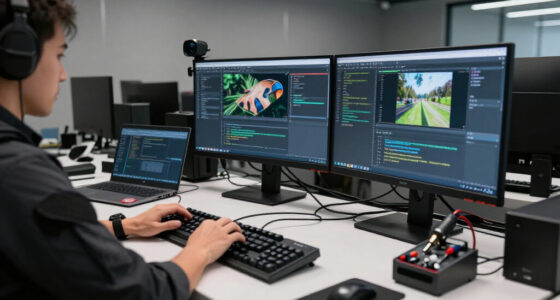
AI research workstation for scientists
As an affiliate, we earn on qualifying purchases.
As an affiliate, we earn on qualifying purchases.
ByteDance’s Growing Focus on AI for Science
Since establishing Seed Edge in January 2025, ByteDance has expanded its research scope beyond consumer AI models to include biomolecular modeling, quantum chemistry, and scientific evaluation. The company’s broader efforts aim to bridge industry and academia, leveraging its AI expertise to contribute to scientific discovery. The new program builds on these efforts by actively recruiting external scientists for targeted research projects, reflecting a wider industry trend of tech firms investing in scientific AI applications.
“The Seed STEM Scientist Program is designed to foster collaboration between industry and academia, pushing the boundaries of AI in scientific research.”
— ByteDance spokesperson
As an affiliate, we earn on qualifying purchases.
Unverified Aspects of Funding and Outcomes
It is not yet clear how much ByteDance plans to spend on this initiative, whether participants will receive salaries or grants, or how the program’s success will be measured. The absence of disclosed budgets, selected researchers, or specific research outputs leaves the program’s true impact uncertain. Additionally, the effect on talent retention in STEM fields remains unverified without baseline employment data or follow-up reports.
quantum chemistry computational tools
As an affiliate, we earn on qualifying purchases.
As an affiliate, we earn on qualifying purchases.
Next Steps and Monitoring Developments
Following the September 30 application deadline, ByteDance is expected to select participants and initiate the pilot in Beijing. The impact of the program will become clearer once the company discloses participant details, research areas, funding specifics, and any peer-reviewed results. Monitoring these developments will be key to assessing whether the initiative can influence talent retention and scientific progress.
As an affiliate, we earn on qualifying purchases.
Key Questions
What is the main goal of ByteDance’s Seed STEM Scientist Program?
The program aims to recruit researchers to develop AI applications for scientific research, potentially helping to address talent shortages in STEM fields.
Who can participate in the program?
The program is seeking about 100 scientists, including doctoral interns and scientific advisers, across fields like biology, chemistry, and materials science.
How much funding or support does ByteDance provide?
Details on funding, salaries, or grants have not been disclosed. The company states resources and compensation are competitive, but specifics are unavailable.
Will the program produce publicly available research?
It is not yet clear whether results will be published or whether intellectual property will be shared publicly, as terms have not been disclosed.
Can this initiative truly reverse the brain drain in STEM?
There is no confirmed evidence yet; the program is a pilot and its long-term impact on talent retention remains uncertain.
Source: ThorstenMeyerAI.com
Fall Picks
fall essentials
As an affiliate, we earn on qualifying purchases.