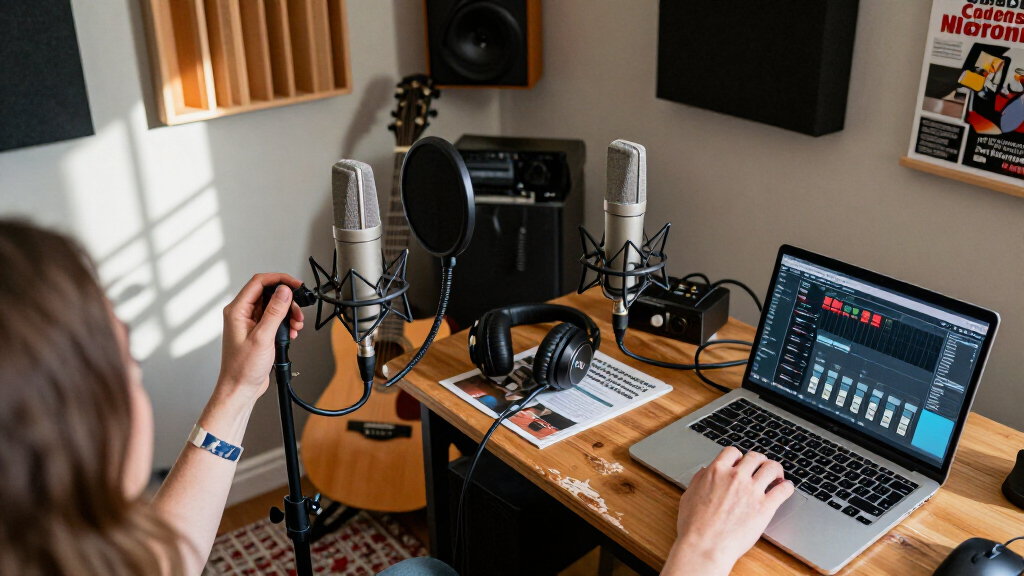

🔍 Read the full analysis: How To Choose A Studio Condenser Microphone For Home Recording In 2027 on ThorstenMeyerAI.com

Get movie nights delivered free with Prime
- Fast, free delivery on millions of items
- Prime Video, Amazon Music and more included
- Member-only deals all year
TL;DR
ThorstenMeyerAI.com’s buyer’s guide compares 10 condenser microphones for home recording, ranking the Audio-Technica AT2020 as its overall XLR choice, the AKG P120 for onboard controls and the MAONO A04 Gen2 for USB/XLR flexibility. The guide says its recommendations are based on listed features and configurations, not reported hands-on testing; room acoustics and mic placement remain important regardless of model.
ThorstenMeyerAI.com has published a guide to 10 studio condenser microphones for home recording, naming the Audio-Technica AT2020 its overall pick for buyers building an XLR setup. The guide also highlights the AKG P120 for onboard controls and the MAONO A04 Gen2 for offering USB and XLR connections, framing the choice around ease of setup, flexibility and the buyer’s recording space.
According to the ThorstenMeyerAI.com guide, the microphones are intended for vocals, spoken-word recording, home studios and first-time setups. The guide says it considers connection type, setup demands, onboard controls, included accessories, mounting practicality and room to expand a recording chain. It also says its ranking favors clear use cases and flexibility over the number of items in a bundled kit, much like other studio condenser microphone guides.
The guide names the AT2020 as its leading XLR recommendation, presents the P120 as a practical choice for people who want recording adjustments on the microphone, and describes the MAONO A04 Gen2 as adaptable for users who may want to start with USB and later use XLR. It also includes USB-focused models, accessory bundles and the premium Stellar X3, which the guide positions for buyers specifically seeking a large-diaphragm XLR microphone, a category also covered in a guide to studio microphones for AI recordings.
The source says its product distinctions are based on listed configurations and features, not hands-on testing. The supplied material does not provide comparative measurements, test recordings, prices or a dated test methodology. The recommendations should therefore be read as a feature-based buyer’s guide, not as a report of controlled sound tests.
The 10 picks
- 1
 TechZoneAudioProducts Stellar X3 Large-Diaphragm Condenser MicrophoneView on Amazon →
- 2
 Audio-Technica AT2020 Cardioid Condenser XLR Studio MicrophoneView on Amazon →
- 3
 MA-67 Studio Condenser Microphone with AccessoriesView on Amazon →
- 4
 AKG Pro Audio P120 Cardioid Condenser MicrophoneView on Amazon →
- 5
 MAONO A04 Gen2 XLR/USB Condenser Microphone KitView on Amazon →
- 6
 MAONO PM320S XLR Condenser Microphone KitView on Amazon →
- 7
 FIFINE T669 USB Condenser Microphone Kit with Boom ArmView on Amazon →
- 8
 Mackie EM-91C Large-Diaphragm Condenser MicrophoneView on Amazon →
- 9
 512 Audio Skylight Large-Diaphragm Studio Condenser XLR Microphone with Shock…View on Amazon →
- 10
 SUUNTOK BM6000 XLR Condenser Microphone KitView on Amazon →
Choosing a Mic That Fits Your Setup
The guide’s connection comparisons show how microphone choice can affect the rest of a home recording setup. USB microphones connect directly to a computer and can simplify a first setup. An XLR model requires an audio interface or mixer, adding cost and setup steps but allowing users to build or change the rest of the recording chain. A dual-connection microphone can offer a middle path, though buyers should check which functions are available through each connection.
The guide also cautions against treating a microphone upgrade as a fix for a poor recording environment. Condenser microphones can capture detail along with room reflections, fan noise and other background sounds. Placement and a quieter or less reflective recording position can matter more than a longer feature list. Bundled arms, mounts and cables may reduce extra purchases, but they do not treat a room or guarantee a clean recording.
How the Guide Ranks Microphones
ThorstenMeyerAI.com frames the comparison for readers choosing between simple desk-based recording and a more expandable XLR setup. The guide says it gives greater weight to how clearly a microphone suits a particular need than to accessory quantity alone. That stated approach explains why an XLR model can rank ahead of a bundle even when the bundle includes more parts.
The guide’s buying advice focuses on practical distinctions: whether the computer connection is USB, XLR or both; whether a buyer will use controls such as a pad or low-frequency roll-off; and whether accessories fit the person’s desk and existing gear. It advises buyers to consider the recording chain they expect to use over the next few years, not just their first session.
What the Comparison Does Not Establish
The supplied ThorstenMeyerAI.com source does not list all 10 microphone names or provide the complete ranking, so the remaining models cannot be identified here without adding unsupported details. It also does not state a publication day, current prices, availability by market or measured differences in sound quality. Those details may change and are not established by the material provided.
The guide describes its methodology as based on listed features and configurations. It does not report hands-on testing, and the supplied material provides no evidence to verify performance claims across different voices, rooms or recording software. Buyers should check the current model configuration and connection-specific controls before purchase.
Check Models Against Your Room
Based on the guide’s setup considerations, readers can compare a microphone’s connection with equipment they already own, confirm whether an XLR model requires an interface, and check which accessories are actually included. For bundled products, the guide recommends checking that the arm or mount suits the recording space rather than counting every included item as equal value.
A practical next step is to test placement in the intended room: record a short sample, listen for reflections and background noise, and adjust the microphone’s position before spending more on equipment. The supplied source does not announce a follow-up test or a later update to the rankings.
Key Questions
Which microphone does the guide recommend overall?
ThorstenMeyerAI.com names the Audio-Technica AT2020 as its leading choice for a straightforward XLR studio setup. The guide does not present this as a result of hands-on sound testing.
What is the difference between USB and XLR for home recording?
The guide describes USB as connecting directly to a computer, which can make setup simpler. XLR generally requires an audio interface or mixer, but can provide more options for building and changing a recording chain.
Which models are highlighted for flexibility or controls?
The guide describes the MAONO A04 Gen2 as a USB/XLR option and the AKG P120 as a choice with useful onboard recording controls.
Will a condenser microphone remove room noise?
No. The guide warns that condenser microphones can capture room reflections and background sounds. Placement and room conditions remain important, and a microphone’s pickup pattern does not eliminate noise.
Were the 10 microphones tested side by side?
The guide says its distinctions are based on listed configurations and features, not hands-on testing. The supplied source material provides no controlled listening results or comparative measurements.
Source: ThorstenMeyerAI.com
Halloween Picks
halloween
As an affiliate, we earn on qualifying purchases.