
🔍 Read the full analysis: How To Choose Among The 10 Best Mesh WiFi Systems For Whole-Home Coverage In 2027 on ThorstenMeyerAI.com

Get movie nights delivered free with Prime
- Fast, free delivery on millions of items
- Prime Video, Amazon Music and more included
- Member-only deals all year
TL;DR
ThorstenMeyerAI.com’s buying guide compares 10 mesh Wi-Fi systems, recommending the TP-Link Deco XE75 as its overall pick and highlighting Wi-Fi 7 models for households seeking newer standards. The supplied material does not provide test results or full model-by-model specifications, so buyers should verify coverage, ports and compatibility before choosing.
ThorstenMeyerAI.com’s mesh Wi-Fi buying guide compares 10 systems for whole-home coverage and names the TP-Link Deco XE75 its best overall choice, citing its Wi-Fi 6E performance and price positioning. The recommendations matter to shoppers weighing newer wireless standards against the cost of a mesh kit, but the supplied guide excerpt does not include independent test measurements or detailed specifications for all 10 picks.
The guide places the NETGEAR Orbi 770 Series and Amazon eero Pro 7 among its Wi-Fi 7 options. It describes the Orbi as a premium choice for buyers seeking newer connectivity and the eero as a fit for households already using Amazon’s smart-home ecosystem. These are the guide’s recommendations, not independently verified performance findings in the material provided.
Its central tradeoff is dedicated backhaul versus lower cost. Tri-band systems can reserve a radio band for traffic between mesh nodes, while dual-band products share spectrum between devices and node-to-node connections. The guide says Wi-Fi 6E models such as the Deco XE75 add a 6GHz band at a lower price point than Wi-Fi 7 alternatives; actual benefits depend on the home, client devices and internet plan.
The guide also names the TP-Link Deco X55 and Amazon eero 6+ as dual-band choices for smaller homes with moderate device counts. It says compact units such as the Deco S4 may be easier to place discreetly, while larger Orbi nodes may offer stronger antenna performance. The excerpt does not provide a complete list of all 10 products, their prices, or comparable coverage and speed measurements.
The 10 picks
- 1
 Amazon eero Pro 7 tri-band mesh Wi-Fi 7 router (newest model) – Supports inte…View on Amazon →
- 2
 NETGEAR Orbi 770 Series WiFi 7 Tri-Band Mesh System, 3-Pack, Covers Up to 8,0…View on Amazon →
- 3
 Amazon eero 7 dual-band mesh Wi-Fi 7 router (newest model) – Supports interne…View on Amazon →
- 4
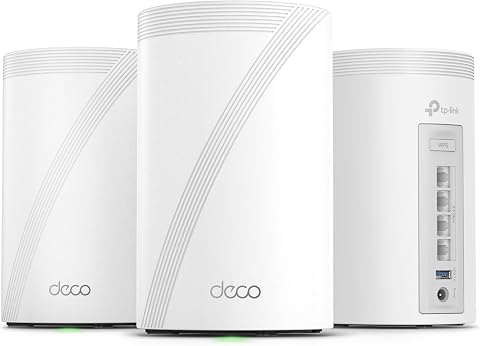 TP-Link Deco 7 Pro Tri-Band WiFi 7 BE10000 Whole Home Mesh System (3-Pack)View on Amazon →
- 5
 Amazon eero 6+ Dual-Band Wi-Fi 6 Mesh System, 3-PackView on Amazon →
- 6
 NETGEAR Orbi 370 Series WiFi 7 Mesh System for Home (RBE373) – Wireless Route…View on Amazon →
- 7
 TP-Link Deco 7 BE5000 Dual-Band Wi-Fi 7 Mesh SystemView on Amazon →
- 8
 TP-Link Deco XE75 AXE5400 Tri-Band Wi-Fi 6E Mesh System, 3-PackView on Amazon →
- 9
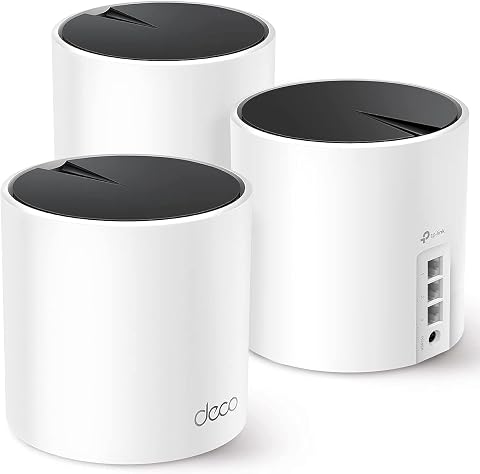 TP-Link Deco X55 AX3000 Wi-Fi 6 Mesh System (3-Pack)View on Amazon →
- 10
 TP-Link Deco S4 AC1900 Mesh Wi-Fi System (3-Pack)View on Amazon →
Match Mesh Features to Home Needs
The choice affects more than headline speed: node placement, wall materials, device load and wired ports can determine whether a mesh network works well across a home. A system with a high advertised coverage figure may not deliver the same range through brick, concrete or multiple floors, and adding nodes can affect throughput when the wireless backhaul is shared.
For readers, the guide’s main practical point is to avoid paying for capacity they cannot use. A household with a gigabit internet plan and older devices may see little benefit from Wi-Fi 7, while a larger home with heavy streaming, gaming or multi-gigabit service may value extra backhaul capacity and faster Ethernet ports. Those conclusions are general buying considerations, not guarantees about any specific model.
Popular right now

Vitamix Propel Series 510 Professional-Grade Blender, 3 Programs, Black

KitchenAid Classic Series 4.5-Quart Tilt-Head Stand Mixer, Onyx Black

Jura E6 Automatic Espresso Machine, Piano Black (15622)
As an affiliate, we earn on qualifying purchases.
How the Guide Ranks Mesh Kits
ThorstenMeyerAI.com says it assessed systems using coverage consistency, backhaul efficiency and setup simplicity. Its stated approach considered manufacturer coverage figures and node counts, whether systems reserve a band for mesh traffic, and the quality of their mobile-app onboarding. It says its ranking favored value in mid-range Wi-Fi 6E and Wi-Fi 7 products, while also including budget and premium options.
The source warns that manufacturer coverage claims can assume open layouts and favorable conditions. It gives a hypothetical example of a three-pack advertised for 6,000 square feet potentially covering 4,500 square feet in a home with challenging walls. That example is guidance in the source, not a measured result for a named kit. The guide also notes that standard gigabit Ethernet ports can limit wired speeds on multi-gigabit plans.
In its standards comparison, the source describes Wi-Fi 6E as adding access to 6GHz spectrum and Wi-Fi 7 as offering wider channels and lower latency potential. Those features require compatible client devices and, for full benefit, suitable network equipment and service. The guide says eero products integrate with Alexa and may include smart-home hub functions, while Deco and Orbi emphasize app-based network controls.
“The TP-Link Deco XE75 stands out as the best overall pick for balancing Wi-Fi 6E performance with reasonable cost.”
— ThorstenMeyerAI.com buying guide
Limits of the Available Comparison
The source excerpt does not identify all 10 systems in its promised list, give a publication date, or report controlled speed, latency or coverage tests. It also does not provide current prices, detailed port counts for each model, or a consistent comparison of included node configurations. Its product rankings and descriptions should be read as the publisher’s assessments.
It is also unclear which specific internet plans, home layouts and client devices informed the recommendations. Coverage and speed vary with distance, construction, interference and equipment compatibility. Buyers should confirm current manufacturer specifications and check whether the devices they own support the bands and features being considered.
Check Specs Before Buying
The guide points shoppers toward matching the system to floor area, building materials, internet speed and smart-home needs. Before purchasing, compare the exact kit’s node count, Ethernet ports, supported Wi-Fi bands, compatibility with add-on nodes and any subscription requirements. For multi-gigabit service, check that both the router and relevant wired ports support speeds above 1Gbps.
No product testing update or follow-up publication date is included in the source material. The next useful step for buyers is to review current prices and independent, like-for-like performance tests for the models under consideration, then confirm return terms in case coverage falls short in their home.
Key Questions
Which mesh Wi-Fi system does the guide recommend overall?
ThorstenMeyerAI.com names the TP-Link Deco XE75 its overall pick, citing Wi-Fi 6E and its balance of performance and cost. The supplied excerpt does not include independent test results for that ranking.
Do I need Wi-Fi 7 for a 1Gbps internet plan?
Not necessarily. The guide says Wi-Fi 7’s advantages are most relevant to compatible devices and faster network plans; a home with a 1Gbps plan may not need those features. Device support, local network use and price also matter.
When is a tri-band mesh system worth considering?
A tri-band system may help when a home has many connected devices, heavy network use or a layout that depends on wireless connections between nodes. A dedicated backhaul band can keep node traffic separate from device traffic, though real performance varies by system and home.
Can a mesh kit’s advertised coverage be taken at face value?
No. The guide cautions that coverage figures may assume open layouts. Walls, floors, interference and node placement can reduce practical range, so compare the claim with your home’s layout and construction.
What should multi-gigabit internet customers check?
Check the router and node Ethernet ports, since standard gigabit ports can limit wired connections to 1Gbps. Also confirm that the service equipment and client devices support the speeds and wireless features you plan to use.
Source: ThorstenMeyerAI.com