
🔍 Read the full analysis: How To Choose The Best Wireless Earbuds For Your Budget In 2027 on ThorstenMeyerAI.com

Get movie nights delivered free with Prime
- Fast, free delivery on millions of items
- Prime Video, Amazon Music and more included
- Member-only deals all year
TL;DR
ThorstenMeyerAI.com compares 10 wireless earbud models across price tiers, focusing on fit, noise control, battery claims, connectivity and case design. Its recommendations are a buying guide, not an independently verified product test, and prices, availability and real-world performance may vary.
ThorstenMeyerAI.com has published a guide to 10 wireless earbuds for 2027, comparing models by price tier, fit, noise control, battery claims and practical features. The guide recommends the Apple AirPods Pro 3 for iPhone users and points to lower-cost options such as the Soundcore P30i and JLab Go Air Pop+, while emphasizing that comfort, device compatibility and case size can matter as much as headline specifications.
The guide frames the choice as a set of tradeoffs rather than a single ranking that will suit everyone, much like other wireless earbud buying guides. It says the AirPods Pro 3 is a strong fit for iPhone owners who value ecosystem integration, spatial audio and adaptive noise control. For buyers seeking a lower-cost model with extended claimed battery life and an added case feature, it highlights the Soundcore P30i, whose case doubles as a phone stand. These are the guide’s assessments; it does not provide a standardized test protocol or independent measurements to substantiate comparative performance.
Other models named include the JLab Go Air Pop+, Fhumsh A10, PIFFA T21, XIAOWTEK S66 and JBL Vibe Beam, along with a product described as “Wireless Earbuds with Bluetooth 5.4.” The guide says the PIFFA T21 has a touchscreen charging case, the XIAOWTEK S66 offers IPX7 water resistance, and the Fhumsh A10 includes call-focused environmental noise cancellation. It also flags a potential compromise in the JBL Vibe Beam: a more compact case may mean less total battery life.
Its selection criteria include audio specifications, fit, connectivity, battery capacity and utility, considerations that also matter when choosing earbuds for commutes and workouts. The guide urges buyers to distinguish active noise cancellation (ANC), which reduces sound heard by the wearer, from environmental noise cancellation (ENC), which targets microphone pickup during calls. It also advises checking per-charge playback time, ear-tip options, codec support and return policies rather than relying only on total battery claims or broad “noise cancellation” wording.
The 10 picks
- 1
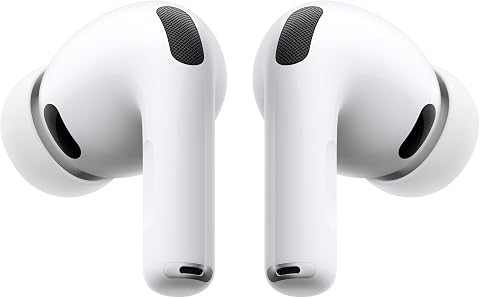 Apple AirPods Pro 3 Wireless Earbuds with Active Noise CancellationView on Amazon →
- 2
 JBL Vibe Beam True Wireless Earbuds (Black)View on Amazon →
- 3
 Soundcore P30i by Anker Noise Cancelling Earbuds, Hands-Free ViewingView on Amazon →
- 4
 Soundcore P30i Noise-Cancelling Wireless Earbuds with Phone-Stand CaseView on Amazon →
- 5
 XIAOWTEK S66 Wireless Earbuds Bluetooth 5.4, Deep Bass Stereo, 50h Playback,…View on Amazon →
- 6
 Wireless Earbuds, Sports Bluetooth Headphones, Running HeadphonesView on Amazon →
- 7
 Wireless Earbuds with Bluetooth 5.4, LED Display, 50h Playtime, IPX7 Waterpro…View on Amazon →
- 8
 Fhumsh A10 Wireless Earbuds with Bluetooth 6.0, LED Display, ENC Noise Cancel…View on Amazon →
- 9
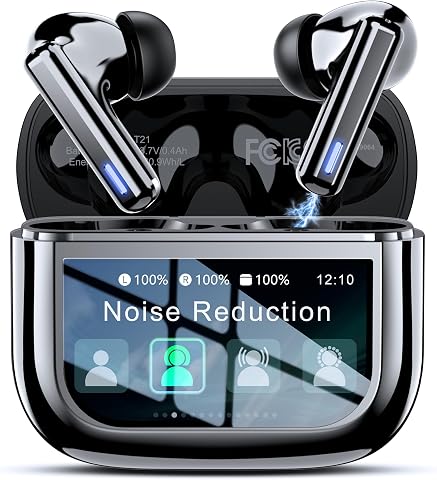 PIFFA T21 True Wireless Earbuds with Touchscreen CaseView on Amazon →
- 10
 JLab Go Air Pop+ True Wireless EarbudsView on Amazon →
The Tradeoffs Behind Each Price
The guide matters to shoppers because earbud specifications can describe different things that are easy to confuse. A claim of 40 or 50 hours typically includes charges supplied by the case, not continuous listening on one charge. The source gives a 50-hour total for the model labeled Wireless Earbuds with Bluetooth 5.4, but does not provide a testing method or a comparison baseline. Buyers should check per-charge playback time and consider whether a larger case suits their daily routine.
Noise-control labels also affect what a buyer receives. ANC helps reduce surrounding sound for listening, while ENC is aimed at improving the voice picked up on calls; one does not substitute for the other. A guide that separates those functions can help readers avoid paying for a feature that does not address their needs, though buyers should confirm each model’s capabilities with current manufacturer specifications.
Finally, price alone does not settle the choice. Fit determines whether earbuds stay comfortable and form an effective seal, while ecosystem features may be more useful to people already using compatible devices. The guide’s central takeaway is practical: match features to commuting, calls, exercise and listening habits, and treat broad claims as starting points rather than guarantees.
Popular right now

Sony 65 Inch BRAVIA 5 Mini LED 4K HDR Smart Google TV (K-65XR50)

Ninja CREAMi Scoop & Swirl 13-in-1 Ice Cream and Soft Serve Maker, NC701

Vitamix Nano Personal Blender with SmoothiePilot, Black
As an affiliate, we earn on qualifying purchases.
How the Guide Compares Models
ThorstenMeyerAI.com says its selection considered audio fidelity, ergonomic fit and practical utility, then weighed specifications against intended use. It describes judging premium products on noise control and ecosystem integration, and budget models on concerns such as microphone quality and connection stability. The source presents these as its chosen criteria, but does not name a test lab, disclose a scoring system or provide detailed side-by-side measurements.
The recommendations span several kinds of product. Some emphasize phone integration or noise cancellation; others promote long battery claims, water resistance or features built into the charging case. The guide specifically cautions that a case with extra functions can add bulk, and that a high total-playtime figure does not tell readers how long the earbuds run between charges. It also notes that Bluetooth version and audio codec support are separate considerations, and that compatibility depends on the user’s phone and listening setup.
What the Source Does Not Verify
The supplied source does not include street prices, purchase links, regional availability or a clear publication date beyond presenting the guide for 2027. It also does not report independent listening tests, controlled battery trials, microphone recordings or fit tests. Descriptions such as “best overall,” “superior” and “exceptional value” are the source’s judgments, not independently established findings.
Some product details need confirmation before purchase. The source gives limited information about the earbuds called “Wireless Earbuds with Bluetooth 5.4,” including no clear brand or model name. Its Bluetooth-version and water-resistance statements are not accompanied by manufacturer documentation in the material provided. Battery performance, fit, ANC quality and codec support can vary by device and use, and the guide does not establish how those results were measured.
Check Details Before Buying
Readers should compare current manufacturer listings and retailer prices for the exact model and region they plan to buy. Confirm whether a product has ANC or only call-focused noise reduction, check playback time per charge, verify the phone’s supported codecs and connection features, and review the available ear-tip sizes. For water resistance, check the official rating and its limits rather than assuming that a model is suitable for swimming.
Because comfort cannot be settled by specifications alone, buyers may also want to check return and exchange terms before ordering. The source provides no announced follow-up testing or update schedule, so current pricing, availability and any later revisions to these recommendations remain unreported.
Key Questions
Which earbuds does the guide recommend for iPhone users?
The guide names the Apple AirPods Pro 3 as its pick for iPhone users, citing ecosystem integration, spatial audio and adaptive noise control. That is the guide’s recommendation, not a result supported by independent testing in the supplied material.
Does a 50-hour battery claim mean 50 hours on one charge?
No. The source describes a 50-hour total claim for the product labeled Wireless Earbuds with Bluetooth 5.4, but does not specify a test method. Total figures commonly include recharges from the case; check the manufacturer’s per-charge estimate for the earbuds themselves.
What is the difference between ANC and ENC?
ANC reduces external sound heard by the listener, while ENC is intended to reduce background noise picked up by microphones during calls. Check the exact product specifications, since general “noise reduction” wording may not identify which function is included.
Which models in the guide have unusual case features?
The guide says the Soundcore P30i case works as a phone stand and the PIFFA T21 has a touchscreen case. It does not provide independent assessments of how useful those features are or how much bulk they add.
Are the guide’s recommendations independently tested?
The supplied material describes the guide’s selection criteria but does not report controlled testing, independent measurements or a named testing organization. Treat its rankings as editorial recommendations and verify specifications, prices and return terms before buying.
Source: ThorstenMeyerAI.com