

Personalized nutrition uses your DNA to craft meals that support your unique health needs. By understanding your genetic markers, you can identify how your body absorbs nutrients, reacts to foods, and your risks for certain conditions. This approach allows you to adjust your diet for better energy, weight management, and disease prevention. If you keep exploring, you’ll discover how to turn your genetic blueprint into practical, daily meal strategies tailored just for you.
Key Takeaways
- Genetic markers reveal individual metabolic responses, guiding tailored dietary choices for optimal health.
- Genetic testing helps identify food sensitivities and nutrient needs to customize daily meal plans.
- Personalizing nutrition based on DNA improves nutrient absorption, digestion, and disease prevention.
- Incorporating genetic insights enables precise adjustments in macronutrients and food selections.
- Overall, DNA-informed diets promote better health outcomes and proactive nutritional management.
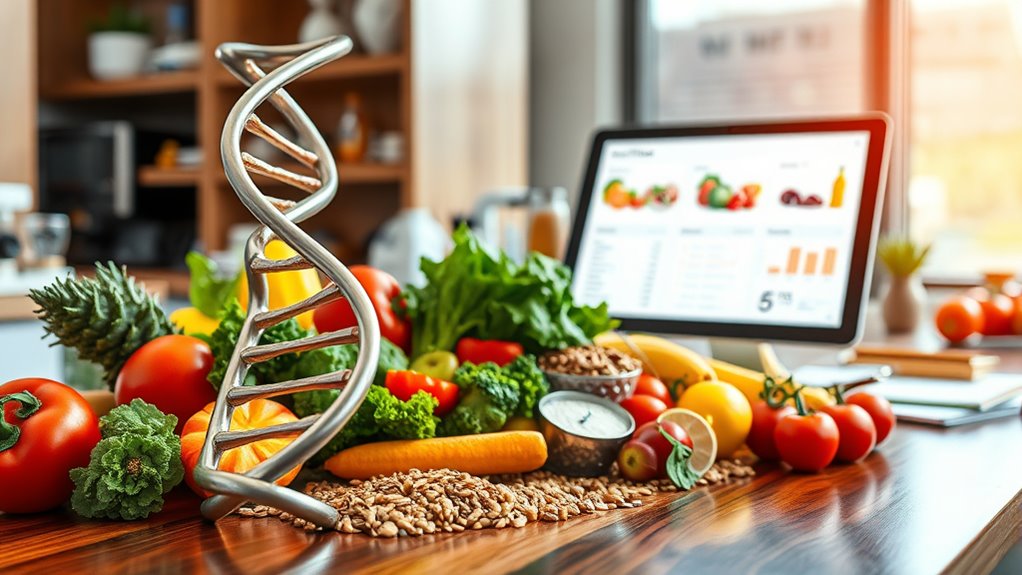
Have you ever wondered if your diet could be tailored specifically to your body’s unique needs? Thanks to advances in personalized nutrition, that’s more possible than ever. The key lies in understanding your genetic markers, which reveal crucial information about how your body responds to different foods. These genetic markers act like a blueprint, helping nutritionists develop diet customization strategies that are uniquely suited to you. Instead of generic meal plans, you can now benefit from nutrition advice based on your DNA, optimizing your health and well-being.
Discover how genetic insights can personalize your diet for better health and well-being.
When you undergo genetic testing, it uncovers specific markers linked to various metabolic processes, nutrient absorption, and even predispositions to certain health conditions. For example, some genetic markers might indicate a higher likelihood of lactose intolerance or a slower caffeine metabolism. Armed with this knowledge, you can avoid foods that may cause discomfort or health issues and focus on those that support your body’s natural tendencies. This approach makes your diet more efficient because it works with your biology rather than against it.
Diet customization using genetic markers isn’t just about avoiding negatives; it’s about maximizing positives. If your DNA suggests you process fats efficiently, you might incorporate more healthy fats into your meals. Conversely, if your markers show a slower ability to metabolize carbohydrates, you could adjust your carbohydrate intake accordingly to maintain stable energy levels and avoid weight gain. This personalized approach helps you fine-tune your nutrition to enhance energy, improve digestion, and potentially lower your risk for certain diseases.
Further, integrating genetic insights into your daily meals can make meal planning more precise and satisfying. For instance, if your DNA indicates a higher need for certain nutrients like vitamin D or omega-3 fatty acids, you can prioritize foods rich in those nutrients. Additionally, understanding your genetic makeup can help you choose the right nutrient absorption strategies to maximize your health benefits. Over time, this targeted diet customization can lead to better overall health, reduced inflammation, and improved immune function. It’s a proactive way to support your body’s specific needs rather than relying on one-size-fits-all dietary advice.
Frequently Asked Questions
How Affordable Is Personalized Nutrition for the Average Consumer?
Personalized nutrition is becoming more affordable as cost reduction efforts and market accessibility improve. You can now access tailored meal plans and DNA testing at lower prices, making it easier to incorporate personalized strategies into your daily routine. While some services may still be costly, ongoing innovations and increased competition are driving prices down, so more consumers like you can benefit from customized nutrition options without breaking the bank.
What Privacy Measures Protect Genetic Data in Personalized Diet Plans?
You’re protected by strict genetic privacy measures, such as data encryption, which safeguards your genetic information from unauthorized access. Reputable companies often implement robust privacy policies, anonymize your data, and require consent before sharing. Always review their privacy practices and choose providers committed to safeguarding your genetic privacy. These measures ensure your sensitive DNA data stays confidential, giving you peace of mind while benefiting from personalized nutrition insights.
Can Personalized Nutrition Address Specific Health Conditions Effectively?
Yes, personalized nutrition can effectively address specific health conditions by considering your genetic predispositions. By analyzing your DNA, diet plans can incorporate targeted interventions tailored to your unique genetic makeup. This approach helps optimize your health, manage risks, and improve outcomes. With precise adjustments based on your genetic data, personalized nutrition offers a proactive way to support your well-being and tackle health issues more effectively.
How Often Should a Personalized Diet Be Updated Based on New Data?
Like a garden that needs seasonal tending, your personalized diet should be revised regularly. Typically, you should update it every 6 to 12 months, or sooner if new genetic updates reveal significant changes. This guarantees your diet remains aligned with your evolving health needs. By keeping your diet current, you maximize its effectiveness, much like a well-tended garden produces the best blooms.
Are There Any Risks Associated With Relying Solely on Dna-Based Dietary Advice?
Relying solely on DNA-based dietary advice can risk genetic determinism, making you believe your genes completely dictate your health. This creates a false security, ignoring other vital factors like lifestyle and environment. While genetic insights are valuable, they shouldn’t be your only guide. Combining DNA data with holistic approaches ensures a balanced, effective plan and reduces the risk of overlooking important health influences.
Conclusion
Imagine your nutrition journey as a unique landscape, shaped by your DNA and daily choices. By embracing personalized nutrition, you’re not just following generic paths—you’re carving out a route tailored just for you. Think of your DNA as the blueprint and your meals as the bricks building your health castle. With this knowledge, you hold the power to craft a vibrant, resilient future. So, take the reins and design a diet as unique as your fingerprint.