TL;DR

Get movie nights delivered free with Prime
- Fast, free delivery on millions of items
- Prime Video, Amazon Music and more included
- Member-only deals all year
Pop culture collectibles are items tied to franchises and media — figures, cards, comics, props, and video game memorabilia — forming a market worth tens of billions globally. Value comes down to condition, rarity, provenance, and franchise momentum, not age alone; most modern mass-produced pieces (like the majority of Funko Pops) never appreciate. Check eBay sold listings before buying or selling anything.
A Pikachu Illustrator card sold for over $5 million. A Funko Pop of SpongeBob sits in a clearance bin for $4.99. Same hobby, wildly different outcomes — and the gap between them is exactly what this article explains.
Pop culture collectibles — items tied to franchises, celebrities, and media — have grown into a market worth tens of billions of dollars. That includes action figures, trading cards, comics, autographs, movie props, and video game memorabilia. But most of it never appreciates, and some of it actively loses money.
Here’s what actually drives value, how to figure out what your stuff is worth, and the traps that catch new collectors. No hype, no nerd nostalgia fog.
Value comes from condition, rarity, provenance, and franchise momentum — age alone makes an item worth almost nothing.
Price anything with eBay sold listings (not asking prices), cross-checked on PopPriceGuide, GoCollect, or PSA market reports.
Grading only pays when the item’s potential value jump beats the $20–$100+ fee — skip it for common, low-value items.
Most mass-produced collectibles (especially Funko Pops) don’t appreciate; genuine scarcity like vintage cards and screen-used props is where records happen.
Protect yourself with buyer protection platforms, verified cert numbers, and COAs from PSA/DNA, Beckett, or JSA — counterfeits are a growing problem.
What Are Pop Culture Collectibles, Exactly?
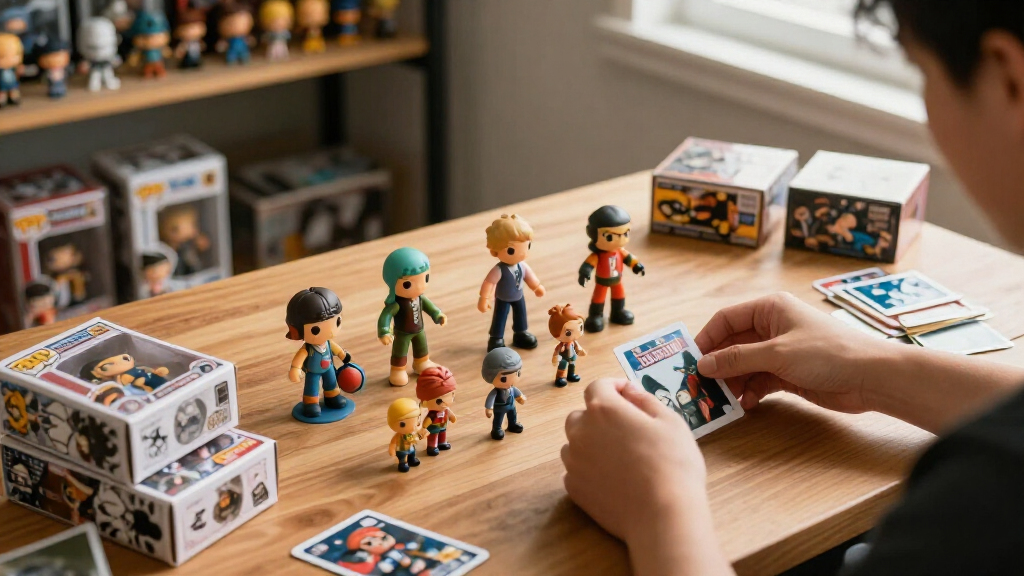
Pop culture collectibles are physical (and sometimes digital) items tied to movies, TV shows, games, comics, and celebrities. Think action figures, Funko Pops, trading cards, comics, autographs, movie props, vinyl toys, and video game memorabilia. The hobby spans a $5 bin Star Wars figure and a six-figure screen-used lightsaber — same category, different planets.
The market’s biggest names tell you where the money flows: Funko, Hasbro, Mattel, LEGO, Topps, Bandai Namco, Hot Toys, and Sideshow Collectibles [1]. LEGO has pushed hard into adult territory with its 18+ line and Botanical Collection, basically admitting grown-ups with paychecks are the real customers now.
A quick overview for a mental map: trading cards and graded comics sit at the high-value end. Figures and props live in the middle. Mass-produced novelty items? Mostly the low end. That hierarchy matters when you’re deciding where to spend.
The 4 Things That Actually Make a Collectible Valuable
Four factors decide almost all value in this hobby: condition, rarity, provenance, and franchise momentum. Age alone does almost nothing — your opened, played-with 90s toys are worth a fraction of what a sealed example fetches.
- Condition and grading. A PSA 10 Pokémon card can sell for 10x a PSA 8 of the same card. Grading services like PSA, CGC, and Beckett seal items in plastic “slabs” with a score, and that score moves price dramatically.
- Rarity and exclusivity. Convention exclusives from SDCC or NYCC, short prints, and limited runs hold value because supply is capped. Mass retail items usually don’t.
- Provenance. For autographs and props, a certificate of authenticity (COA) or documented chain of ownership is everything. A real Harrison Ford signature without paperwork is nearly unsellable at full price.
- Franchise momentum. A new movie or show spikes related prices. When a legacy IP like Star Wars or Pokémon hits an anniversary, related collectibles climb.
Real example: a sealed, first-edition Pokémon base set box sold for hundreds of thousands of dollars. The same cards, loose and played with? Maybe a few hundred. Condition isn’t a detail — it’s the whole game.
Sealed vs. Opened: Should You Keep It in the Box?
For value, sealed and boxed items almost always beat opened ones — but the honest answer is you should collect whichever way makes you happy, and just know the tradeoff. Sealed vintage Star Wars figures sell for thousands; opened ones sell for tens. The plastic prison is real.
The nuance: sealing only protects value when the item is rare. A sealed common Funko Pop from 2022 is still worth about retail, because Funko made millions of them. Meanwhile, an opened Hot Toys figure — genuinely limited, high-detail — can hold value fine out of the box if you keep the packaging.
Open it if you’ll love it more. Keep it sealed if it’s genuinely rare. Just never throw away the box — original packaging can add 30–50% to resale on figures.
One more practical note: display items degrade. Sunlight fades ink and yellow plastic. If you open things, display them out of direct sun.
How to Price Your Collection in 10 Minutes
The fastest way to value a collectible is checking eBay sold listings — not active listings, sold ones. Asking prices are fantasy; sold prices are reality. Filter for “Sold items,” find your exact item in similar condition, and average the last few sales.
- Search your item on eBay with as much specificity as possible (year, edition, box number).
- Filter to sold listings from the last 90 days.
- Compare condition honestly — a dented box is not a mint box.
- Cross-check on PopPriceGuide for Funko, GoCollect for comics, or PSA’s market reports for cards.
Scenario: you find a vintage TMNT figure in your parents’ attic. eBay sold listings show sealed examples at $200 and loose, complete ones at $35. Yours is missing a belt and a weapon — realistically $15–20. That ten minutes just saved you from an embarrassing asking price.
Values shift fast in this market. Verify anything significant against live sources before you commit to a sale [1].
Is Grading Worth the Cost? The Honest Math
Grading is worth it when the potential value jump exceeds the $20–$100+ fee and the risk of a low score. For a card worth $50 raw, grading is usually a loss. For a card that could grade a 9 or 10 and jump to $500? Absolutely worth it.
| Situation | Grade It? | Why |
|---|---|---|
| Card/figure worth under $50 raw | No | Fees and shipping eat any gain |
| Vintage card in great shape | Yes | A PSA 9–10 can multiply value 5–10x |
| Common modern item | No | Supply too high for grade to matter |
| High-value autograph | Yes | Certification makes it sellable at all |
The pandemic-era card boom made grading backlogs legendary — waits stretched to months. Prices have partially corrected since, but vintage Pokémon cards still make headlines with record six- and seven-figure sales [1].
Counterfeits Are Everywhere — Here’s How to Spot Them
The counterfeit problem in collectibles has grown sharply, especially with fake graded slabs and forged autographs [1]. If a deal looks too good, it is. Scammers have gotten good enough that even experienced collectors get burned.
- Check the slab. Verify the cert number on PSA or Beckett’s website directly — fake slabs often have wrong fonts, misaligned labels, or numbers that don’t exist.
- Autographs need provenance. Demand a COA from a reputable source (PSA/DNA, Beckett, JSA). A “trust me bro” certificate from an unknown seller is wallpaper.
- Buy Funko Pops with scrutiny. Compare box printing quality, sticker placement, and figure paint against confirmed-authentic photos.
- Use buyer protection. eBay, Mercari, and Whatnot offer recourse; a cash deal in a parking lot offers none.
For high-dollar purchases, consider an authentication service before paying, not after. It’s cheaper than learning the hard way.
Are Collectibles a Good Investment? (Mostly No)
As investments, most pop culture collectibles underperform — and Funko is the cautionary tale. After years of overproduction, the company famously considered discarding warehouse stock in 2023 because it couldn’t sell through, and its stock has been volatile ever since [1]. Millions of Pops sit in bins worth less than retail.
What does appreciate? Genuine scarcity plus cultural weight. Vintage Pokémon cards, key silver-age comics, and screen-used props keep setting records at houses like Heritage Auctions and Julien’s, where costumes and props fetch millions [1]. Notice the pattern: those items couldn’t be reproduced at will. Funko Pops could, and did.
Treat collecting as a hobby you might partially recoup, not a retirement plan. If an item’s value crashes, you should still want it on your shelf. The digital side proves the point — NFTs and NBA Top Shot rose dramatically, then largely cooled, leaving late buyers holding worthless JPEGs [1].
Buy what you’d keep even if the price went to zero. Anything else is speculation with extra steps.
Starting a Collection Without Wrecking Your Budget
The best way to start collecting is picking one niche you genuinely love and setting a monthly cap before you buy anything. Collectors who chase everything end up with piles of depreciating plastic. Collectors who focus end up with collections that mean something — and hold value better.
- Pick one lane. One franchise, one era, one format. Depth beats sprawl.
- Set a monthly budget and treat it like a gym membership — non-negotiable, capped.
- Buy the best condition you can afford rather than more cheap items.
- Store smart: UV-protected cases, stable temperature, no attics or garages.
- Track everything — a simple spreadsheet of what you paid protects you later for insurance and taxes.
Speaking of insurance: collections above a few thousand dollars usually need a rider on your homeowner’s or renter’s policy. Standard policies often cap collectibles well below their real value.
Frequently Asked Questions
Is my childhood toy collection valuable?
Maybe — but condition decides everything. Sealed vintage Star Wars, TMNT, or Pokémon items can sell for hundreds or thousands, while opened, incomplete, played-with examples often go for under $50. Check eBay sold listings for your exact item in its exact condition before assuming anything.Are Funko Pops a good investment?
Usually not. Funko’s overproduction led the company to consider discarding warehouse stock in 2023, and most Pops sell at or below retail on the secondary market. Rare chase variants and vaulted exclusives hold value, but the average Pop is a decoration, not an asset.Should I open my collectibles or keep them sealed?
Sealed items almost always resell for more, sometimes dramatically more. But if an item is mass-produced, sealing doesn’t save much value anyway. Open what you’ll enjoy, keep rare items sealed, and never throw away original packaging — it can add 30–50% to figure resale prices.How do I know if a graded card or autograph is fake?
Verify the certification number directly on PSA’s, Beckett’s, or CGC’s official website — fake slabs often carry numbers that don’t exist or details that don’t match. For autographs, only accept COAs from PSA/DNA, Beckett (JSA), or another recognized authenticator, and buy through platforms with buyer protection.Where’s the safest place to buy and sell collectibles?
eBay, Mercari, and Whatnot offer buyer and seller protection and large audiences. Conventions and collector groups work too, but cash deals carry counterfeit risk with no recourse. For high-value items, use an authentication service before finalizing payment.Conclusion
If you remember one rule: rarity plus condition plus paperwork beats nostalgia every time. The sealed box, the verified signature, the limited run — those survive market swings. The mass-produced figure you paid retail for probably won’t.
Collect because you love the thing. Price it with sold listings, not wishful thinking. And before your next buy, ask yourself the only question that matters: would I still want this on my shelf if it was worth nothing tomorrow?
Fall Picks
fall essentials
As an affiliate, we earn on qualifying purchases.