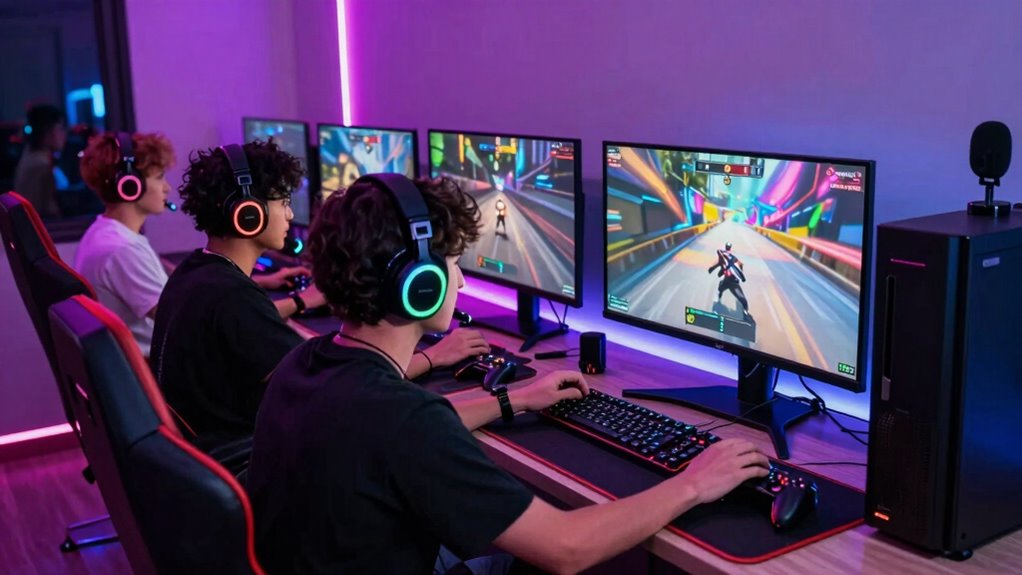

Streaming technology has greatly improved multiplayer gaming by making high-quality gameplay accessible without expensive hardware. It reduces reliance on powerful consoles or PCs, letting you play from almost anywhere with an internet connection. Advancements in cloud infrastructure and edge computing lower latency, so your actions feel more responsive. Bandwidth optimization ensures smooth, consistent performance even during intense multiplayer sessions. If you’re curious about how these innovations continue to shape your gaming experience, there’s more to discover below.

Get movie nights delivered free with Prime
- Fast, free delivery on millions of items
- Prime Video, Amazon Music and more included
- Member-only deals all year
Key Takeaways
- Cloud streaming reduces hardware barriers, enabling more players to join multiplayer games from various devices.
- Lower latency from advanced infrastructure enhances real-time responsiveness in fast-paced multiplayer gameplay.
- Dynamic bandwidth optimization ensures consistent, smooth multiplayer experiences despite varying internet speeds.
- Edge computing decreases latency by bringing servers closer to players, improving multiplayer responsiveness.
- Remote game updates and high-quality visuals via streaming make multiplayer gaming more accessible and immersive.

Streaming technology has revolutionized multiplayer gaming by making it more accessible and seamless than ever before. Instead of relying solely on powerful hardware or complex setups, you can now connect to high-quality gaming experiences through cloud-based platforms. This shift minimizes the need for expensive consoles or PCs, allowing you to play from almost anywhere with an internet connection. The key to this transformation lies in how streaming minimizes issues like cloud latency and maximizes bandwidth optimization, essential factors for smooth gameplay.
Streaming tech makes multiplayer gaming more accessible and seamless, reducing hardware barriers and enhancing the experience through cloud optimization.
Cloud latency plays a significant role in how quickly your actions translate into game responses. When latency is high, you might experience delays, input lag, or choppy visuals, which can ruin the experience. Streaming tech has worked to reduce this lag by improving server infrastructure and data transfer speeds. As a result, your commands are relayed faster, making gameplay feel more natural and responsive. This reduction in cloud latency is indispensable for fast-paced multiplayer games where split-second reactions matter, such as shooters or racing titles. With lower latency, you experience less delay, making it easier to compete and coordinate with others.
Bandwidth optimization is another critical element that streaming technology has mastered to enhance multiplayer gaming. Streaming platforms dynamically adjust the quality of the video and audio stream based on your internet speed, ensuring minimal buffering and consistent performance. This means that even if your connection fluctuates, the game adapts to provide the best experience possible without sacrificing responsiveness. Bandwidth optimization also involves compressing data efficiently, reducing the amount required to transmit game state updates, player movements, and environment details. This efficiency minimizes lag and packet loss, which are common issues in online gaming. Additionally, ongoing advancements in data transfer protocols are further reducing latency and improving streaming stability, ensuring a smoother gaming experience. The integration of cloud infrastructure has also played a vital role in supporting these improvements by providing more reliable and scalable server networks. Furthermore, innovations in network management are helping to prioritize gaming traffic, which enhances overall responsiveness during multiplayer sessions. Moreover, the evolution of edge computing techniques is bringing servers closer to players, further decreasing latency and improving overall responsiveness.
Additionally, advancements in projector technology have made it easier to enjoy high-quality visuals during multiplayer gaming sessions in a home theater setup, further enriching the gaming experience. Furthermore, these technological improvements are making multiplayer gaming more inclusive. You no longer need the latest high-end hardware to enjoy multiplayer titles at high quality; a stable internet connection is often enough. Cloud streaming services handle the heavy lifting, processing the game’s graphics and physics remotely, then transmitting the video feed to your device. This setup reduces hardware barriers and allows more players to join the multiplayer community. It also means developers can continually update games without requiring players to download large patches, keeping the experience fresh and engaging.
As an affiliate, we earn on qualifying purchases.
Frequently Asked Questions
How Does Streaming Tech Reduce Latency in Multiplayer Games?
Streaming tech reduces latency in multiplayer games by utilizing edge computing, which processes data closer to your device, minimizing delays. It also employs bandwidth optimization to efficiently manage data flow, ensuring faster updates and responses. You experience smoother gameplay with fewer lag issues because this technology decreases the distance data travels and maximizes network efficiency. As a result, your multiplayer gaming sessions become more responsive and immersive.
What Are the Main Challenges in Implementing Streaming Technology?
You face main challenges in implementing streaming technology, especially with bandwidth optimization and server scalability. Managing high data transfer rates demands efficient compression and data handling to prevent lag. Also, as player numbers grow, servers must scale seamlessly to handle increased loads without degrading performance. Balancing these factors requires robust infrastructure and intelligent algorithms, making it complex to deliver smooth, real-time multiplayer experiences while maintaining cost-effectiveness.
How Does Streaming Impact Game Developer Workflows?
Streaming acts like a bridge connecting your ideas to players’ screens, transforming your workflow. You leverage cloud infrastructure to access powerful resources without heavy hardware, and developer tools streamline coding and testing. This means you can innovate faster, adapt gameplay quickly, and collaborate seamlessly across teams. Ultimately, streaming makes your development process more flexible and efficient, letting you focus on creating immersive multiplayer experiences rather than managing technical constraints.
Can Streaming Tech Improve Multiplayer Gaming on Mobile Devices?
Yes, streaming tech can enhance multiplayer gaming on mobile devices. It reduces latency, providing smoother gameplay, and allows for high-quality graphics without taxing your device’s hardware. You’ll notice an improved user interface with real-time updates and seamless interactions. However, cloud security remains essential, ensuring your data stays protected during gameplay. Overall, streaming tech makes multiplayer gaming more accessible and enjoyable on mobile, elevating your gaming experience.
What Future Advancements Are Expected in Streaming Technology for Gaming?
Future advancements in streaming technology for gaming will likely focus on reducing latency and increasing stability. You’ll see improvements through better cloud infrastructure and edge computing, which bring data processing closer to you. This means smoother gameplay, even in fast-paced multiplayer games. Although some worry about internet reliability, ongoing innovations aim to make streaming seamless everywhere, making your gaming experience more immersive and accessible than ever before.
As an affiliate, we earn on qualifying purchases.
Conclusion
As streaming technology continues to evolve, the future of multiplayer gaming becomes more exciting and unpredictable. You might think you’ve seen it all, but with each breakthrough, new possibilities emerge—faster connections, seamless experiences, and worlds yet to be explored. Are you ready to see how far this journey can go? Because what’s next could redefine gaming forever, and you’re right at the edge of it all, waiting to discover what’s possible.
high-speed internet gaming router
As an affiliate, we earn on qualifying purchases.
As an affiliate, we earn on qualifying purchases.
As an affiliate, we earn on qualifying purchases.
Halloween Picks
halloween
As an affiliate, we earn on qualifying purchases.