
📊 Full opportunity report: The Neocloud Cartel: How the AI Industry Started Renting Compute From Itself on ThorstenMeyerAI.com — validation score, market gap, and execution plan.

Get movie nights delivered free — and shop member deals
- Fast, free delivery on millions of items
- Access to Prime Big Deal Days deals on October 6–7
- Prime Video, Amazon Music and more included
TL;DR
The AI industry has shifted to a model where companies rent GPU compute from each other, forming a cartel led by Nvidia. This structure controls access and pricing, but also introduces systemic fragility.
In 2026, the AI industry has fundamentally changed, with companies no longer owning their own hardware but instead renting GPU compute from each other and a small group of dominant suppliers. This shift has created a tightly interconnected cartel centered around Nvidia, which controls the majority of AI hardware supply and financing, raising questions about market power and fragility.
The rise of the neocloud category—an AI-specific hyperscaler model—was driven by the 2024–25 GPU shortage, prompting firms like CoreWeave and xAI to rent hardware rather than own it. Notably, xAI leased its supercomputer to competitors like Anthropic and Google for billions monthly, illustrating the decoupling of ownership from use.
Major AI companies, including OpenAI, have committed hundreds of billions of dollars to compute over the next decade, with much of this spending funneled through a small circle of suppliers such as Nvidia, Microsoft, and AMD. Nvidia, in particular, has become the central node, investing heavily in financing and holding equity in key players, effectively controlling GPU allocation and pricing during shortages.
This circular financing and leasing system has transformed the market into a cartel: a small group of firms financing and leasing from each other, with Nvidia at the core, wielding disproportionate influence over the entire AI hardware ecosystem.
The Neocloud Cartel
Almost no one racing to build AI owns the machine it runs on. They rent — increasingly from each other — and the money loops back to one chip maker that’s also an investor in nearly everyone at the table.
The cartel isn’t a conspiracy — it’s the endpoint of extreme capital intensity, real scarcity, and one dominant supplier. But the same circularity that makes it powerful makes it a fuse: each cancelled order is someone else’s missing revenue. Don’t be a price-taker at the bottom of a loop you don’t control — own your inference, keep an open-weight fallback, diversify silicon.
Implications of the AI Compute Cartel for Industry Power
This development signifies a concentration of market power within a small circle of firms, primarily Nvidia, which controls hardware supply, financing, and access. Such a setup can lead to increased pricing leverage, limited competition, and systemic risks if the cartel’s cohesion weakens. The decoupling of hardware ownership from AI development also raises questions about long-term innovation and market resilience.
As an affiliate, we earn on qualifying purchases.
Background of AI Hardware Leasing and Market Concentration
Over the past three years, the AI industry has shifted from owning hardware to leasing GPU compute, driven by supply shortages and the need for rapid scale. Companies like CoreWeave and Meta have become major players in the neocloud sector, which is characterized by GPU-as-a-service models that bypass traditional cloud infrastructure.
In 2026, the emergence of xAI leasing its supercomputer to competitors marked a turning point, illustrating how ownership has become secondary to access. Meanwhile, Nvidia’s strategic investments and financing arrangements have positioned it as the central power broker, controlling the flow of compute capacity across the industry.
“A gigawatt of AI data center capacity costs roughly $50 billion, with Nvidia capturing the majority of that revenue.”
— Jensen Huang, Nvidia CEO
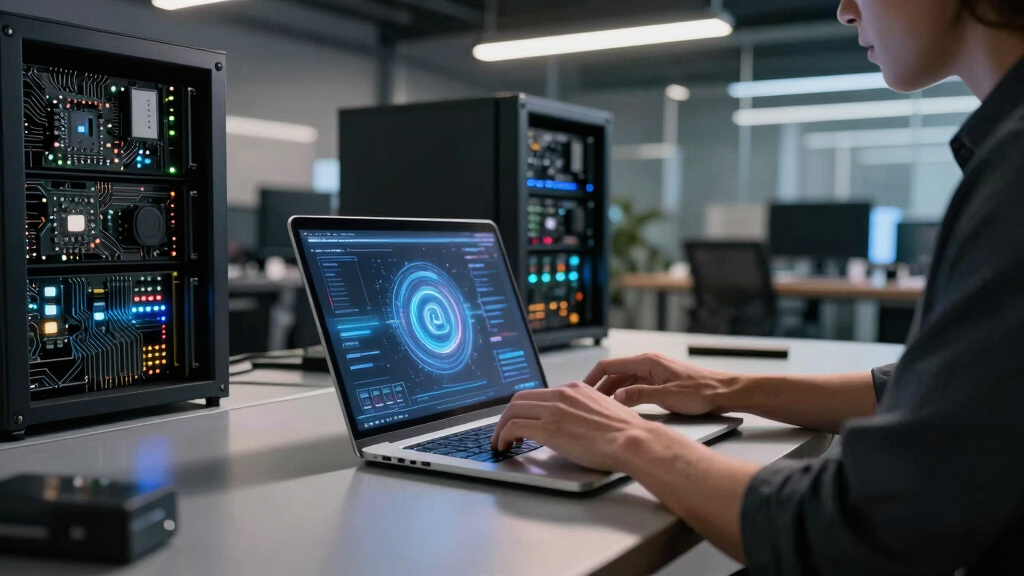
high performance AI compute hardware
As an affiliate, we earn on qualifying purchases.
As an affiliate, we earn on qualifying purchases.
Uncertainties About Market Stability and Future Risks
It remains unclear how fragile the current cartel structure is and whether it can withstand potential disruptions, such as regulatory interventions, supply chain shocks, or internal conflicts among key players. The long-term impact of decoupling ownership from AI development also remains uncertain, especially regarding innovation and competition.
GPU leasing services for AI development
As an affiliate, we earn on qualifying purchases.
As an affiliate, we earn on qualifying purchases.
Next Steps for AI Hardware Market Dynamics
Industry observers expect increased regulatory scrutiny and potential efforts to break the concentration of power. Companies may also seek alternative supply sources or develop proprietary hardware to reduce dependency. Monitoring Nvidia’s strategic moves and the evolution of leasing agreements will be critical to understanding future market stability.
As an affiliate, we earn on qualifying purchases.
Key Questions
Why is Nvidia so central to the AI compute market?
Nvidia controls the majority of GPU supply, invests heavily in financing and equity in key firms, and manages GPU allocation during shortages, giving it outsized influence over the entire ecosystem.
What does it mean for AI companies to rent compute instead of owning hardware?
It means they rely on external providers and leasing agreements, which can limit control over hardware and create dependencies that influence pricing, availability, and strategic decisions.
Could this cartel structure lead to market collapse?
The circular financing and leasing create systemic fragility, meaning disruptions in one part of the loop could cascade, risking market instability or collapse if cohesion breaks down.
How might regulators respond to this concentration of power?
Regulators could investigate antitrust concerns, push for increased competition, or impose restrictions on leasing and financing practices to prevent abuse of market dominance.
Will companies develop their own hardware to bypass the cartel?
Some firms are exploring proprietary hardware solutions, but high costs and supply chain challenges make leasing the current dominant strategy for most AI developers.
Source: ThorstenMeyerAI.com
Fall Picks
fall essentials
As an affiliate, we earn on qualifying purchases.