📊 Full opportunity report: The Roblox Cheat That Broke Vercel. on ThorstenMeyerAI.com — validation score, market gap, and execution plan.

Get movie nights delivered free with Prime
- Fast, free delivery on millions of items
- Prime Video, Amazon Music and more included
- Member-only deals all year
TL;DR
A Roblox cheat script infected a Vercel employee’s machine, allowing attackers to exploit OAuth trust relationships and breach customer data. The breach highlights risks from seemingly minor security lapses. The investigation continues as authorities assess downstream impacts.
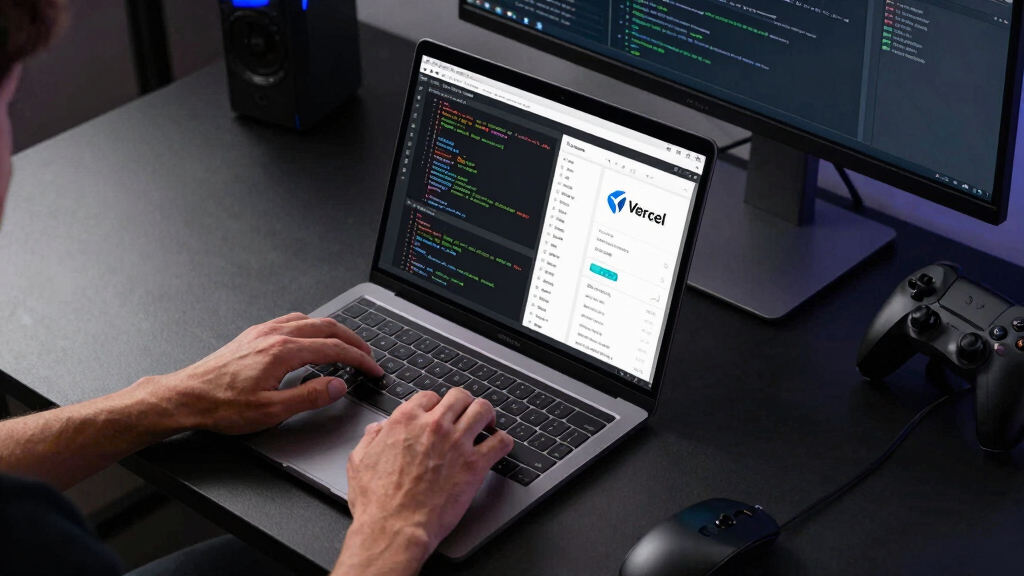
Vercel disclosed a major security breach on April 19, 2026, resulting from a Roblox auto-farm script downloaded by an employee that led to a two-month infiltration of its internal systems and customer environments. The incident underscores how seemingly minor personal decisions can cascade into enterprise-wide compromises, especially when trust architectures are exploited.
In February 2026, a Vercel employee with access to sensitive internal systems downloaded a Roblox auto-farm script from a malicious site. The script contained Lumma Stealer malware, which harvested credentials stored on the employee’s machine, including OAuth tokens, passwords, and session cookies for various corporate applications.
Over the subsequent two months, attackers leveraged these credentials to pivot through the employee’s Google Workspace account, access internal systems, and ultimately compromise Vercel’s customer environment variables stored across cloud platforms like AWS, Azure, and GCP. The breach was only detected when Vercel publicly disclosed the incident on April 19, 2026, after threat actors posted stolen internal data on BreachForums for $2 million. The attack’s operational velocity was attributed by Vercel’s CEO to AI-augmented attack methods, enabling rapid lateral movement and exploitation.
The Roblox cheat
that broke Vercel.
A forensic walkthrough of the April 2026 breach — the auto-farm script, the 2-month dwell, the OAuth chain.
February 2026: a Context.ai employee downloads Roblox auto-farm scripts on their work machine. The scripts carry Lumma Stealer. The infostealer harvests Google Workspace OAuth tokens. Those tokens stay valid for two months while the attacker pivots Context.ai → Vercel employee Workspace → Vercel internal → customer environment variables. April 19: $2M BreachForums listing. Every structural pattern from this franchise is present in a single incident.
Roblox to root, via OAuth.
Walking the chain step by step from Lumma Stealer infection through Context.ai → Google Workspace → Vercel employee account → Vercel internal systems → customer environment variables. No zero-day. No novel exploitation. Standard infostealer + standard OAuth tokens + standard “Allow All” consent = $2M listing.
The CEO publicly attributed the attacker’s operational velocity to AI augmentation — one of the first high-profile incidents where AI capability is explicitly named in the post-mortem. This is the canonical 2026 supply-chain attack pattern composed end-to-end in a single incident.
Eight events. Two months of dwell. One disclosure cascade.
From the February Lumma Stealer infection to the May ongoing investigation. Each event has been verified across multiple public sources — Vercel security bulletin, Context.ai bulletin, Hudson Rock investigation, Mandiant collaboration, TechCrunch and BleepingComputer reporting, Trend Micro post-mortem with April 21 corrections.
COMPROMISE
FAILURE
MITIGATION
omddlmnhcofjbnbflmjginpjjblphbgk removed from Chrome Web Store. Allowed full read access to Google Drive via OAuth app 110671459871-f3cq3okebd3jcg1lllmroqejdbka8cqq. Separate Office Suite OAuth app remained operational.MITIGATION
DISCLOSURE
CONFIRMED
EXPANSION
STATUS
Every link was a defensive opportunity that wasn’t taken.
No single failure caused the breach. Six structural failures compose the chain. Each represents an enterprise architectural choice where the defensive option exists but wasn’t deployed.
Specific IOCs to hunt for in your environment.
Vercel published specific OAuth app and Chrome extension IDs to support community investigation. Google Workspace administrators should hunt for these in OAuth grant logs and revoke any access found.
If you operate on Vercel · act now.
Two action categories. Immediate response if you operate on Vercel (rotate everything, treat all secrets as compromised) and strategic response for any enterprise (audit AI productivity tools, switch to admin-managed consent, treat OAuth apps as third-party vendors).
- Rotate every secret stored in Vercel environment variables. Cloud credentials first (AWS, Azure, GCP), then database passwords, GitHub tokens, everything else
- Check cloud provider logs (CloudTrail, Activity Log, Audit Logs) for unusual activity in past 30 days
- Check GitHub for unexpected webhooks, deploy keys, OAuth applications
- Review recent Vercel deployments — confirm all triggered by your team
- Mark all secrets as
Sensitivein Vercel · prevents plaintext storage - Enable MFA on Vercel accounts · authenticator apps or passkeys · not SMS
- Audit AI tools with broad Google/Microsoft account access · revoke non-critical
- Hunt for the specific IOCs · Google App
110671459871-30f1spbu0hptbs60cb4vsmv79i7bbvqj· check usage and revoke - Audit your AI productivity tool inventory. Every tool with broad OAuth permissions is a potential Vercel-style entry vector
- Switch to admin-managed OAuth consent — the single highest-leverage change. Blocks the entire Vercel attack chain structurally.
- Migrate secrets to dedicated secrets managers (Vault, AWS Secrets Manager, Doppler, Infisical) — inject at runtime
- Establish credential rotation automation · 30-90 day schedule regardless of incident status
- Deploy credential leakage monitoring · HudsonRock, SpyCloud, Recorded Future
- Treat OAuth apps as third-party vendors · add to risk inventory alongside contracted vendors
A Roblox cheat script downloaded on a personal machine propagated through enterprise OAuth trust relationships across three organizational boundaries to compromise platform customer credentials. Every link was harmless individually. The composition is the canonical 2026 attack pattern.
Impact of Low-Sophistication Attacks on Enterprise Security
This breach demonstrates that highly damaging security incidents can originate from simple, non-technical actions, such as downloading a gaming cheat. It highlights vulnerabilities in trust architectures relying on OAuth permissions and the importance of strict credential management. The incident also raises concerns about employee device security and the risks posed by malware-laden scripts in personal environments, especially when combined with AI-driven attack speed.
enterprise cybersecurity USB security key
As an affiliate, we earn on qualifying purchases.
As an affiliate, we earn on qualifying purchases.
Structural Failures in Cloud Trust and Credential Management
The Vercel breach exemplifies a series of systemic security failures discussed in recent security analyses. The incident is a textbook case of the ‘OAuth Allow All’ permission flaw, enabling attackers to exploit broad trust relationships. The two-month dwell time aligns with patterns observed in recent supply chain breaches, where attacker persistence exceeds typical monitoring windows. Additionally, the use of plaintext environment variables and the lack of sensitive data marking at rest contributed to the severity of the breach.
Prior to this, security experts had warned about the risks of consumer-grade malware and the potential for low-sophistication exploits to cause widespread damage, especially when combined with AI-enabled operational velocity, as highlighted in recent forensic studies.
“The attacker’s velocity was significantly amplified by AI, allowing rapid lateral movement across our systems.”
— Vercel CEO
multi-factor authentication security token
As an affiliate, we earn on qualifying purchases.
As an affiliate, we earn on qualifying purchases.
Remaining Unknowns About Downstream Impact
As of May 2026, investigators have not fully determined the extent of downstream impact, including whether customer data was exfiltrated or compromised beyond initial credential exposure. The full scope of affected systems across all cloud providers remains under assessment, and attribution to specific threat actors is still evolving.
password manager for business teams
As an affiliate, we earn on qualifying purchases.
As an affiliate, we earn on qualifying purchases.
Next Steps in Investigation and Security Reinforcements
Vercel and affected organizations are expected to implement enhanced credential management, restrict OAuth permissions, and improve malware detection. Ongoing investigations aim to clarify the full scope of the breach, attribute responsibility, and develop targeted security recommendations to prevent similar incidents. Public reporting and security audits are likely in the coming weeks.
As an affiliate, we earn on qualifying purchases.
Key Questions
How did a Roblox cheat script lead to a major breach?
The cheat script contained malware that harvested credentials from an employee’s machine, which attackers used to pivot through trust relationships and access internal systems.
Was this breach technically sophisticated?
No. The breach was initiated by a simple malware download—highlighting how basic security lapses can have severe consequences when combined with trust exploitation and AI-enabled attack velocity.
Which systems were affected by the breach?
Customer environment variables stored across multiple cloud platforms, including AWS, Azure, and GCP, were compromised. The full extent of data exfiltration remains under investigation.
What are the main lessons for enterprises?
Implement strict credential management, restrict OAuth permissions, monitor for malware, and educate employees about security risks in personal device use.
Will this lead to regulatory action?
It is too early to determine, but the incident underscores the need for tighter security standards around trust relationships and third-party integrations.
Source: ThorstenMeyerAI.com
Halloween Picks
halloween
As an affiliate, we earn on qualifying purchases.