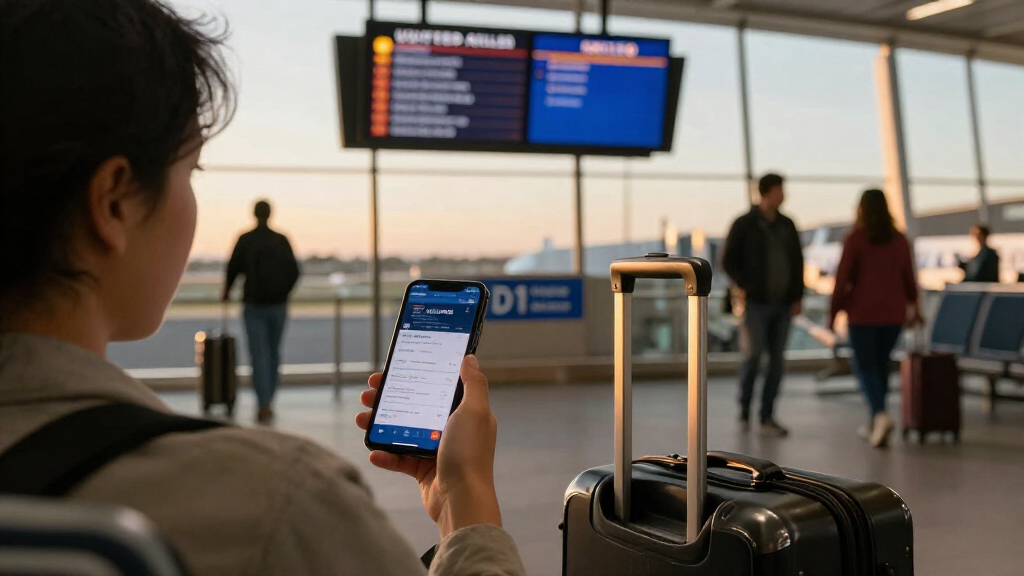
🔍 Read the full analysis: United Bans AI Agents From Booking Flights, Even With Your Approval on ThorstenMeyerAI.com

Get movie nights delivered free with Prime
- Fast, free delivery on millions of items
- Prime Video, Amazon Music and more included
- Member-only deals all year
TL;DR
United Airlines has added a contract rule prohibiting unauthorized third-party AI agents from making, changing or servicing tickets, including when a passenger supervises or approves the software. The airline says travelers can still use tools to search for flights, but must handle purchases themselves; how the rule will be enforced remains unclear.
United Airlines has barred unauthorized third-party AI agents from making, changing or servicing tickets through its platforms and intermediaries, under a contract revision dated November 11, 2026. The restriction applies even when a passenger or another person supervises or approves the agent’s actions, setting a clear limit on software that can book travel for users.
United said it is restricting agent access both directly on its website and app and indirectly through travel agencies and aggregators. The revised contract of carriage adds “the use of AI Agents to make, modify or service a Ticket, and/or to purchase any service or product” to its list of prohibited practices. The wording is quoted in reports by View from the Wing, One Mile at a Time and PPC Land, which reproduced the contract text on November 11.
The contract defines an AI agent broadly as software or a service that takes autonomous or semi-autonomous action to search, book, purchase or manage United products. It includes AI assistants built into consumer platforms, AI-enabled browsers and standalone agents, as well as third-party tools connecting through travel agencies or other intermediaries. It does not name specific products.
According to The Wall Street Journal, as cited by View from the Wing, assistants may still search for United flights and show fares; the traveler must complete the purchase. The contract also says United may cancel reservations made, modified or serviced by an AI agent without notice. Other remedies listed in the contract include invalidating tickets, charging their full value, deleting miles and ending MileagePlus membership, though the text does not specify whether United plans to apply those measures to agent bookings.
United draws a line on AI flight bookings
United Airlines bars unauthorized third-party AI agents from booking or managing tickets, even with a passenger’s approval. Travelers can still use assistants to search, but must complete purchases themselves.
What the rule covers
The contract applies to autonomous or semi-autonomous software acting on United products.
United’s website and app
Agents may not make, change, or service tickets through United’s digital platforms.
Agencies and aggregators
The restriction also reaches agent activity routed through third-party booking services.
Does not change the rule
A passenger’s supervision or approval does not make an agent-performed transaction permissible.
Search is allowed; purchase is yours
United’s reported guidance separates comparing flights from carrying out a transaction.
AI tools may search for United flights and show fares.
Review the option you want to book.
The traveler must handle the purchase and booking.
Why the policy matters
The change affects both how travelers use assistants and how businesses build software that buys across websites.
- Use assistants to compare fares, then book and manage tickets yourself.
- United cites account security and unintended purchases or changes as concerns.
- Agent-based purchasing may be blocked on United’s platforms and through intermediaries.
- United says it does not want to create another middleman.
What remains unclear
The contract lists possible consequences, but United has not explained how it will apply them.
- How the airline will identify AI-agent activity or limit access.
- Whether it will cancel suspected bookings or use other listed remedies.
- How it will treat cases where an agent assists but a person completes the purchase.
A New Boundary for Travel Agents
The policy puts a boundary between AI-assisted flight search and letting software carry out a transaction. That matters to travelers who want an assistant to compare fares and then book a selected itinerary, and to companies building agents intended to handle purchases across websites. Under United’s wording, a human’s approval does not make an agent-performed booking permissible.
The rule may also affect bookings made through intermediaries, not just interactions with United’s own digital services. United says the restriction reaches travel agencies and aggregators, although the precise technical steps it will use to limit access are not described. The contract’s listed penalties give the airline options if it identifies a prohibited reservation, but it has not said which remedies it will use.
According to Skift, United is the first U.S. airline to state such a prohibition explicitly. Other travel and technology companies have taken different approaches: the source report says Southwest and Expedia are working with ChatGPT, while Amazon and JPMorgan Chase have blocked outside agents. The contrast reflects an unresolved business question: whether companies will let third-party software transact on their services or keep those customer relationships and purchases within their own channels.
Popular right now

KitchenAid Artisan 5-Quart Tilt-Head Stand Mixer, Almond Cream

Dyson V8 Cyclone Cordless Vacuum

Bose QuietComfort True Wireless Earbuds with Active Noise Cancellation, Bluetooth 5.3, USB-C Charging, and IPX4 Water Resistance
As an affiliate, we earn on qualifying purchases.
What United Changed in Its Contract
United’s contract of carriage is the set of terms passengers accept when buying a ticket. Its revised text places AI-agent use among “Prohibited Practices,” a section that also covers fare practices such as hidden-city and throwaway ticketing. The revision is dated November 11, and the reported wording was reproduced by several travel publications.
United’s stated reasons include account security and the risk of unintended purchases, account changes or use of MileagePlus miles if passengers share credentials with third-party assistants. The airline also says automated actions could raise concerns under FAA and Department of Transportation rules. It gives flight check-in as an example, saying passengers must acknowledge that checked bags do not contain banned substances such as explosives.
The source report notes that federal rule 49 CFR 175.25 requires airlines to provide hazardous-material information at ticket purchase and check-in. When a passenger completes either process without another person’s involvement, the passenger must acknowledge receiving the information. Gary Leff of View from the Wing questioned United’s safety rationale, saying the rule does not require the customer to make that acknowledgment through a particular kind of interface. That is his interpretation, not a finding about the legality of United’s policy.
United CEO Scott Kirby also gave a commercial reason for the restriction at an event in Chicago, according to The Wall Street Journal: “To be honest, I don’t want to create another middleman.” The source report says actual agent-led purchases remain uncommon; it cites Uber counting four agent-booked rides in a week with about 320 million trips and orders. That figure concerns Uber activity, not United bookings, and the comparison basis for airline agent purchases is not supplied.
““United is taking steps to restrict access — directly within our digital platforms and indirectly via travel agencies and aggregators — to prohibit use by unauthorized, third-party personal AI agents or assistants.””
— United Airlines
Enforcement and Ticket Scope
United has not explained how it will identify AI-agent activity, how often it expects to cancel reservations, or whether it will use the contract’s listed remedies against passengers whose bookings involve an agent. The contract wording is broad, but the airline’s announcement does not name particular products or describe a technical enforcement process.
The source report says the contract applies according to the terms in effect on the date a ticket is issued, and interprets that to mean tickets issued before November 11 are governed by the earlier version. That is a reading of the contract reported by PPC Land, not a separate statement from United about every existing reservation. It is also unclear how United will treat bookings where an agent only searches or fills in information but a person completes the purchase.
The source material does not establish how many travelers currently use agents to book United flights, or whether the rule will prompt changes at other airlines. Nor does it resolve the disagreement over how the cited federal acknowledgment requirements apply to automated booking and check-in flows.
How United Applies the Restriction
The immediate next step is for travelers and travel providers to follow United’s revised terms: use assistants for search if desired, but make and manage bookings themselves unless United clarifies that a particular service is allowed. Passengers with existing tickets can check the terms that applied when their tickets were issued and contact United if they are unsure whether an agent changed or serviced a reservation.
Further detail from United about its enforcement methods, treatment of intermediary bookings and handling of suspected agent reservations would clarify the practical reach of the rule. Any changes by other airlines or booking platforms may also show whether United’s approach remains unusual or becomes a wider industry policy. No timetable for further guidance was provided in the source material.
Key Questions
Can an AI assistant still search for United flights?
According to The Wall Street Journal, as cited by View from the Wing, an assistant may search and display fares. The traveler must complete the purchase rather than have the agent book the ticket.
Does a passenger’s approval make an AI booking acceptable?
No. The reported contract definition covers autonomous or semi-autonomous actions whether or not a passenger or another person supervises or approves them.
What could United do with a reservation made by an AI agent?
The contract says United may cancel reservations made, modified or serviced by agents without notice. It also lists remedies such as invalidating a ticket, charging its full value, deleting miles or ending MileagePlus membership, but United has not said which remedies it intends to use for agent bookings.
Does the restriction name specific AI products?
No specific products are named in the reported contract text. Its definition instead covers broad categories, including platform assistants, AI-enabled browsers, standalone agents and third-party tools that connect through intermediaries.
Source: ThorstenMeyerAI.com