

You see, urban legends turned into internet legends because stories spread quickly through digital platforms driven by our desire for sensational and memorable tales. People often share these stories without checking facts, which helps them go viral. Emotional and mysterious content encourages sharing, while confirmation bias makes us accept stories that fit our beliefs. As more people pass along these tales, they evolve and blur the line between fact and fiction. Keep exploring to discover more behind this fascinating phenomenon.

Get movie nights delivered free with Prime
- Fast, free delivery on millions of items
- Prime Video, Amazon Music and more included
- Member-only deals all year
Key Takeaways
- Digital platforms enable rapid sharing, turning local urban legends into global internet phenomena.
- Viral content is amplified by emotional appeal and sensationalism, encouraging widespread dissemination.
- Participants share stories impulsively, often without fact-checking, fueling myth evolution.
- Confirmation bias and psychological factors sustain belief, prompting further sharing and myth reinforcement.
- The cycle of myth creation and sharing is amplified by human desire for memorable, shocking stories.
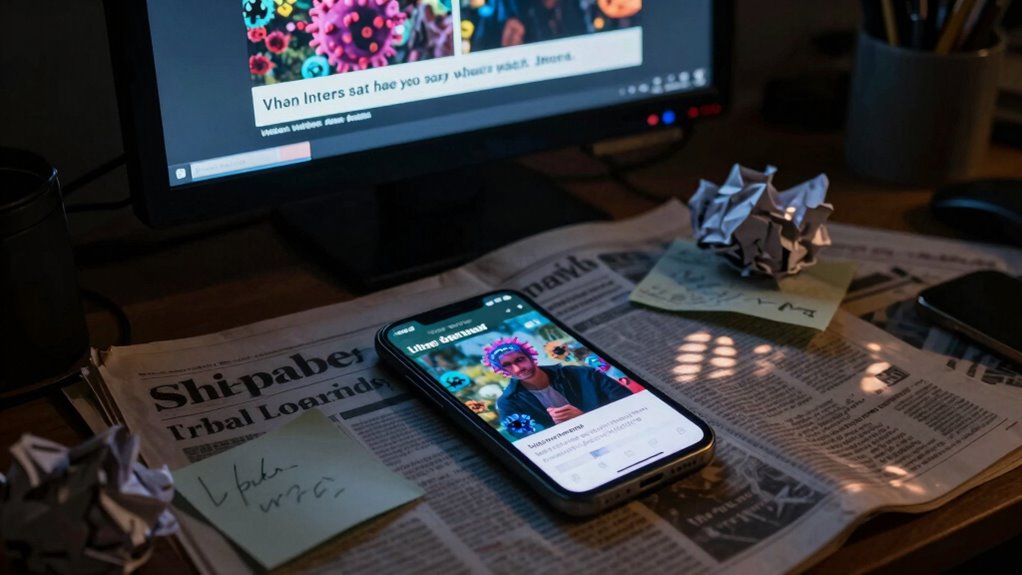
Have you ever wondered why certain stories seem to spread wildly across the internet, even when they’re not true? That’s the power of myth propagation in action, fueled by our collective desire for sensational and memorable tales. When an urban legend hits the online world, it’s often crafted or exaggerated just enough to catch your attention. Once it sparks curiosity, it’s ready for viral sharing. People share these stories without questioning their authenticity, driven by the thrill of the unknown or the desire to be part of something “special.” This cycle of myth propagation transforms a simple story into an internet legend, jumping from person to person with rapid speed.
Stories spread online because we crave sensational tales that catch attention and ignite curiosity, turning myths into viral legends.
The internet has revolutionized how myths and legends evolve. Unlike traditional urban legends passed orally or through print, digital platforms allow stories to reach vast audiences instantly. A single click can send a story spiraling across social media, email chains, and forums. This viral sharing isn’t just about spreading information; it’s about creating a shared experience. When you see a story that seems shocking or unbelievable, you’re more likely to pass it on, especially if it confirms your beliefs or elicits strong emotions. The ease of sharing online accelerates myth propagation, allowing stories that might have once been local or obscure to become global phenomena. Additionally, digital content virality helps amplify these stories, making them even more irresistible to share. Furthermore, the psychological tendency to seek out stories that evoke strong emotions greatly contributes to their rapid spread. Another factor is the increasing prevalence of credit card-related scams and hoaxes, which often rely on sensational stories to lure victims or spread misinformation.
As an active participant in this process, you’re both consumer and contributor. You might see a story and think, “Wow, this is fascinating,” then share it without verifying facts. Your action adds to the viral sharing cycle, helping to cement the story’s status as an internet legend. Sometimes, stories evolve with each new share, gaining details or changing nuances, further blurring the line between truth and fiction. This dynamic process ensures that urban legends adapt to the digital age, becoming more elaborate or shocking over time. The rapid spread of stories is also facilitated by the virality of digital content, which amplifies the reach and influence of these tales.
What’s fascinating is how this cycle sustains itself. The more a story is shared, the more it feels real to those who encounter it, even if it’s a complete myth. This belief in the story’s authenticity fuels further sharing, reinforcing myth propagation. In addition, the confirmation bias that often accompanies online interactions can lead people to accept and propagate stories that align with their existing beliefs, regardless of factual accuracy. In this way, internet legends are born from a blend of human psychology, the ease of digital communication, and our natural attraction to stories that evoke emotion or mystery. So, next time you see a viral story, remember: you’re part of a long tradition of myth propagation, carried forward by the viral sharing that makes internet legends so compelling—and often so far removed from reality.
As an affiliate, we earn on qualifying purchases.
Frequently Asked Questions
How Do Urban Legends Adapt to Online Formats?
You see urban legends adapt to online formats through viral hoaxes and meme transformations. When a story spreads quickly on social media, it becomes a viral hoax, gaining popularity and new variations. Meme transformations help these legends evolve visually and contextually, making them more memorable and shareable. This rapid dissemination and creative reinterpretation keep urban legends alive, blending traditional storytelling with digital culture to reach a wider audience effortlessly.
What Role Does Social Media Play in Spreading These Legends?
Social media acts like a wildfire, turning stories into sparks that ignite across digital landscapes. It fuels viral memes and spreads digital folklore rapidly, making legends grow legs and run faster than ever. With each share, comment, or repost, you add fuel to the blaze, transforming local tales into global phenomena. Social platforms amplify these legends, weaving them into the fabric of online culture, where they flourish and evolve in the blink of an eye.
Are There Specific Types of Urban Legends More Popular Online?
You’ll notice that certain urban legends, especially those tied to viral memes or mysterious stories from anonymous sources, become more popular online. These legends spread quickly because they’re easy to share and often tap into current fears or interests. The anonymity of sources adds an element of intrigue, making people more likely to believe and pass them along. So, stories that are sensational or mysterious tend to dominate the online urban legend landscape.
How Do Internet Legends Differ From Traditional Urban Myths?
Internet legends differ from traditional urban myths primarily through their rapid myth evolution and digital cultural origins. You’ll notice that online legends spread faster, often gaining new details with each share, reflecting evolving cultural influences. Unlike traditional myths rooted in local stories, internet legends are shaped by global digital communities. This swift myth evolution creates dynamic, ever-changing tales that resonate across diverse audiences, making the digital landscape a unique space for myth-making.
Can Urban Legends on the Internet Influence Real-World Behavior?
Urban legends on the internet can act like wildfire, igniting fears or beliefs that influence your actions. Their psychological impact is like a mirror reflecting societal anxieties, shaping perceptions and behaviors. These stories become cultural reflections, echoing collective hopes or fears. When you encounter them online, they have the power to sway decisions, foster myths, or even spark real-world consequences, proving that digital tales are more than just stories—they’re catalysts for change.
storytelling books for internet legends
As an affiliate, we earn on qualifying purchases.
As an affiliate, we earn on qualifying purchases.
Conclusion
So, next time you come across a chilling story online, remember—it might just be the next urban legend in the making. The lines between fact and fiction blur faster than ever, and what seems like a harmless tale could hold secrets waiting to be uncovered. Will you be the one to pass it on, or question its truth? The internet’s legends are waiting—are you ready to face what’s real and what’s not?
social media marketing for viral stories
As an affiliate, we earn on qualifying purchases.
As an affiliate, we earn on qualifying purchases.
As an affiliate, we earn on qualifying purchases.
Fall Picks
fall essentials
As an affiliate, we earn on qualifying purchases.