
TL;DR

Get movie nights delivered free with Prime
- Fast, free delivery on millions of items
- Prime Video, Amazon Music and more included
- Member-only deals all year
Walt Disney Animation Studios describes animated filmmaking as a collaborative process that starts with story and visual development and ends with finished picture and sound. Its outline covers casting, 3D asset creation, shot production, rendering and archiving, while offering a studio-specific account rather than a universal production schedule.
Walt Disney Animation Studios has outlined how its animated films move from early story ideas to completed picture and sound, describing a process that brings together storytellers, artists, technologists and production teams. The studio’s account shows that animation is not just character movement: it also involves developing the narrative and visual style, building digital characters and environments, producing shots, and preparing the finished film for delivery.
The process begins in development, where storytellers shape the narrative while artists explore the look of characters and worlds. Disney says its editorial and sound teams work with evolving story ideas to help guide production. Casting is another part of the early work: the studio describes finding actors whose performances give characters their voices. It also says training and development teams provide classes, workshops, lectures, field trips and screenings in filmmaking, art, storytelling and production tools.
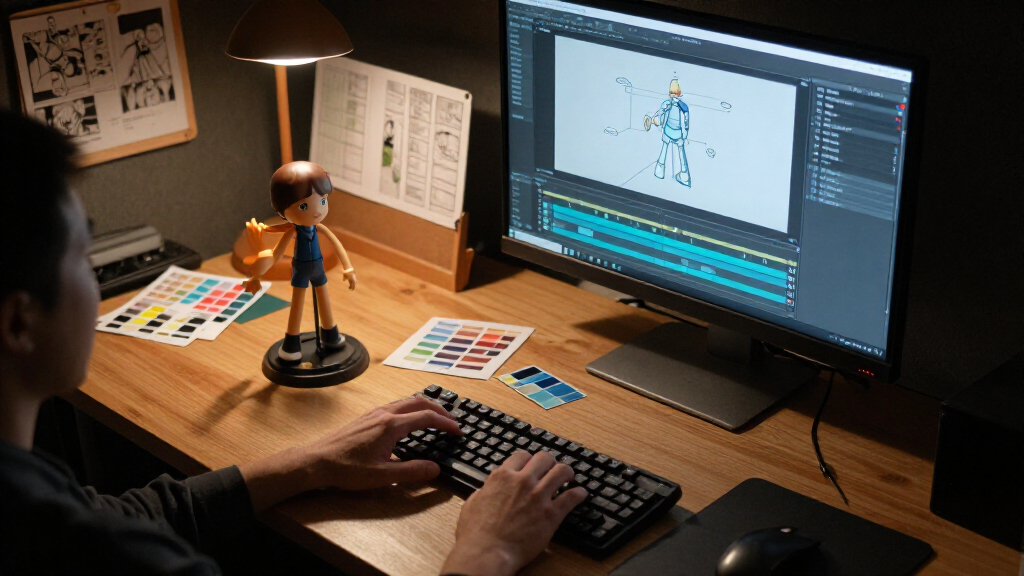
When the story and visual direction are ready to move forward, artists create the film’s three-dimensional assets. That includes models, rigs and textures for characters and environments. Production management tracks schedules as they change, while technical directors address production problems through tools, support and software development. Disney describes its technology work as a partnership with artists, aimed at developing tools and workflows for making the film.
In shot production, teams assemble the scenes that make up the movie. Disney says this work involves animators and technicians, covering character performance as well as details such as hair, clothing and the surrounding world. The studio also points to visualization, collaboration and rendering technologies as part of producing and refining shots. Post-production then shapes picture and sound for final delivery. After production, the studio says it organizes and archives artwork and assets for reference and inspiration across the Walt Disney Company.
Why Animation Takes Many Teams
The studio’s outline makes clear that a finished animated film depends on many connected kinds of work, not only the visible task of animating characters. Choices made during story development and visual design inform the assets artists build; those assets, in turn, are used by teams producing individual shots. Production management and technical support help coordinate that work across a changing schedule.
For viewers, that helps explain why animation production can involve long chains of creative and technical decisions before a scene appears on screen. The studio specifically says its tools are intended to support higher-quality visualization and faster iteration, but it does not provide figures showing how much time or money those tools save. The page is a useful account of the process at one major studio, not evidence that every animated production follows the same structure.
Popular right now

TCL 85 Designer Series QD-Mini LED TV (Model 85A400U) with Google Smart TV

Vitamix 5200 Professional-Grade Blender, 64 oz. Container, Black

iRobot Roomba 105 Vac Robot Vacuum
As an affiliate, we earn on qualifying purchases.
From Studio Pipeline to Finished Film
Disney Animation groups the work into broad stages: development, pre-production, shot production and post-production. The labels describe connected phases rather than isolated tasks. Story and design evolve before and during production, and the company says editorial and sound contribute while story ideas are still developing.
The studio also describes its Walt Disney Animation Research Library as a resource for filmmakers and artists. It says the library holds more than 65 million assets from nearly a century of Disney Animation history. That archive, along with the production assets saved when a film wraps, provides material that the studio says can be used for reference and inspiration. This information comes from Disney’s own description of its filmmaking process.
“Our filmmaking process begins in Development, where our storytellers begin to craft the narrative, and our artists define the look of the characters and worlds.”
— Walt Disney Animation Studios
What the Studio Outline Leaves Out
Disney’s page explains the stages in general terms but does not give a schedule, budget, staffing level or length of production for a particular film. It also does not specify how much each stage varies by project, how many revisions a scene may undergo, or which tasks are handled by outside partners. The description should be read as Disney Animation’s account of its process, not as a complete guide to every studio or animation method.
The page mentions technology intended to support faster iteration and higher-quality visualization, but it provides no measurements or comparisons for those results. It does not state how the process differs across films or explain the specific software and tools used on individual productions.
The Work After Production Wraps
For each film, the described process continues through final picture and sound delivery, followed by organizing and archiving its artwork and assets. Disney’s outline does not announce a new production milestone or provide dates for an upcoming project; it describes the studio’s general workflow. The next concrete steps for any individual movie depend on its production schedule and release plans, which are not detailed in this process description.
Key Questions
What is the first stage in Disney Animation’s process?
Disney says the process begins in development, where storytellers work on the narrative and artists define the look of characters and worlds.
What happens before animators create shots?
Artists create digital characters and environments by building models, rigs and textures. Production management and technical teams also help organize schedules and solve workflow problems.
What does shot production include?
Disney describes shot production as creating the scenes that comprise the film. It includes character acting and details such as hair, clothing and the surrounding world, with work from animators and technicians.
Is this the process used by every animation studio?
No such claim is made in the source. This is Walt Disney Animation Studios’ account of its own filmmaking process; other studios and productions may organize their work differently.
What happens after an animated film is completed?
Disney says post-production prepares the final picture and sound for delivery. After a production wraps, the studio organizes and archives its artwork and assets for future reference and inspiration.
Source: hn