
🔍 Read the full analysis: Why Bangladesh Garment Workers Are Back On The Highways: Wages, Buyers And Machines on ThorstenMeyerAI.com

Get movie nights delivered free with Prime
- Fast, free delivery on millions of items
- Prime Video, Amazon Music and more included
- Member-only deals all year
TL;DR
Bangladesh garment workers resumed highway protests on November 17 and 18 after a scheduled wage-board meeting was postponed. Workers’ representatives have proposed 32,000 taka a month, while owners have not formally presented a figure; the board is due to meet again on November 23.
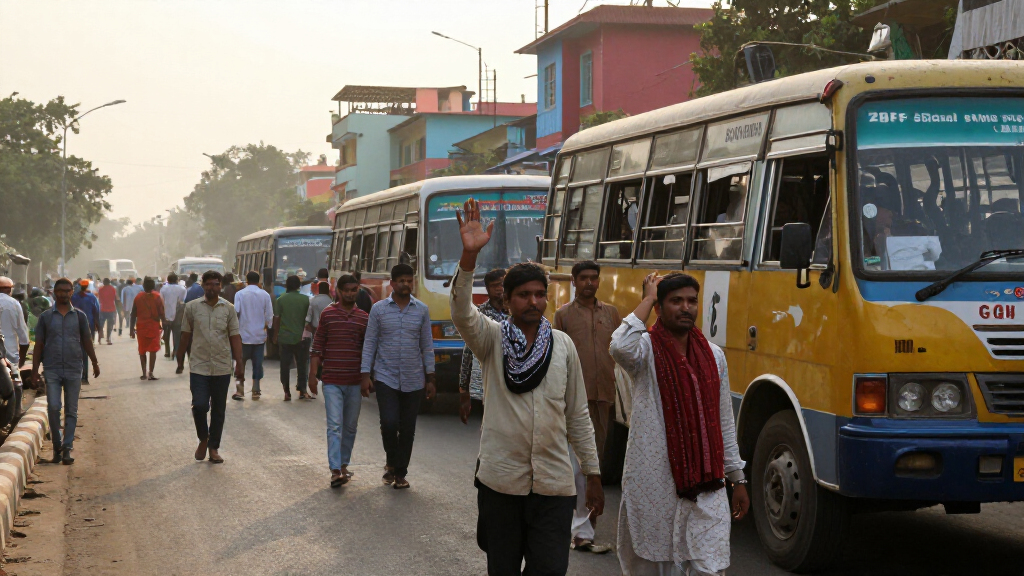
Bangladesh garment workers resumed highway protests around Dhaka on November 17 and 18 after a wage-board meeting was postponed, leaving a wide gap between workers’ pay demand and the current minimum wage unresolved. Police used tear gas, stun grenades and batons as demonstrators blocked roads, while the board is scheduled to meet again on November 23.
The board’s November 16 meeting was postponed after Anwar Hossain, the workers’ permanent representative, fell ill and was admitted to hospital, according to a joint statement from the Bangladesh Garment Manufacturers and Exporters Association (BGMEA) and the Bangladesh Knitwear Manufacturers and Exporters Association (BKMEA). The associations said the employers’ side was prepared to submit its proposal and asked for a new date. No employer figure was formally presented at the meeting.
The current monthly minimum wage is 12,500 taka, in force since December 1, 2023. The workers’ side on the wage board has formally proposed 32,000 taka, while protesters have called for 30,000 taka. At the Bangladesh Bank rate of 124.75 taka to the US dollar, those amounts are about $100, $257 and $240 respectively. The source reports that employers had discussed a figure of about 15,000 taka before the cancelled meeting, citing The Financial Express; that figure is not an official proposal.
On November 17, protests and road blockages were reported in Gazipur, Savar, Ashulia and Mirpur. AFP reported police firing tear gas and stun grenades, while protesters threw bricks, set vehicles on fire and blocked the Dhaka-Mymensingh road. The Associated Press reported that around 20,000 workers from one factory blocked the Dhaka-Aricha Highway in Savar the following day, and that police used tear gas, stun grenades and batons. AP said it was not immediately clear how many people were injured.
Pay Dispute Threatens Factory Output
The protests put pressure on an industry that supports about four million jobs and is a major part of Bangladesh’s export economy. When factories close or production stops, workers lose income and manufacturers risk missing orders. The disruption also exposes a direct conflict between workers’ demands for higher pay and owners’ concerns about production costs and competitiveness.
The scale of closures is disputed across reports and depends on the area and source. A BGMEA vice-president told The Daily Star that production had halted at nearly 450 factories. The paper’s correspondents, citing industrial police and protesters, counted at least 250 closures in Savar, Ashulia and Hemayetpur, plus 60 in Gazipur. AFP, citing sources, put the number at about 500 of Bangladesh’s 4,500 garment factories. These are reported estimates, not a single independently verified count.
Factory owners have argued that a sharp wage increase could weaken Bangladesh’s cost advantage over competitors such as India and Vietnam. They have also pointed to low prices offered by international buyers and rising energy costs. The source material reports no public comment from international buyers on this round of protests, leaving their role in the current negotiations unclear.
Popular right now

Vitamix Propel Series 510 Professional-Grade Blender, Black

De'Longhi Classic Signature Espresso Machine with Adjustable Milk Frother

KitchenAid Classic Series 4.5-Quart Tilt-Head Stand Mixer, Onyx Black
As an affiliate, we earn on qualifying purchases.
A Wage Board With a Fixed Calendar
The wage board is considering a new minimum after the current 12,500-taka floor took effect in December 2023. The November 16 meeting was its third. The postponement followed a period of demonstrations that, according to a Savar police officer cited in the source reports, had been under way since October 31. The officer said 11 cases had been filed and 117 people arrested since then.
On November 16, BGMEA sources told The Financial Express that 98 factories had closed under the “no work, no pay” provision of section 13(1) of the Bangladesh Labour Act, while another 24 had suspended operations. Five labour alliances representing 55 worker organisations warned that delaying the board meeting could send workers the wrong message.
The dispute is unfolding alongside changes in factory employment. A 2024 study of factories around Dhaka found that automated production lines required 30.58 percent fewer workers, most of them helpers. An International Labour Organization working paper, using labour force survey data, calculated that women’s share of apparel jobs fell from 46.2 percent in 2016–17 to 35.2 percent in 2024. Those figures describe broader employment pressures; they do not establish that automation caused the current protests.
“We want to return to our machines.”
— A 28-year-old garment worker, speaking to AFP
The Wage Offer and Injury Toll
The main unresolved issue is the amount employers will formally offer. The reported 15,000-taka figure was discussed before the cancelled meeting, but the associations have not submitted an official number in the available reporting. It is also not clear whether the board’s November 23 meeting will proceed as scheduled or produce an agreement.
Reports do not provide a confirmed, consolidated count of factories closed, workers detained or people injured across all protest areas. AP said the number injured in the November 18 confrontation was not immediately clear. A Savar police officer said no casualties were reported during Tuesday’s demonstrations, but that statement does not settle the injury toll for later events or other locations.
The Savar officer also alleged that members of various organisations, including banned groups, had infiltrated the movement. The cited report did not provide evidence for that allegation. It should be treated as a police claim, not an established finding. The source material reported no deaths in the coverage reviewed as of 07:00 UTC on November 19.
Board Returns on November 23
The wage board is scheduled to meet again on November 23. Its chairman has said the revised minimum wage will take effect on December 1 regardless of the amount, with workers due to receive it in their January 2027 pay. The immediate test is whether the employers present a formal figure and whether the board can narrow the gap between that offer and workers’ proposal.
Protests, factory closures and police deployments may continue as the meeting approaches; the available reports do not establish how long the disruptions will last. Further reporting will be needed to confirm the number of factories operating, the impact on workers’ pay and any injuries or arrests. No outcome from the next board meeting is yet known.
Key Questions
What are Bangladesh garment workers demanding?
The workers’ side on the wage board formally proposed a monthly minimum of 32,000 taka. Protesters have also called for 30,000 taka. The current minimum is 12,500 taka.
Why did the wage-board meeting get postponed?
The November 16 meeting was postponed after workers’ representative Anwar Hossain fell ill and was admitted to hospital, according to a joint statement by BGMEA and BKMEA.
When will the wage board meet again?
The next meeting is scheduled for November 23, 2026. Whether it will produce an agreed wage or a formal employer proposal is not yet known.
How many garment factories have stopped work?
Reported estimates vary. The Daily Star cited an industry representative who said nearly 450 factories had halted production, while AFP reported about 500 closures. These figures use different sources and are not a verified single count.
When would a new minimum wage take effect?
The wage-board chairman has said the new rate will take effect on December 1, whatever the amount, and workers will receive it with their January 2027 pay.
Source: ThorstenMeyerAI.com