
📊 Full opportunity report: Fair-value appraisals for used GPUs and AI hardware on IdeaNavigator AI — validation score, market gap, and execution plan.
TL;DR

A new approach to fair-value appraisals for used AI hardware is being tested to address pricing uncertainties in the secondary market. The method involves manual valuations based on recent comparable sales, with potential for monetization. Its success could streamline GPU resale transactions.
IdeaNavigator AI is testing a manual valuation tool designed to establish fair market prices for used data-center GPUs and AI hardware, addressing a key gap in the secondary market that hampers deal closure and accurate pricing.
The initiative targets brokers reselling used AI hardware, such as H100 GPUs and DGX racks, which currently lack reliable reference prices. Without transparent valuation benchmarks, buyers and sellers frequently face disputes over pricing, leading to stalled deals and mispriced equipment. The proposed solution is a manual valuation sheet where brokers input hardware details—model, condition, quantity—and receive a curated fair-value range based on three recent comparable sales pulled from public listings. This process aims to create a standardized, accessible metric for pricing used AI infrastructure.
Market participants see this as a ‘first-win’ workflow that could be expanded into a broader automated or integrated system in the future. The initial testing involves recruiting ten active used-GPU brokers, who will use the valuation tool for ongoing deals. The goal is to measure whether brokers find the valuations accurate and whether they are willing to pay for such a service, with the ultimate aim of monetizing through per-appraisal fees or monthly subscriptions for unlimited valuations. This approach seeks to bring more transparency and efficiency to the rapidly evolving secondary market driven by hyperscalers and labs refreshing their GPU fleets.
Impact on GPU Resale Market Transparency
This development could significantly reduce pricing disputes and improve deal efficiency in the used AI hardware market. By providing a standardized valuation method, brokers and buyers can make more informed decisions, potentially increasing liquidity and reducing mispricing by thousands of dollars per unit. If successful, the system may become a key reference point, fostering greater confidence and stability in the secondary AI hardware market, which is currently characterized by opaque and inconsistent pricing.

Nvidia GeForce GTX 1070 Founders Edition (Renewed)
- GPU Model: NVIDIA GeForce GTX 1070
- Memory: 8GB GDDR5
- Interface: PCIe 3.0 x16
As an affiliate, we earn on qualifying purchases.
As an affiliate, we earn on qualifying purchases.
Secondary Market Dynamics and Hardware Refresh Cycles
The secondary market for used AI hardware has grown rapidly as hyperscalers and research labs replace hardware at a brisk pace, flooding the market with recent-generation GPUs and servers. However, the lack of transparent, standardized pricing has led to frequent disagreements over value, slowing transactions and creating inefficiencies. Currently, pricing relies heavily on anecdotal comparisons and individual broker judgment, which can vary widely. The absence of a reliable fair-value benchmark hampers the growth of a mature resale ecosystem, prompting efforts like the one from IdeaNavigator AI to introduce more structure.
Previous attempts at automated valuation models have been limited or proprietary, leaving a gap for a manual, curated approach that can be tested and refined in real-world broker workflows.
“Establishing a fair-value range based on recent comparable sales could transform how used AI hardware is priced and traded.”
— an anonymous researcher
secondhand AI hardware valuation tools
As an affiliate, we earn on qualifying purchases.
As an affiliate, we earn on qualifying purchases.
Unclear Effectiveness and Market Adoption
It is not yet clear how accurately the manual valuation sheet will reflect true market prices or whether brokers will widely adopt the tool. The effectiveness of the approach depends on the quality of recent comparable sales data and broker trust in the system. Additionally, the scalability and potential automation of this process remain uncertain, as does its ability to adapt to rapidly changing hardware markets and new GPU models.
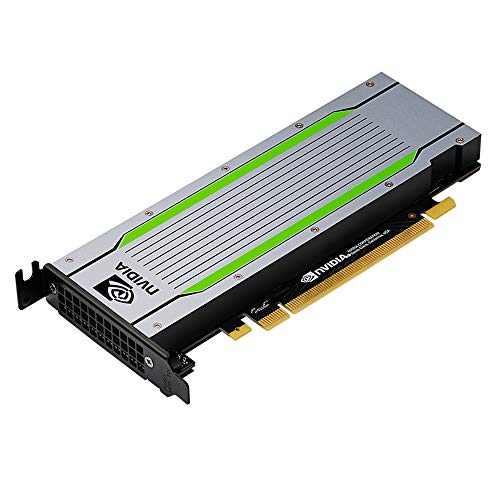
PNY TESLAT4 NVIDIA Tesla T4 PCI-E 16GB GDDR6 GPU Accelerator Datacenter Card w/Full Height Bracket (Renewed)
- Item Dimensions: 2.72 inches
- Graphics Memory: 16 GB GDDR6
- Graphics Type: Dedicated GPU
As an affiliate, we earn on qualifying purchases.
As an affiliate, we earn on qualifying purchases.
Next Steps in Validation and Broader Implementation
Following initial testing with ten brokers, IdeaNavigator AI plans to evaluate the accuracy and usability of the valuation tool. Success metrics include broker willingness to pay for the service and alignment with actual sale prices. If validated, the company will consider expanding the platform, automating data collection, and integrating the system into broader resale workflows. Further, industry feedback will shape future enhancements, potentially leading to a more comprehensive pricing benchmark for used AI hardware.
As an affiliate, we earn on qualifying purchases.
Key Questions
How does the manual valuation tool work?
Brokers input hardware details such as model, condition, and quantity into a curated spreadsheet, which then provides a fair-value range based on recent comparable sales from public listings.
Will this system replace automated pricing models?
Initially, it is designed as a manual, first-step workflow to establish a transparent benchmark. Automation may be considered in future phases based on validation results.
Who will pay for this valuation service?
The plan is to monetize through per-appraisal fees or monthly subscriptions for unlimited valuations, targeting brokers and resellers in the used AI hardware market.
What hardware models will be covered first?
The initial focus is on recent-generation GPUs like the NVIDIA H100 and DGX racks, which are heavily traded in the secondary market.
How reliable are recent comparable sales as a valuation basis?
Reliability depends on the availability and accuracy of recent sales data, which can vary by hardware model and market conditions. The approach aims to select the most recent and relevant transactions for each valuation.
Source: IdeaNavigator AI